
Green Coffee
Unroasted green beans for home roasters — the same traceable sourcing, your own roast curve.
Products in this collection
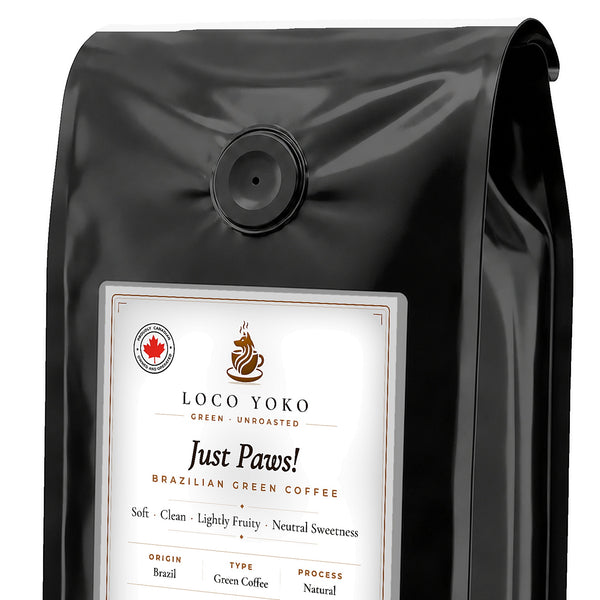
Just Paws!
Soft · Clean · Lightly fruity · Neutral sweetness
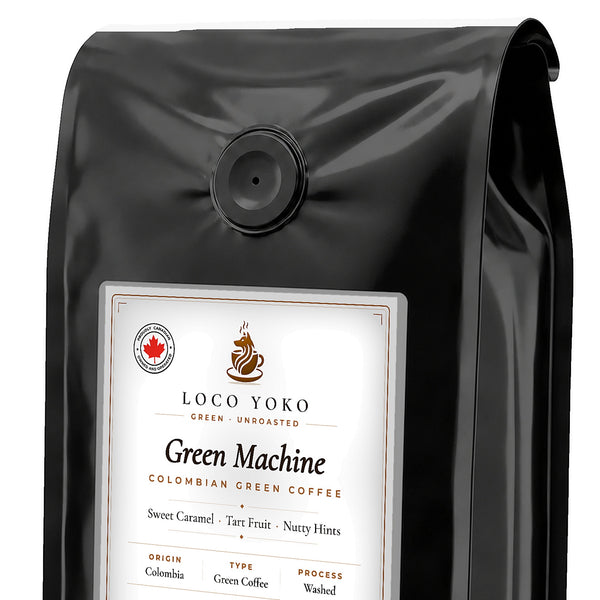
Green Machine
Sweet caramel · Tart fruit · Nutty hints
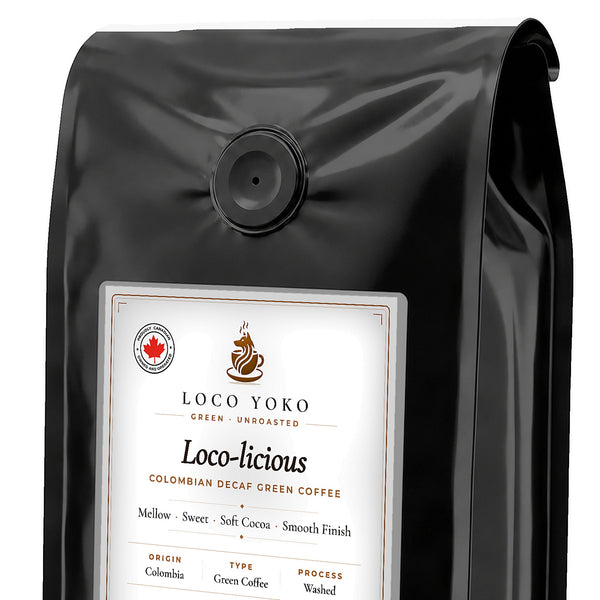
Loco-licious
Mellow · Sweet · Soft cocoa · Smooth finish
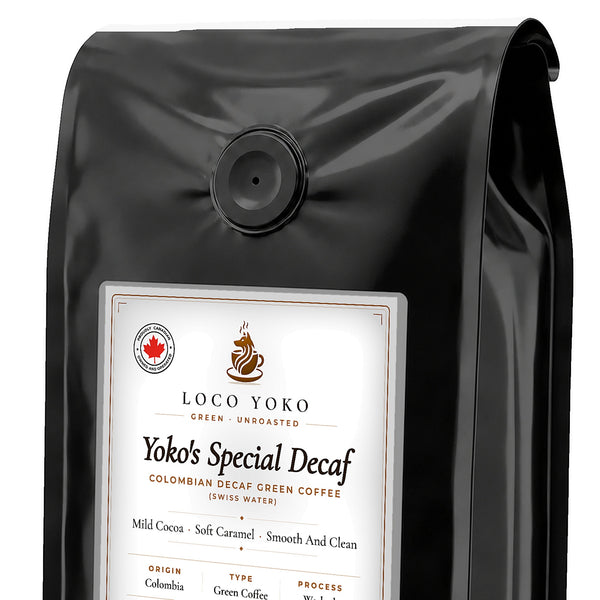
Yoko's Special Decaf
Mild cocoa · Soft caramel · Smooth and clean
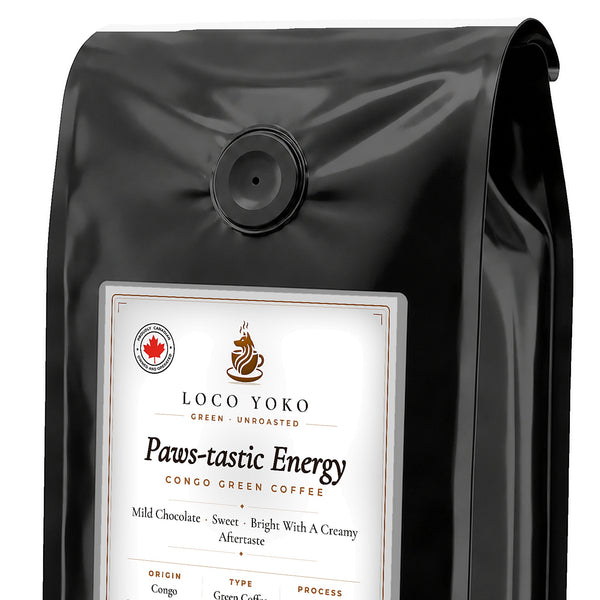
Paws-tastic Energy
Mild chocolate · Sweet · Bright with a creamy aftertaste
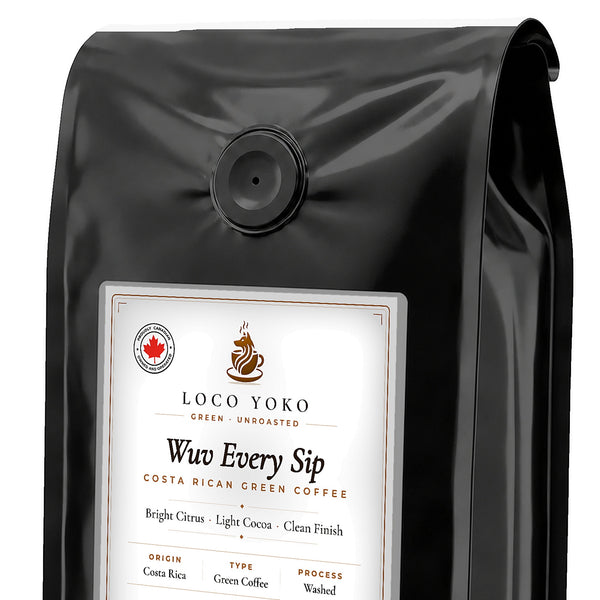
Wuv Every Sip
Bright citrus · Light cocoa · Clean finish
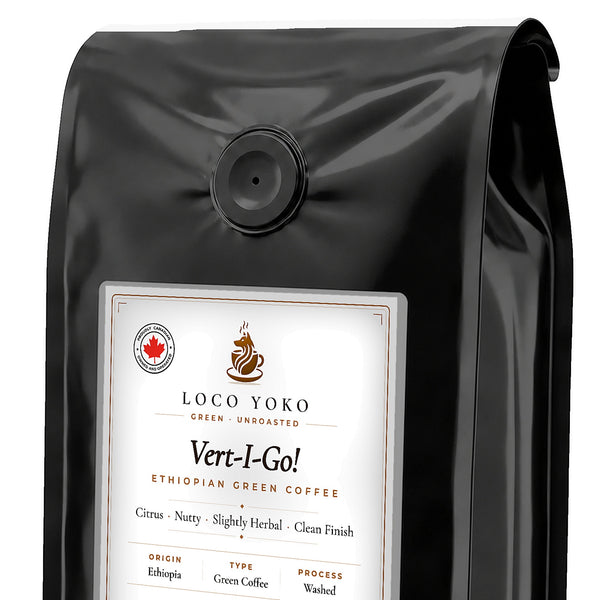
Vert-I-Go!
Citrus · Nutty · Slightly herbal · Clean finish
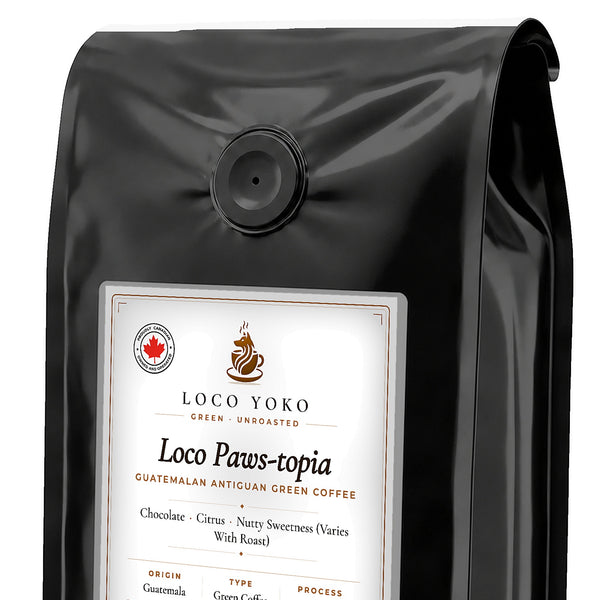
Loco Paws-topia
Chocolate · Citrus · Nutty sweetness (varies with roast)
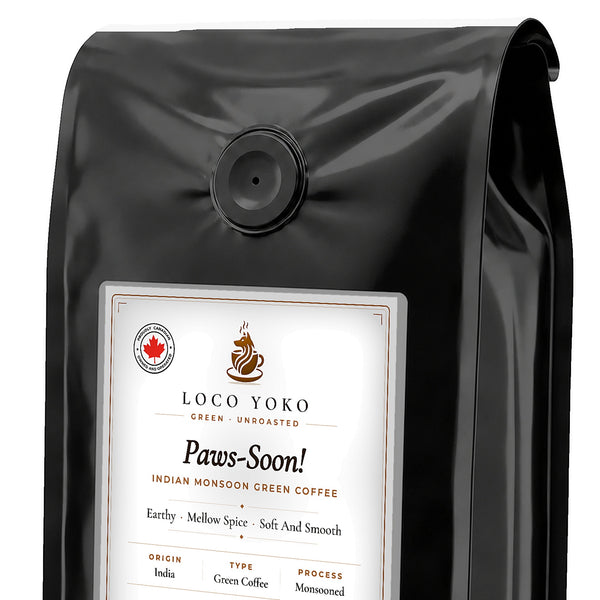
Paws-Soon!
Earthy · Mellow spice · Soft and smooth
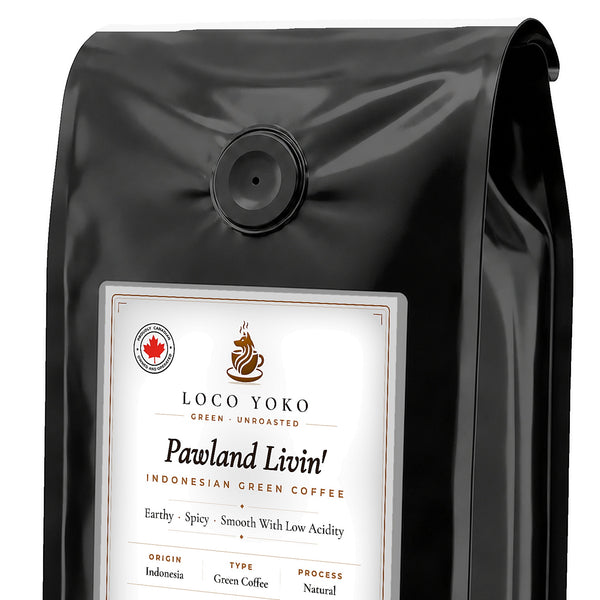
Pawland Livin'
Earthy · Spicy · Smooth with low
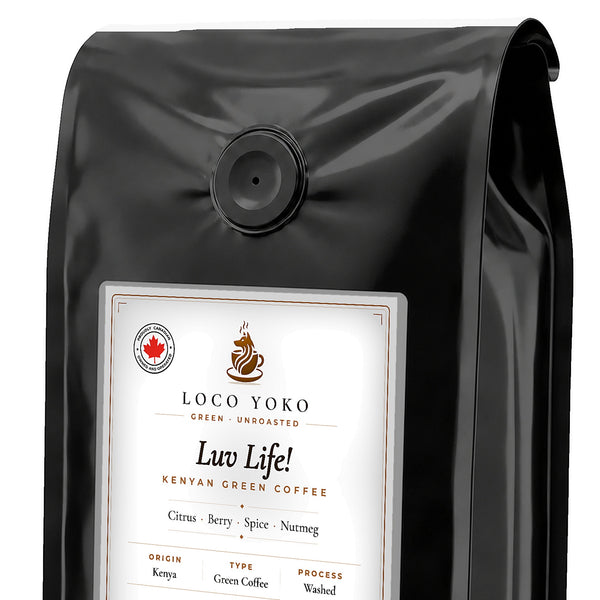
Luv Life!
Citrus · Berry · Spice · Nutmeg
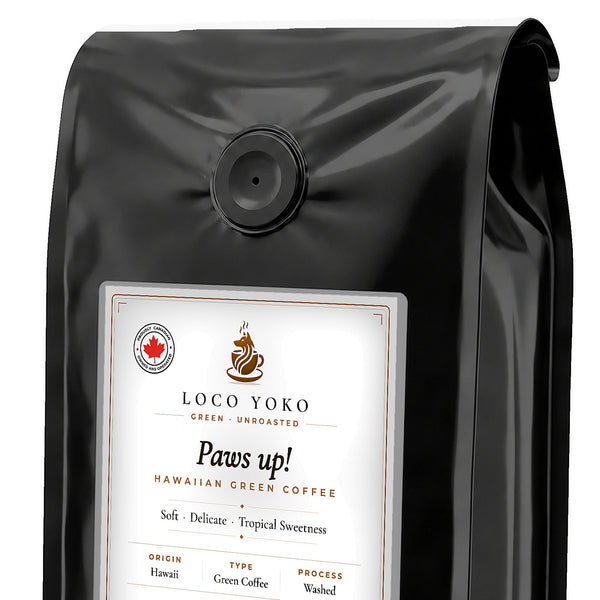
Paws up!
Soft · Delicate · Tropical sweetness
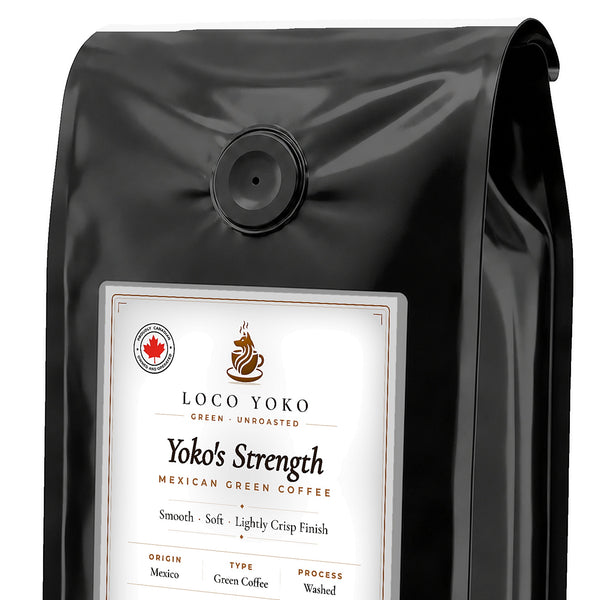
Yoko's Strength
Smooth · Soft · Lightly crisp finish
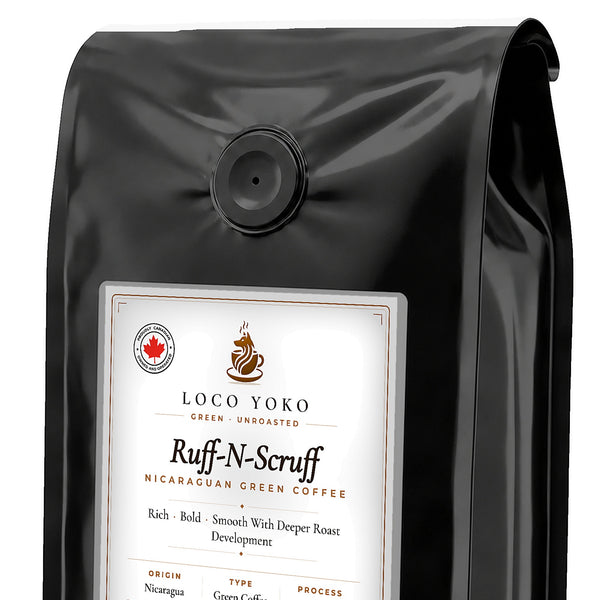
Ruff-N-Scruff
Rich · Bold · Smooth with deeper roast development
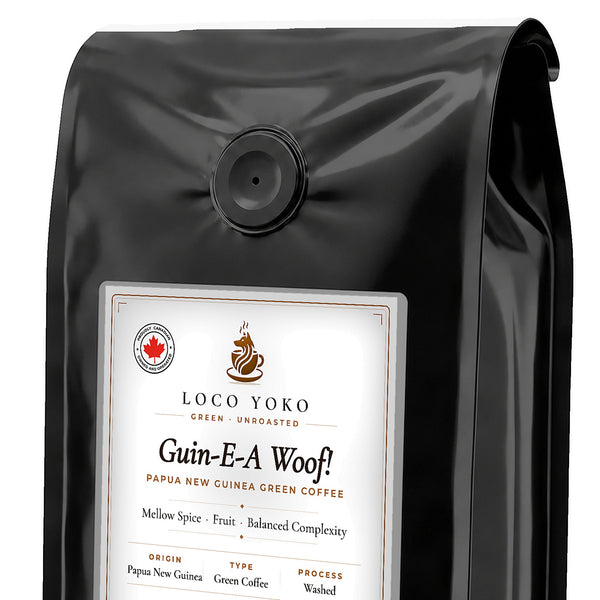
Guin-E-A Woof!
Mellow spice · Fruit · Balanced complexity
Try removing a filter or two.
Tap a choice and we'll take you to the next step.
What Green Coffee Actually Is
Green coffee is simply coffee that hasn't been roasted yet. After a coffee cherry is picked, pulped, fermented or dried, and hulled, what's left is a dense, pale, faintly grassy-smelling seed. That's the green bean — the raw material every cup of coffee starts from before heat transforms it into the brown, aromatic bean you're used to grinding. When we talk about unroasted coffee beans, this is what we mean: agriculturally finished, but chemically still very close to how it grew on the tree.
At LocoYoko we roast every order fresh in Toronto, which means we're handling green coffee daily — bagging it, cupping it, deciding roast curves for it. Selling a portion of that green stock directly to home roasters is a natural extension of the same relationship we already have with the coffee. If you're used to buying our roasted coffee, this collection is the same beans one step earlier in the process.
Where This Green Coffee Comes From
We source single origin green coffee the same way we source our roasted lots — by region, by farm or cooperative, and by processing method, rather than blending anonymous stock. Origins in this collection rotate with harvest seasons, but they consistently draw from the same growing regions behind our roasted lineup: the volcanic highlands of Guatemala's Antigua Valley, the high-altitude farms behind our Kenyan coffee, the wet-processed lots that define our Costa Rica coffee, and heirloom varieties from Ethiopia, one of the oldest coffee-growing regions on earth.
Other lots come from the shaded arabica farms of Mexico, the co-op networks that supply our Nicaraguan coffee, large-scale estates similar to what fills our Brazilian coffee lineup, and smaller volumes from Colombia, the Congo, India, Indonesia, and even limited releases comparable to Hawaiian coffee and Papua New Guinea. If a region isn't currently in stock as green, it's almost always available roasted — check the linked collection for what's on the shelf right now.
Growing region shapes everything about how a green bean will eventually taste once roasted. Altitude slows the ripening of the cherry, which builds density and sugar in the seed. Volcanic soil adds minerality. Rainfall patterns and shade cover affect acidity and body. This is true of raw coffee beans canada roasters source from any origin — the roast doesn't create flavor from nothing, it develops what's already latent in the seed.
Processing: Washed, Natural, and Honey
How a cherry is processed after picking has as much influence on final cup quality as origin does, and it's worth understanding before you buy specialty unroasted coffee for home roasting.
- Washed (wet) process — the cherry skin and fruit pulp are removed before drying, and the beans ferment briefly in water to strip the sticky mucilage layer. This produces a cleaner, brighter, more acidic cup with clearly defined flavors. Most Kenyan and Costa Rican lots use this method.
- Natural (dry) process — whole cherries are dried in the sun with the fruit still intact, and the bean absorbs sugars and fruit character during that slow drying. Natural-processed beans tend to be heavier-bodied, winey, and more fruit-forward. Many Ethiopian and Brazilian lots are processed this way.
- Honey process — a middle path, common in Costa Rica, where some or all of the mucilage is left on the bean during drying. The result sits between washed clarity and natural sweetness.
None of this is visible to the naked eye on a bag of green coffee, which is why sourcing from a roaster who can tell you the processing method — not just the country of origin — matters if you're serious about home roasting.
Green Coffee vs. Roasted Coffee Beans
The difference between green coffee vs roasted coffee beans comes down to heat and time. Roasting takes a green bean from roughly 20% moisture content down to 1-2%, drives off grassy and vegetal compounds, and triggers the Maillard reaction and caramelization that build the sugars, acids, and aromatic oils we associate with "coffee flavor." Green beans, by contrast, are dense, hard on a blade grinder, and smell more like raw legumes or fresh-cut grass than coffee.
Nutritionally, green and roasted coffee diverge too. Roasting reduces the concentration of chlorogenic acids — the naturally occurring antioxidant compounds present at much higher levels in the unroasted seed. This is the whole basis of the green coffee bean extract supplement category: extracts are made by isolating those compounds before roasting degrades them.
Because the two are structurally and chemically different, don't expect to brew whole green beans and get anything resembling coffee. Home roasting is the bridge between the raw agricultural product and the drinkable one — it's the step that unlocks flavor, not just a formality.
Green Coffee Bean Extract: What the Research Actually Shows
A lot of search traffic around green coffee lands on supplements, so it's worth addressing directly, separate from what we sell. Interest in green coffee bean extract benefits is driven mainly by chlorogenic acid content, which some small human trials have linked to modest improvements in blood pressure and blood sugar regulation. The evidence base is limited — most studies are short, small, and often industry-funded — so treat any strong claim with skepticism.
The more heavily marketed claim, green coffee bean extract weight loss, traces back to a small, widely publicized 2012 study that was later retracted after data integrity concerns were raised about the researchers' methods. Larger, better-controlled follow-up research hasn't reproduced dramatic results. If you're buying from us, it's because you want to roast and brew whole beans, not because we're positioning green coffee as a weight-loss product — we sell it for home roasters, not encapsulated extract, and we'd rather be straight with you about that distinction than let the search term do the talking.
Separately, if you're wondering about chlorogenic acid content in unroasted coffee directly: levels vary by species and origin, but robusta beans generally run higher than arabica, and lighter roasting preserves more of the compound than dark roasting. This is one more reason serious home roasters lean toward lighter roast profiles when the goal is preserving the bean's original chemistry rather than maximizing roast-driven sweetness.
What Green Coffee Actually Tastes Like
If you're curious what unroasted beans actually taste like in the literal sense — steeped or chewed raw — expect something closer to an herbal tea than coffee: grassy, slightly bitter, a little astringent, with faint notes of hay or fresh vegetation. Some people do steep green beans as a mild tisane, but it bears almost no resemblance to brewed coffee. The flavor you actually want — chocolate, stone fruit, citrus, caramel, whatever the origin promises — only shows up once heat does its work in the roaster. That's the entire point of buying green and roasting yourself: you control exactly how far that transformation goes.
Home Roasting: Getting Started
For anyone starting out, this is genuinely approachable home coffee roasting beginners territory. You don't need an expensive drum roaster to get a drinkable result. Common starting setups include:
- A stovetop popcorn popper — cheap, fast, and surprisingly effective for small batches. Keep the beans moving constantly.
- A dedicated home roaster — countertop machines built specifically for coffee, offering more control over airflow and temperature.
- An oven or pan — works in a pinch, though even heat distribution is harder to manage and smoke can be a problem indoors.
Whichever method you choose, roast outdoors or with strong ventilation — roasting produces real smoke and chaff. Listen for "first crack," an audible popping sound around 196°C (385°F) that signals the beans have hit a light roast; a "second crack" a few minutes later marks the start of darker roast territory. Track time and temperature so you can repeat, or adjust, a result you liked. And just like our own roasted coffee, freshly roasted beans need a rest — give home-roasted beans at least 24 to 48 hours off-gassing before brewing for the best results.
Buying green coffee beans for home roasting in small trial quantities before committing to a larger bag is a smart way to figure out which origins and processing styles you actually enjoy roasting and drinking, since flavor outcomes shift noticeably by bean density and moisture content.
Roast Level Guidance for Different Origins
Not every green lot wants the same roast level. As a general guide:
- Washed, high-altitude origins (Kenya, Ethiopia, parts of Guatemala) — take these light to medium to preserve bright acidity and origin-specific character.
- Natural-processed, fruit-forward lots (much of Ethiopia, some Brazilian lots) — medium roasts tend to balance the fruit sweetness without tipping into bitterness.
- Dense, lower-altitude origins (Indonesian, some Brazilian) — these can handle medium-dark to dark roasting and often taste better that way, developing body and reduced acidity.
This mirrors exactly how we decide roast profiles in our own Toronto roastery, and it's the same logic worth applying at home once you're buying green coffee by origin rather than by blend.
Organic and Bulk Buying
Demand for organic green coffee beans canada shoppers can trust has grown alongside interest in home roasting generally — certified organic lots are grown without synthetic pesticides or fertilizers, verified through third-party certification rather than a label claim alone. We carry organic-certified lots within this collection when they're in season; availability shifts by harvest, so check current stock rather than assuming a specific origin is always organic.
For roasters going through more volume — cafés testing new origins, serious hobbyists, or anyone roasting weekly — we also support bulk green coffee beans canada orders. Reach out directly if you need quantities beyond what's listed and we'll quote current pricing and availability by origin.
Buying Green Coffee Online in Canada
If you're looking to buy green coffee beans online canada-wide, sourcing matters as much as price. Green coffee is an agricultural product with a shelf life — it degrades slowly in flavor potential the longer it sits, even though it lasts far longer unroasted than roasted. Buying from a working roastery rather than a repackager means the beans are turning over regularly, not sitting in a warehouse for a year before reaching you. As with all our coffee, orders ship free across Canada over $50.
We'd rather sell you green coffee with an honest description of origin and processing than dress it up with vague marketing language. If a lot is inconsistent or past its best window, we simply won't list it — that's true of our roasted coffee and it's true here too.
FAQ
Can I brew unroasted beans without roasting them first?
Not in any way that resembles coffee. Unroasted beans lack the flavor compounds that roasting develops, and steeping them raw produces a grassy, tea-like liquid rather than coffee. Roasting — even a quick stovetop batch — is a required step, not an optional one.
How long does unroasted coffee last before roasting?
Properly stored in a cool, dark, dry place, green coffee holds its roasting potential far longer than roasted coffee does — often a year or more, compared to a few weeks for roasted beans at peak flavor. That said, flavor potential does slowly decline over time, so buying what you'll actually roast within several months gives the best results.
What's the difference between single origin and blended green coffee?
Single origin coffee comes from one country, region, or even one farm, and reflects that specific terroir and processing method. Blends combine beans from multiple origins, usually to balance body, acidity, and sweetness or to hit a consistent flavor profile year-round. Home roasters often start with single-origin lots specifically to learn how one origin behaves before experimenting with their own blends.
Do I need special equipment to roast coffee at home?
No — a stovetop popcorn popper or even a heavy pan can produce a genuinely good first roast. Dedicated home roasters make the process more consistent and easier to repeat, but they're an upgrade, not a requirement, for getting started.
Is green coffee bean extract the same as the beans you sell?
No. Extract is a concentrated supplement made by isolating compounds like chlorogenic acid from unroasted seeds, typically sold in capsule form. What we sell is whole beans intended for home roasting and brewing — an entirely different product and use case, even though both start from the same raw material.
What roast level should a beginner aim for?
Start with a light-to-medium roast and taste the results before pushing darker. Lighter roasts are more forgiving of small timing errors and let you actually taste differences between origins, which is useful feedback while you're still learning how your setup behaves.
Frequently asked questions
The essentials about this collection. Still curious about something?
Ask us anything