
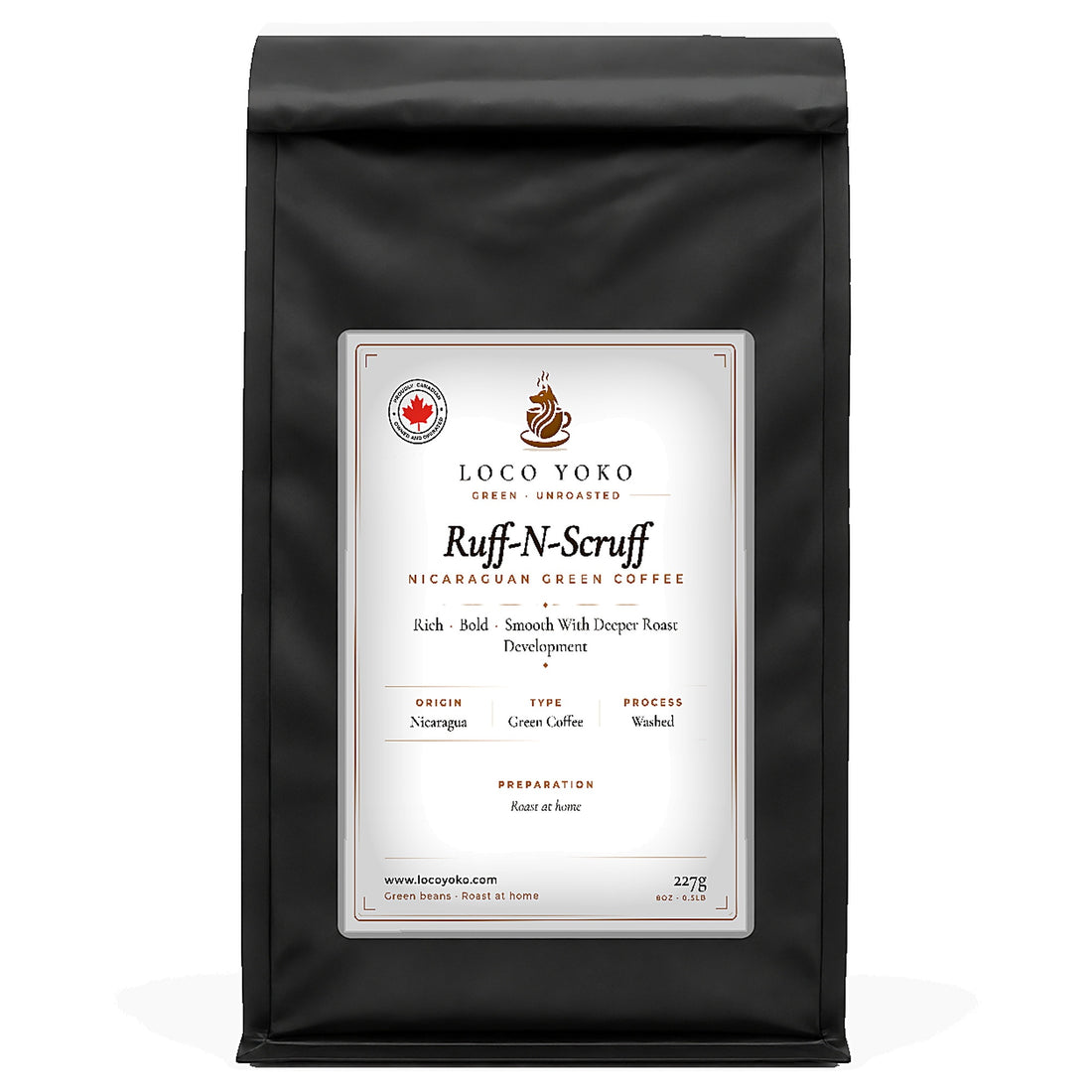


Ruff-N-Scruff - Nicaraguan Green Coffee
Green Coffee Beans | Roasted at Home by You | Brought to You by LocoYoko Coffee Not every roast is easy — but the best ones rarely are. Ruff-N-Scruff is made from Strictly High Grown (SHG) Nicaraguan green coffee beans, known for their bold character and hidden depth....
 2026 Canadian Choice Award
Proud winner
2026 Canadian Choice Award
Proud winner
Cupping notes: Rich · Bold · Smooth with deeper roast development. Single-origin from Nicaragua. Roasted to order and stamped with its roast date — best enjoyed within 4 weeks.
We roast and ship Monday–Friday, usually within 24 hours. Free shipping Canada-wide on orders over $50; flat $6 under. Our 30-day happiness guarantee means we'll make it right.
Pour-over (V60): 1:16 ratio, 22 g coffee to 350 g water at 94 °C, ~2:45 total. Prefer filter or French press? Pick your grind above and we'll dial it in.
The spec sheet.
Every bag is stamped with the day it was roasted. If it's older than 30 days when it reaches you, we'll replace it free.
What Canadians say.
Write a review
Genuinely fresh and full of character — the rich note comes through beautifully. Easily my favourite coffee right now.
You can tell this is small-batch — clean, vibrant, and the rich is spot on. Beautiful packaging too.
Bold without being harsh — exactly my kind of coffee. The subscription just shows up and I'm thrilled.
Pairs well with.
Green Coffee, Not Ready-to-Brew: What Ruff-N-Scruff Actually Is
Let's clear something up before you scroll any further: Ruff-N-Scruff is unroasted. These are raw, dense, slightly grassy-smelling Nicaraguan green coffee beans in the exact state they arrived at the mill after processing and drying. There's no aroma of toasted caramel here, no oily sheen, no ready-to-grind convenience. If you're looking for a bag you can crack open and brew tonight, you want one of our roasted lineup instead. If you're the kind of person who owns a popcorn popper you've quietly repurposed, or you've been eyeing a home roaster for months, keep reading — this one's for you.
We source our Nicaraguan coffee from small producer groups in the highlands, where volcanic soil and high elevation slow the cherry's maturation and build the kind of sugar density that rewards a careful roast. Selling it green means we're handing you the raw material at its freshest possible point — no oxidation clock has started ticking on the oils yet, because there aren't any oils yet. That clock only starts once heat cracks the bean open.
Why Home Roasters Choose Nicaraguan Green Coffee
If you've spent any time in home-roasting forums, you already know that nicaraguan green coffee shows up constantly as a recommended starting point for people building their roasting chops, and for good reason. Nicaragua's beans tend to be forgiving. They don't scorch as easily as some higher-density Kenyan or Ethiopian lots, and they carry a naturally balanced sweetness — think brown sugar, light stone fruit, a clean cocoa finish — that stays pleasant across a fairly wide window of roast levels. That means if your first attempt runs a touch long or a touch short of your target, you're still likely to end up with something drinkable, which is exactly what you want when you're learning to read a roast by sound, smell, and color rather than by a fixed number on a dial.
Buying green coffee beans nicaragua growers have carefully picked, wet-processed, and dried also means you're getting full control over the outcome. Roasting is where the vast majority of a coffee's final flavor gets decided — far more than most people realize. The same lot pushed to a light city roast will taste bright, floral, and tea-like. Push that identical lot to a full city or Vienna roast and you'll get deeper caramel, less acidity, more body. When you buy pre-roasted, someone else made that decision for you. When you buy green, you get to make it three, four, ten different ways until you land on exactly what your palate wants.
There's also a simple, practical reason serious coffee drinkers move toward roasting their own: freshness. Roasted coffee starts losing its best aromatics within about two weeks of roasting, degassing carbon dioxide and slowly going flat. Green coffee, on the other hand, is remarkably stable. Stored properly, it holds its character for a year or more without much decline. Buying nicaraguan green coffee in bulk and roasting small batches weekly means every cup you drink is days, not weeks, from the roaster.
What Makes This Lot Worth Roasting
Ruff-N-Scruff isn't a random green lot we picked up cheap. It comes from the same relationships behind our roasted Oh, Paw-lease Nicaraguan Coffee, grown in the same highland regions where cool nights and rich volcanic soil produce dense, slow-maturing cherries. The beans are washed and patio-dried, which gives them a cleaner, brighter cup profile than natural-processed coffees and makes flaws easier to spot visually before you roast — useful information when you're hand-sorting a batch for the first time. Expect a classic Central American flavor foundation once roasted: balanced acidity, milk chocolate, a light nutty sweetness, and a smooth body that plays well at nearly any roast level from light to dark.
If you want to see what this coffee tastes like already roasted and dialed in by our team, our Nicaraguan coffee collection has options ready to brew today. But if you're here for the green beans, you're getting the same base material with all the roasting decisions still ahead of you.
Getting Started: Equipment You Actually Need
Home roasting has a low floor and a high ceiling, which is part of the appeal. You don't need to spend serious money to get a legitimately good roast going, though you can go as deep into gear as your budget allows.
- Stovetop skillet or popcorn popper: The cheapest entry point. A hot-air popcorn popper with the internal screen removed works surprisingly well for small batches and gives you decent airflow to carry off chaff.
- Dedicated home roasters: Machines built specifically for roasting (drum or fluid-bed style) give you better temperature control and more consistent results batch to batch. Worth the investment if you're roasting weekly.
- A reliable thermometer or built-in temperature readout: Especially important once you move past your first few batches, since roast level is really a function of both time and internal bean temperature.
- A cooling tray or colander: You need to stop the roast fast once beans hit your target, or carryover heat will push them further than you want.
- Outdoor space or strong ventilation: Roasting produces smoke and chaff. A garage, covered porch, or well-vented kitchen with the exhaust fan running makes a real difference.
Start small. A four-ounce test batch tells you almost everything a full-pound batch would, at a fraction of the risk, and it lets you dial in your specific setup — every popper, skillet, and roaster runs a little differently.
A Simple First Roast, Step by Step
- Measure out a small batch — 100 to 150 grams is plenty for a first attempt — and give the beans a quick visual sort for any obvious defects.
- Preheat your roaster or popper for a minute or two before adding beans, so you're not fighting a cold chamber.
- Add the beans and keep them moving constantly, whether that's the popper's built-in agitation or your own stirring in a skillet.
- Listen for "first crack" — an audible popping sound, similar to popcorn, that signals the beans have hit roughly 385–400°F internally. This is the earliest point the coffee is technically drinkable, landing you in light roast territory.
- Decide how much further to push it. A minute or two past first crack lands you around a medium roast. Pushing toward a second, quieter round of cracking gets you into darker, oilier territory.
- Dump the beans into your cooling tray immediately and stir or fan them to halt the roast quickly.
- Let the beans rest. This part trips up a lot of first-timers — fresh-roasted coffee actually tastes better after resting 12 to 48 hours, once the worst of the CO2 has released.
Storing Green Beans (and What Changes Once You Roast)
One of the underrated advantages of buying unroasted nicaraguan coffee is how easy it is to store. Keep the green beans in a cool, dark, dry spot — a sealed container in a pantry works fine — and they'll hold their quality for many months without special equipment. There's no rush to roast the whole bag the moment it arrives.
Roasted coffee is a different story. Once roasted, use a one-way valve bag or airtight container, keep it away from light and heat, and try to work through it within two to three weeks for the best flavor. This is exactly why so many home roasters land on a small-batch rhythm: roast what you'll drink in the next week or two, and let the rest of your green stock wait patiently in the pantry until you're ready for it.
Finding Your Roast Level
There's no universally "correct" roast for this lot — it genuinely depends on what you like drinking. If you're chasing bright acidity and origin character, stop shortly after first crack for a light roast. If you want a more familiar, balanced cup with rounded sweetness and chocolate notes, ride it another minute or two into medium territory. Darker roasts trade some of that origin nuance for bolder, smokier, heavier-bodied results — a valid choice, just a different goal. Keep a simple log of your batch weight, roast time, and tasting notes for the first several roasts. It's the fastest way to repeat your favorites and avoid repeating your mistakes.
Explore the rest of our coffee collection for more origins to try once you've got your roasting rhythm down — pairing a familiar green bean like this one against something new is one of the best ways to sharpen your palate.
Common Mistakes First-Time Home Roasters Make
Almost everyone who starts roasting green coffee at home makes the same handful of errors early on, and knowing them ahead of time will save you a few disappointing batches. The most common one is rushing the roast with too much heat too fast, which can scorch the outside of the bean while the inside stays underdeveloped — you'll taste this as a sharp, papery bitterness sitting on top of an otherwise thin, sour cup. The fix is almost always patience: a slightly slower ramp gives the heat time to penetrate the bean evenly.
If you've ordered nicaragua green coffee beans before and ended up with a scorched or uneven batch from a different supplier, this same too-hot-too-fast pattern is usually why. The second common mistake is skipping the rest period. It's tempting to grind and brew a batch the moment it's cooled, especially after waiting for a roast to finish, but fresh-off-the-roaster coffee is still releasing carbon dioxide and often tastes flat or oddly sour right away. Give it at least twelve hours, ideally a full day or two, before you judge it.
The third is under-agitating. Whether you're using a skillet, a popper, or a drum roaster, beans that sit still too long against a heat source scorch unevenly, leaving you with a mottled, inconsistent roast across the batch. Constant movement is not optional — it's the difference between a roast you're proud of and one you dump.
Finally, many first-timers roast too large a batch too soon. It's much harder to keep 500 grams of beans moving evenly in a small home setup than it is 100 grams. Nail your process on small batches first, then scale up once you understand how your specific equipment behaves.
Why Buy Direct From a Roaster Instead of a Generic Green Supplier
Anyone can find bulk green coffee for sale online, but sourcing matters just as much for green beans as it does for beans you buy already roasted. When you buy green coffee beans nicaragua farms produced through a roaster who already has relationships in the region — rather than an anonymous bulk exporter — you benefit from the same quality control that shapes our roasted lineup. We taste-test the lots we bring in before we ever offer them green, which means the beans in your bag passed the same standards as the ones we roast ourselves and sell as finished coffee.
That matters more than people expect. Green coffee that's been poorly stored, sourced from inconsistent lots, or blended from multiple harvests without disclosure can roast unpredictably, giving you scorched batches or flat, muddled cups no matter how carefully you follow a roast curve. Buying from a source that stands behind its sourcing takes one major variable out of the equation, leaving roast technique as the main thing left for you to master.
Building a Roasting Habit That Sticks
The home roasters who stick with this hobby long-term tend to treat it less like a one-off experiment and more like a small weekly ritual. Set aside a regular time — Sunday afternoon works well for a lot of people — to roast enough for the week ahead. Because green coffee stores so well, you can buy a larger quantity of Ruff-N-Scruff up front and simply portion off what you need each week, always roasting from beans that are still well within their peak green shelf life.
Over time, you'll start noticing patterns: how ambient temperature and humidity subtly change your roast times, how a slightly darker roast performs better with your specific brew method, how resting time changes the cup depending on roast level. None of that comes from reading about roasting — it comes from doing it, batch after batch, with a coffee forgiving enough to let you experiment without constantly ruining your morning cup. That's exactly the role Ruff-N-Scruff is built to play.
FAQ
Is Ruff-N-Scruff safe to brew without roasting first?
No. Green coffee is not intended for direct brewing — it's dense, starchy, and grassy-tasting in its raw state. It needs to go through a roast, even a light one, before it develops the flavors and solubility you associate with coffee.
How much green coffee do I need for my first roast?
Start with a small test batch of around 100 to 150 grams. It's enough to judge flavor and roast level without wasting much bean if the first attempt runs short or long.
Do I need a dedicated roasting machine to get started?
Not at all. Many home roasters start with a modified hot-air popcorn popper or a stovetop skillet and get very usable results. A dedicated roaster becomes worthwhile once you're roasting regularly and want more consistency.
How long can I store the green beans before roasting them?
Quite a while. Kept sealed in a cool, dark, dry place, green coffee holds up well for many months — far longer than roasted coffee, which is best used within a few weeks.
What does this lot taste like once roasted?
Expect a classic Central American cup: balanced acidity, milk chocolate and light nutty sweetness, and a smooth, forgiving body that holds together well from light to darker roast levels.
Can I buy this coffee already roasted if I don't want to roast it myself?
Yes. Browse our Nicaraguan coffee collection, including Oh, Paw-lease, for beans from the same growing regions that our team has already roasted and dialed in for you.
Frequently asked questions
The essentials about this coffee. Still curious about something?
Ask us anything