
Costa Rica Coffee
Costa Rica's Tarrazú highlands, honey-processed at 1,200–1,900m for a clean cup with bright citrus and natural sweetness. Roasted to order and shipped free across Canada over $50.
Products in this collection
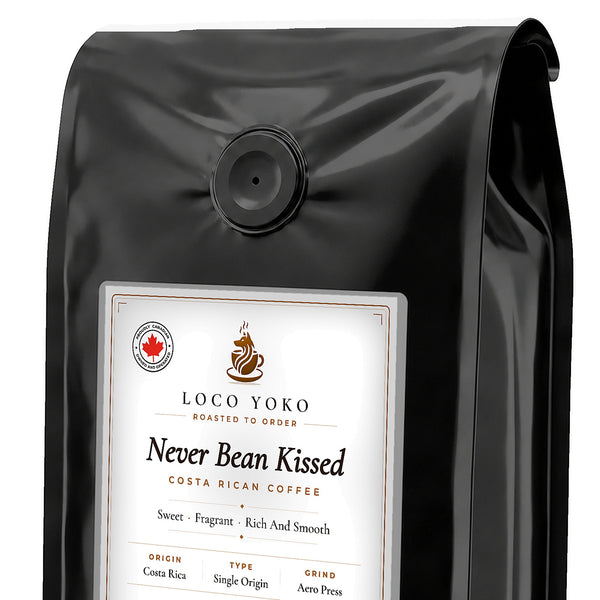
Never Bean Kissed
Sweet · Fragrant · Rich and smooth
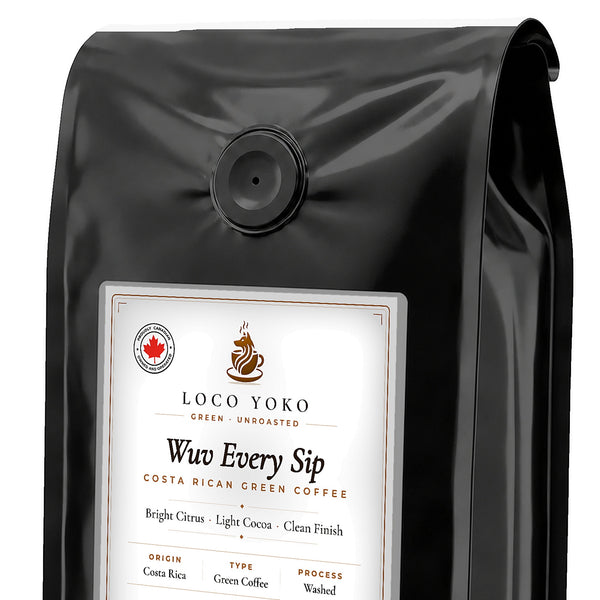
Wuv Every Sip
Bright citrus · Light cocoa · Clean finish
Try removing a filter or two.
Tap a choice and we'll take you to the next step.
Costa Rica: The Benchmark for Clean, Bright Coffee
If you've spent any time drinking specialty coffee, Costa Rica is probably the country you'd point to as the reference point for what "clean" tastes like. Costa Rica coffee beans have a reputation built over more than a century of deliberate, government-backed quality control, and that reputation is earned. When we're building out a lineup of single origin costa rica coffee for the roastery, this is one origin we never skip, because it does something few other countries do consistently: balance acidity, sweetness, and body without ever tipping into the muddiness or funk you sometimes get from origins with looser processing standards.
Costa Rica made a decision decades ago that shaped everything about how its coffee tastes today. In 1989, the country banned the cultivation of the lower-quality robusta species entirely, meaning every bag of costa rica coffee beans you buy is 100% arabica by law. On top of that, Costa Rica requires all wet mills (locally called "beneficios") to be licensed and regulated, which keeps processing water quality, fermentation times, and drying practices far more consistent than in countries where processing is left entirely to individual farmers. The result is a national coffee identity that's unusually reliable from farm to farm and year to year.
Growing Regions: Tarrazú and Beyond
Costa Rica is a small country, but it has eight officially recognized coffee-growing regions, each with its own microclimate, elevation range, and flavor tendencies. The most famous by a wide margin is Tarrazú, a mountainous zone south of San José that produces what many buyers consider the country's finest lots. Costa rica tarrazu coffee grows at elevations often exceeding 1,500 to 1,900 meters, on steep volcanic slopes with rich, well-drained soil. That combination of high altitude volcanic coffee costa rica terrain, cool nights, and consistent rainfall patterns slows down cherry maturation, which concentrates sugars and acids in the bean and produces the dense, hard beans that give Tarrazú lots their signature brightness and structure.
Other notable regions include Central Valley (Valle Central), where the industry historically got its start and where volcanic soil from Poás and Irazú volcanoes contributes real minerality to the cup; West Valley (Valle Occidental), known for fruitier, sweeter profiles; Tres Ríos, a small but historically prized zone near San José; and Brunca, in the south near the Panama border, which tends to produce fuller-bodied, less acidic coffee than the highland regions. When a bag is simply labeled "Costa Rica" without a regional designation, it's often a blend of several of these zones, but costa rica tarrazu whole bean coffee specifically will almost always carry that regional name on the label because it commands a premium and buyers seek it out by name.
Processing: Where Costa Rica Really Sets Itself Apart
Costa Rica is arguably the country most responsible for popularizing the honey process as a mainstream category. Traditional washed processing removes the fruit skin and pulp, ferments the beans to break down the remaining mucilage, then washes and dries them — this produces the clean, crisp, high-acidity cup most people associate with classic costa rica coffee taste notes. Honey processing, by contrast, leaves some or all of the sticky mucilage layer on the parchment during drying. Costa Rican mills categorize this by color — yellow, red, and black honey — depending on how much mucilage is left and how long the beans dry, with black honey being the most intensive and producing the most fruit-forward, syrupy sweetness.
You'll also find natural-processed lots, where the whole cherry dries intact around the bean, producing heavier body and bolder, more fermented-fruit character, though washed and honey processing remain far more common given Costa Rica's regulated wet-mill infrastructure and reliable water access at higher elevations. This variety of processing methods, combined with strict regulation, is a big part of why buyers looking for fair trade organic costa rican coffee can usually find exactly what they want without much guesswork — the country's cooperative and micro-mill system is transparent about method, lot, and farm of origin in a way a lot of origins simply aren't yet.
Costa Rica Coffee Flavor Profile
Ask ten roasters to describe costa rica coffee flavor profile and you'll hear the same handful of words over and over: bright, clean, balanced, citrusy, honeyed. Classic washed Tarrazú tends to lead with orange or lemon-forward acidity, a medium body, and a finish that's often compared to brown sugar or light caramel. It's rarely muddy or heavy, which is exactly why it became the benchmark cup that other origins get measured against in cupping labs. When you taste costa rica coffee chocolate citrus notes together in the same cup — and you often will, especially in Central Valley or Tres Ríos lots — that's the volcanic soil and careful processing working in tandem: the chocolate and nutty base notes come from soil mineral content, while the citrus brightness comes from altitude and fermentation control.
Honey-processed lots shift that profile toward stone fruit, dried apricot, and a rounder, syrupy sweetness with softer acidity than the washed version. If you're newer to single origin coffee and want an easy entry point into what makes Central American coffee distinct from, say, African or Southeast Asian origins, Costa Rica is the place to start — the flavors are approachable and rarely polarizing, without sacrificing complexity.
Roast Level: Getting the Most Out of These Beans
Because Costa Rican coffee's whole appeal is built around clarity and brightness, we generally recommend a costa rica coffee light roast or costa rica coffee medium roast rather than pushing it dark. A light roast preserves the citrus acidity and floral top notes and is the better choice if you're brewing pour-over or a clean drip method where you want to taste every layer distinctly. A medium roast rounds off some of that acidity and brings the caramel and chocolate notes further forward, which tends to work better for drip coffee makers, moka pots, and anyone who finds light roasts a little too sharp first thing in the morning. We'd steer you away from a dark roast here — pushing a Tarrazú past second crack burns off the very acidity and citrus character that makes the origin worth seeking out in the first place, and you end up with a generic roasty cup that could be from almost anywhere.
Whatever roast level you land on, remember that every batch we send out is roasted to order in Toronto, and we'd always recommend giving the beans a 24-72 hour rest after roasting before you brew. That resting window lets residual CO2 escape the bean structure, which noticeably smooths out the extraction and lets those bright top notes show properly instead of getting muted by excess off-gassing.
How Costa Rica Compares to Other Origins
Context helps here, because "clean and bright" only means something in comparison to what else is out there. Against our coffee from neighboring Nicaragua, Costa Rica tends to show more defined acidity and a lighter body — Nicaraguan lots, especially from Jinotega and Matagalpa, often lean sweeter and nuttier with less citrus snap. Compared to the beans we bring in from Peru, Costa Rica is usually the brighter, more structured cup, while Peruvian coffee (much of it certified organic, grown by smallholder cooperatives at similarly high elevations) tends toward a softer, more chocolatey profile with gentler acidity.
Step outside Latin America and the contrast gets sharper. Coffee from the Papua New Guinea highlands shares Costa Rica's high-altitude growing conditions but produces a heavier-bodied, more earthy and spice-driven cup, closer in some ways to an Indonesian profile than anything from Central America. If you're trying to figure out where Costa Rica fits in a broader coffee education, it's genuinely one of the best reference points precisely because its flavor is so legible — you can taste the altitude, you can taste the processing, and you can taste the volcanic soil, all without any single element overwhelming the others. For anyone building out a home tasting flight, we'd suggest pulling a bag from our full coffee lineup alongside a Costa Rican lot so you have a clear baseline to compare everything else against.
Sourcing, Certifications, and What to Look For
When you're shopping for costa rican coffee online canada options, a few labels are worth understanding rather than just skimming past. Organic certification means the farm avoided synthetic pesticides and fertilizers, which matters both environmentally and, some drinkers report, in cup clarity, since there's no chemical residue interference during processing. Fair trade certification guarantees a minimum price floor to the farmer or cooperative regardless of market swings, which is especially relevant in Costa Rica, where labor costs are higher than in most coffee-growing countries and farms rely on price stability to stay viable. Combined, fair trade organic costa rican coffee tends to come from smaller cooperatives and family farms rather than large industrial operations, and you'll often see a specific mill or cooperative name on the bag rather than just a country of origin.
We'd also point out that Costa Rica's micro-mill movement, which took off in the early 2000s, means a lot of what's available today comes from small producers processing their own cherry on-site rather than sending it to a large central wet mill. That gives you far more traceability, down to the specific farm and sometimes the specific plot, than you'd get from most other origins at a comparable price point. If traceability and process transparency matter to you as a buyer, Costa Rica is one of the easier origins to source with confidence.
If you're curious about processing on a more technical level, or you roast at home, it's worth a look at our green coffee selection — buying unroasted lots is the clearest way to see exactly what a washed versus honey-processed Costa Rican bean looks like before it ever hits the roaster, and it's a good way to understand why processing has such an outsized effect on the final cup.
Ordering and Shipping
Every order ships free across Canada on orders over $50, and that applies to costa rica coffee beans free shipping canada the same as anything else in the catalog — no separate threshold or surcharge for single-origin lots. We roast to order out of Toronto rather than holding pre-roasted inventory, which means the bag you receive was roasted days, not months, before it reaches your door. If you're searching for buy costa rica coffee beans canada options and comparing roasters, freshness and roast date transparency are the two things worth checking before anything else — a lot of the "clean, bright" reputation Costa Rica has built over the decades gets lost fast if the beans have been sitting on a shelf for months before you brew them. Ask around in Canadian specialty circles and you'll hear a lot of the same names come up for best costa rican coffee canada has to offer, but the honest answer is that "best" mostly comes down to freshness at the point you buy it — a mediocre-on-paper lot roasted three days ago will usually beat a famous-name lot that's been sitting in a warehouse for two months.
FAQ
What makes Costa Rica coffee different from other Central American origins?
The biggest factor is regulation. Costa Rica banned robusta cultivation outright and requires all wet mills to be licensed, which keeps quality and processing consistency unusually high nationwide. Combine that with genuinely high-altitude volcanic growing regions like Tarrazú, and you get a national profile that's more reliably bright, clean, and balanced than you'll find from countries with less centralized quality control.
Is Tarrazú coffee always better than other Costa Rican regions?
Not necessarily better, but it is the most consistently prized. Tarrazú's high elevation and volcanic soil produce dense beans with pronounced acidity and structure, which is why costa rica tarrazu coffee commands a premium. But regions like West Valley or Tres Ríos can produce equally excellent, just differently styled, cups — West Valley lots tend to be fruitier and sweeter, for example, so it really comes down to what profile you're after.
Should I choose a light roast or medium roast for Costa Rican beans?
It depends on your brew method and taste preference, but a costa rica coffee light roast will preserve more of the citrus acidity and floral character that makes the origin distinctive, especially for pour-over. A costa rica coffee medium roast softens that acidity and pushes the caramel and chocolate notes forward, which many people find more approachable for everyday drip coffee. We'd avoid dark roasting this origin since it tends to mute the very qualities that make it worth buying in the first place.
What does washed versus honey processed actually change in the cup?
Washed processing strips the fruit pulp before fermentation and drying, producing the classic crisp, high-acidity, tea-like clarity Costa Rica is known for. Honey processing leaves some of the sticky mucilage on during drying, which adds body and shifts the flavor toward stone fruit and syrupy sweetness with softer acidity. Neither is objectively better — it's a genuine style difference, and trying both from the same region is one of the best ways to understand how processing shapes flavor independent of terroir.
Is Costa Rican coffee always organic or fair trade?
No, not automatically — those are separate certifications a farm or cooperative has to pursue and pay for, and plenty of excellent Costa Rican coffee isn't certified simply because small farms can't always afford the certification process. That said, Costa Rica has a strong concentration of small cooperatives and micro-mills, so fair trade organic costa rican coffee is easier to find here, with better traceability, than in many other origins.
How should I store and brew Costa Rican beans once they arrive?
Keep the bag sealed in a cool, dark cupboard rather than the fridge or freezer, and let freshly roasted beans rest 24 to 72 hours before brewing so residual CO2 can escape and the extraction evens out. For pour-over or drip methods, a medium-fine grind suits Costa Rica's bright, structured profile well since it lets the acidity come through clearly without over-extracting into bitterness.
Frequently asked questions
The essentials about this collection. Still curious about something?
Ask us anything