
Mexican Coffee
Mexico's Chiapas and Veracruz highlands, grown 900–1,700m for a mild, easy-drinking cup with soft nutty sweetness and a hint of citrus. Roasted to order and shipped free across Canada over $50.
Products in this collection
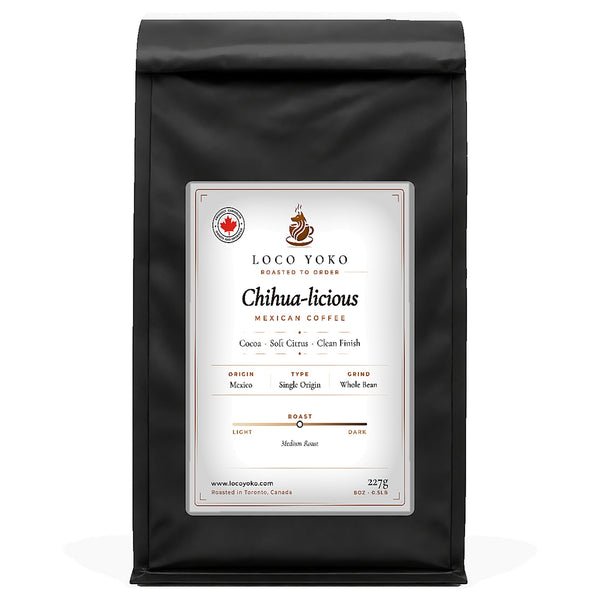
Chihua-licious
Cocoa · Soft citrus · Clean finish
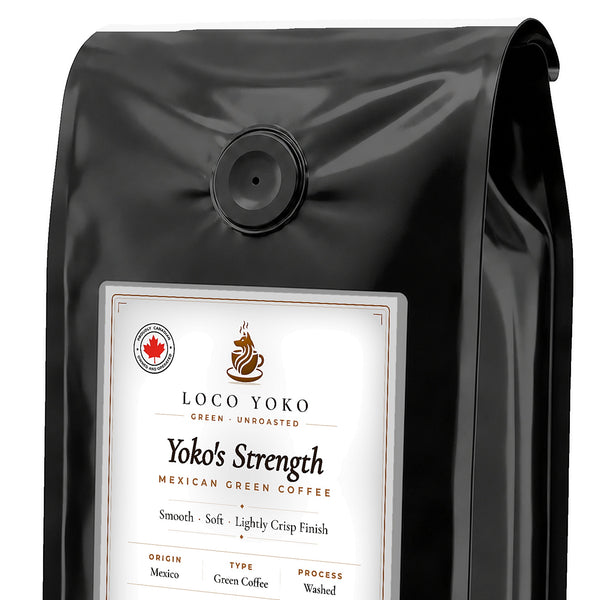
Yoko's Strength
Smooth · Soft · Lightly crisp finish
Try removing a filter or two.
Tap a choice and we'll take you to the next step.
Mexican Coffee: A Grower's Guide to Chiapas, Oaxaca, and Veracruz
Mexico is one of the largest coffee-producing countries in the world, yet it rarely gets the spotlight that Colombia, Ethiopia, or Guatemala do. That's a shame, because mexican coffee beans deliver some of the most balanced, food-friendly cups in the specialty world — soft acidity, real sweetness, and a chocolate-and-nut backbone that makes them a reliable everyday roast rather than a novelty. If you're building out a rotation of single-origin coffees, Mexico deserves a permanent spot alongside your Costa Rican lots and other Central American staples.
This guide covers where the coffee grows, how it's processed, what it tastes like, how to buy it, and how it stacks up against the other origins we carry. Think of it as the reference page for everything above — the products in this collection are the current harvest lots we've selected; this article is the context for understanding what's in the bag.
Where Mexican Coffee Grows
Mexico's coffee belt runs along its southern and central highlands, and three states do most of the heavy lifting: Chiapas, Oaxaca, and Veracruz. Each has its own microclimate and its own reputation.
Chiapas borders Guatemala and shares much of its terrain — the Sierra Madre de Chiapas mountains push farms up to 1,200–1,800 meters, which is high enough to slow cherry development and concentrate sugars. mexican chiapas coffee beans are generally considered the country's benchmark: dense, well-structured, and consistently sweet. Towns like Tapachula, Motozintla, and the Frailesca region are where you'll find the bulk of export-quality lots. A huge share of Chiapas production comes from smallholder cooperatives, many of them Indigenous Tzeltal and Tzotzil farming communities working plots of one to five hectares.
Oaxaca, further west, grows at slightly lower average elevations but makes up for it with volcanic soil and a long dry season that's ideal for patio drying. Oaxaca coffee beans tend to run a touch softer and rounder than Chiapas lots — less bright acidity, more straightforward sweetness — which makes them a favorite for drinkers who want a gentler cup.
Veracruz, on the Gulf side, is Mexico's oldest coffee-growing region (coffee arrived here from Cuba in the late 1700s) and includes the Coatepec and Huatusco districts. Veracruz coffee is often milder still, with a shorter, cleaner finish — useful in blends or for drinkers new to single origin.
Altitude is the single biggest driver of quality across all three regions. Farms above 1,200 meters — sometimes called "altura" or "strictly high grown" lots — produce denser beans with more developed sugars, which is why the best Mexican lots are almost always marketed by elevation as much as by region.
Processing: Mostly Washed, Increasingly Experimental
The overwhelming majority of Mexican coffee is wet-processed (washed). Cherries are depulped shortly after picking, fermented in tanks for 12–36 hours to break down the mucilage, washed clean, and then dried on raised beds or patios. Washed processing is what gives Mexican coffee its trademark clarity — it strips away fruit-forward funk and lets the bean's own sugars and the soil's mineral character come through unobstructed. That's a big part of why the mexican coffee flavor profile reads as "clean and balanced" rather than wild or fermented-tasting.
That said, honey and natural processing have been gaining ground over the last decade, especially among smaller Chiapas and Oaxaca producers looking to differentiate their lots in a competitive export market. Honey-processed Mexican coffee keeps some or all of the mucilage on the bean during drying, adding body and a touch more sweetness without pushing all the way into the boozy, fruit-bomb territory you sometimes get from natural-processed African coffees. If you've tried naturals from our Papua New Guinea offerings, Mexican honey process is a much gentler introduction to that style.
Mexican Coffee Taste Notes
If you're trying to pin down mexican coffee taste notes in a cupping session, here's what shows up consistently:
- Milk chocolate and cocoa, especially in Chiapas and Veracruz lots
- Roasted almond, walnut, or hazelnut
- Brown sugar or light caramel sweetness
- Mild citrus or red apple acidity in higher-altitude Chiapas lots
- A soft, round body — rarely heavy, rarely thin
What you generally won't find is the bright, wine-like acidity of an Ethiopian natural or the syrupy, fruit-forward intensity of some Central American washed lots. Mexican coffee plays it straighter, which is exactly why it works so well as a daily driver, a diner-style drip coffee, or the backbone of a house blend. The mexican coffee chocolate nutty notes people talk about aren't marketing shorthand — they're a direct result of the varietals grown (mostly Bourbon, Typica, and Caturra) combined with washed processing and mid-range altitude.
How Mexican Coffee Compares to Other Origins
Because Mexico sits geographically and stylistically between Central America and the U.S. specialty market, it's a useful reference point against other origins we roast.
Against our Costa Rica lots, Mexican coffee is usually softer and less acidic — Costa Rican coffee, especially from Tarrazú, tends to have brighter citrus and a heavier body from more controlled micro-mill processing. Against Nicaragua, the two origins are closer cousins: both lean toward chocolate and nut notes with moderate acidity, though Nicaraguan lots from Jinotega and Matagalpa can bring a bit more red-fruit sweetness. If you've had coffee from Papua New Guinea, that's a useful contrast case — PNG lots run heavier-bodied and earthier, sometimes with a distinct tropical fruit or spice note that's much more assertive than anything you'll find in a Mexican cup.
In short: reach for Mexican coffee when you want approachable, balanced, and consistent. Reach for the brighter Central Americans or the funkier Africa/Pacific lots when you want something more assertive.
Organic and Fair Trade Certification
Mexico produces more certified organic coffee than any other country in the world, and Chiapas and Oaxaca account for most of it. This isn't a marketing footnote — a huge percentage of Mexican coffee is grown by smallholder families on steep, shaded plots where synthetic inputs were never affordable in the first place, so organic certification often just formalizes existing practice. If you're specifically shopping for organic mexican coffee beans, look for certification from bodies like CERTIMEX (Mexico's own organic certifier) alongside USDA Organic.
Fair trade certification is similarly common, run through cooperatives that pool small farms' harvests to meet export volume minimums and negotiate better pricing collectively. Fair trade mexican coffee matters here specifically because so much of the country's production comes from farms under five hectares — cooperative fair trade structures are often the only realistic path these growers have to direct export pricing instead of selling at whatever the local coyote (middleman buyer) offers.
Buying and Roast-Level Guidance
When you're shopping for mexican coffee whole bean online, a few things are worth checking before you buy: elevation (higher is generally better, and Chiapas lots above 1,300m are a safe bet), processing method (washed for clarity, honey if you want extra body), and roast date. Because Mexican beans tend to be lower-density than, say, a hard-bean Guatemalan or a Kenyan AA, they roast a little faster and are more forgiving of a slightly heavier hand.
Mexican coffee medium roast is where most of these beans shine. Medium roast preserves the chocolate-and-nut character and the coffee's natural sweetness without dulling it under heavy caramelization. It's also the roast level that shows off regional differences most clearly — you can actually taste the difference between a Chiapas and an Oaxaca lot at medium, whereas a dark roast tends to flatten that distinction.
Mexican coffee dark roast isn't wrong, it's just a different goal. Dark roast pushes the sugars into heavier caramelization and brings out a bittersweet, almost baker's-chocolate quality — good for a bold drip coffee or a straightforward espresso base, but you'll lose most of the subtle fruit and altitude-driven acidity that makes single-origin Mexican interesting in the first place. Our general advice: if you're drinking it black or pour-over, go medium; if it's headed into a milk drink or a big pot of drip for a crowd, dark roast Mexican holds up fine.
For brewing, Mexican coffee's balanced profile makes it genuinely versatile — it works in a drip machine, a French press, pour-over, or espresso without needing to be babied. As with everything we roast, give it a 24 to 72 hour rest after the roast date before brewing; that resting window lets residual CO2 escape and lets the flavors settle, which matters more for these subtler, chocolate-forward cups than it does for a loud, fruit-bomb natural where the intensity can mask an under-rested bean.
Single Origin vs. Blend
Single origin mexican coffee is worth seeking out specifically because the country's regional differences are real and tasteable — Chiapas versus Oaxaca versus Veracruz aren't just labels, they're genuinely different cups. That regional distinctness is also why Mexican coffee shows up so often as a blend component: its chocolate-forward, low-acid profile is an excellent base note that lets brighter origins (a Kenyan or an Ethiopian) sing on top without the blend tasting thin. If you're roasting or brewing for a crowd rather than a tasting, Mexican works well as 40–60% of a house blend.
Buying Mexican Coffee in Canada
If you're looking to buy mexican coffee beans online canada-wide, freshness and roast date matter more than almost anything else, since a lot of what sits on grocery shelves has been roasted months earlier and shipped through multiple distribution layers before it reaches you. We roast to order here in Toronto, so chiapas coffee beans canada orders go into the roaster within days of your order, not weeks before. That's the same standard we hold for every origin we carry, from our house roasted coffee lineup to the unroasted lots in our green coffee selection for home roasters who want to control the curve themselves. For anyone searching for the best mexican coffee canada has to offer, the honest answer is: look for a recent roast date, a real region (not just "Product of Mexico"), and a roaster willing to tell you the elevation and processing method. If a bag can't tell you those three things, it probably wasn't sourced with much intention.
FAQ
What does Mexican coffee taste like?
Mexican coffee is known for a balanced, low-to-medium acidity cup with chocolate, roasted nut, and brown sugar sweetness. Chiapas lots can carry a light citrus or apple-like brightness at higher elevations, while Oaxaca and Veracruz coffees tend to be rounder and softer. It's a smoother, gentler profile compared to brighter East African coffees or heavier Indonesian ones.
Is Chiapas coffee better than other Mexican regions?
"Better" depends on what you want. Chiapas is generally considered the most consistent and highest-quality Mexican growing region because of its higher average elevation and dense concentration of cooperative-run smallholder farms, which is why it's the most widely exported and recognized region. But Oaxaca and Veracruz aren't lesser — they're simply softer and rounder, which some drinkers actually prefer for everyday drinking.
What roast level is best for Mexican coffee?
Medium roast is the best starting point for single-origin Mexican coffee because it preserves the chocolate, nut, and subtle fruit notes that make the origin distinctive. Dark roast works fine too, particularly for drip coffee or milk-based drinks, but it trades away some of that regional character for heavier caramelization and a bolder, more bittersweet cup.
Is most Mexican coffee organic or fair trade?
A large share of it is, though not all. Mexico is the world's leading producer of certified organic coffee, largely because so many smallholder farms in Chiapas and Oaxaca have never used synthetic fertilizers or pesticides, making organic certification a natural fit. Fair trade certification is also common, usually administered through farmer cooperatives that pool harvests for export.
How is Mexican coffee different from Costa Rican or Nicaraguan coffee?
Mexican coffee tends to be softer and less acidic than Costa Rican coffee, which is known for brighter citrus notes and heavier body from controlled micro-mill processing. It's closer in style to Nicaraguan coffee, though Nicaraguan lots often bring a touch more red-fruit sweetness. All three origins share a washed-processing tradition and a Central American growing latitude, which is part of why they pair well together in blends.
What's the difference between washed and honey-processed Mexican coffee?
Washed processing removes the fruit pulp and mucilage before drying, producing a cleaner, more transparent cup that's the traditional style for most Mexican coffee. Honey processing leaves some mucilage on the bean during drying, adding extra body and sweetness without the intense fruit character of a fully natural-processed coffee. Washed is still the dominant method across Chiapas, Oaxaca, and Veracruz, though honey-processed lots are becoming more common from smaller producers.
Frequently asked questions
The essentials about this collection. Still curious about something?
Ask us anything