
Colombian + Decaf
Colombia's Huila and Nariño highlands, grown between 1,200–1,900m and washed for clarity. Expect balanced sweetness, red fruit and a soft caramel finish. Roasted to order and shipped free across Canada over $50.
Products in this collection
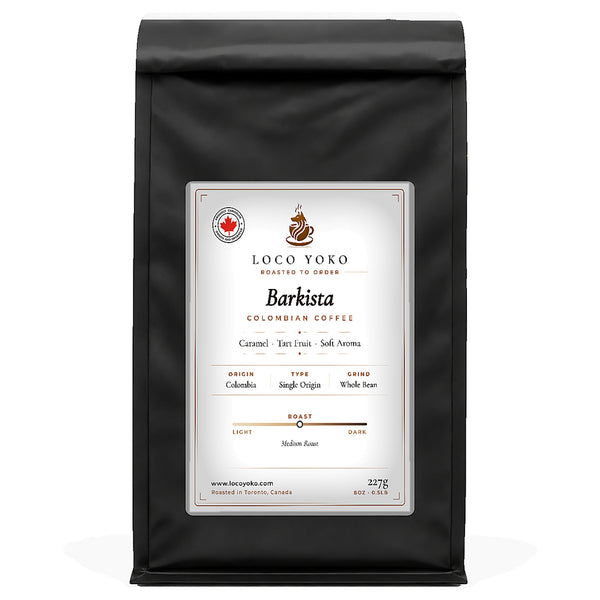
Barkista
Caramel · Tart fruit · Soft aroma
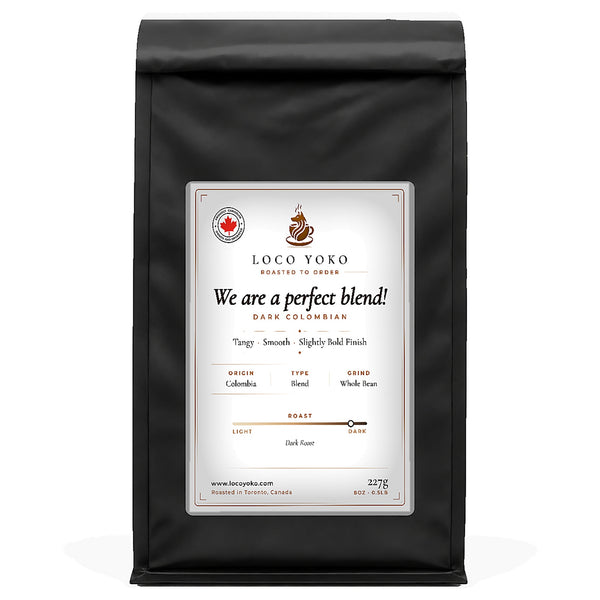
We are a perfect blend!
Tangy · Smooth · Slightly bold finish
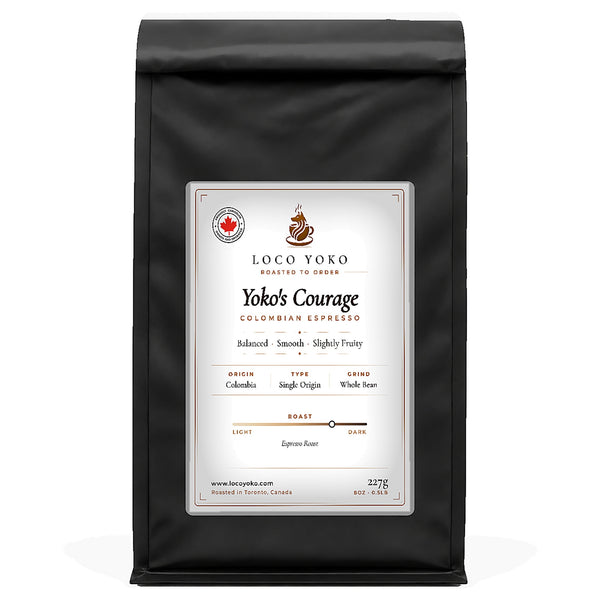
Yoko's Courage
Balanced · Smooth · Slightly fruity
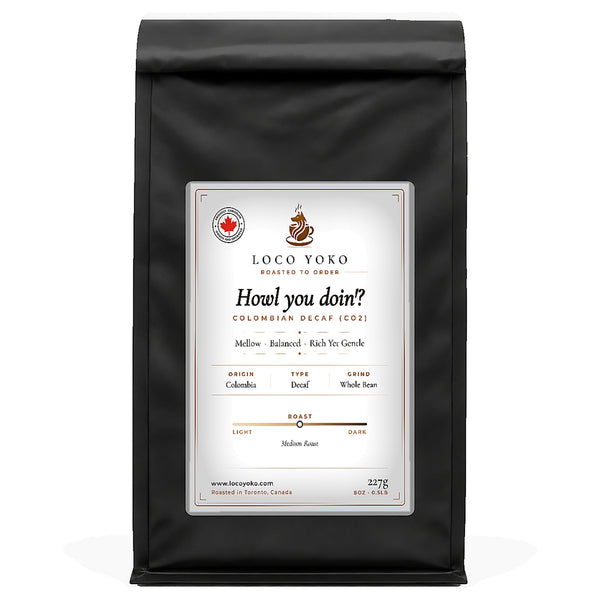
Howl you doin'?
Mellow · Balanced · Rich yet gentle
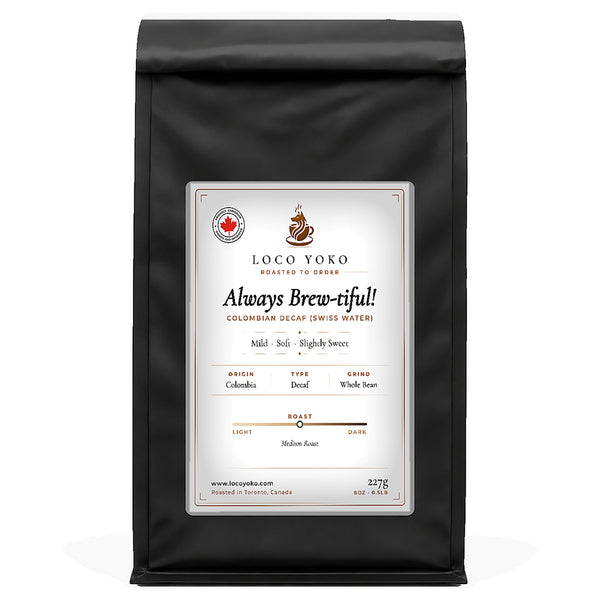
Always Brew-tiful!
Mild · Soft · Slightly sweet
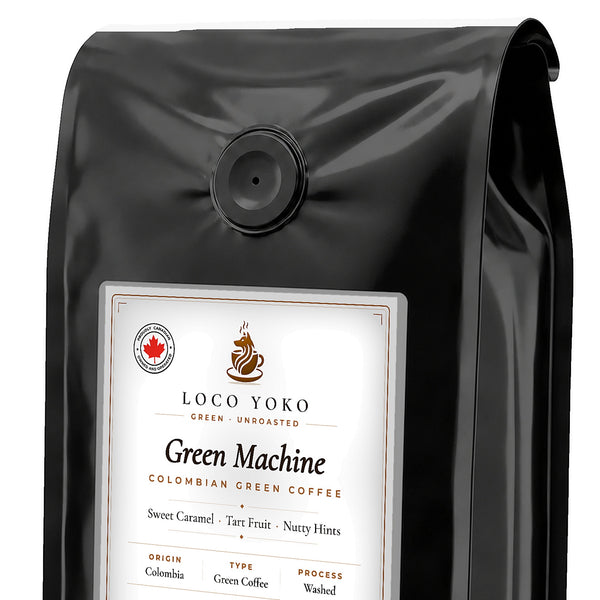
Green Machine
Sweet caramel · Tart fruit · Nutty hints
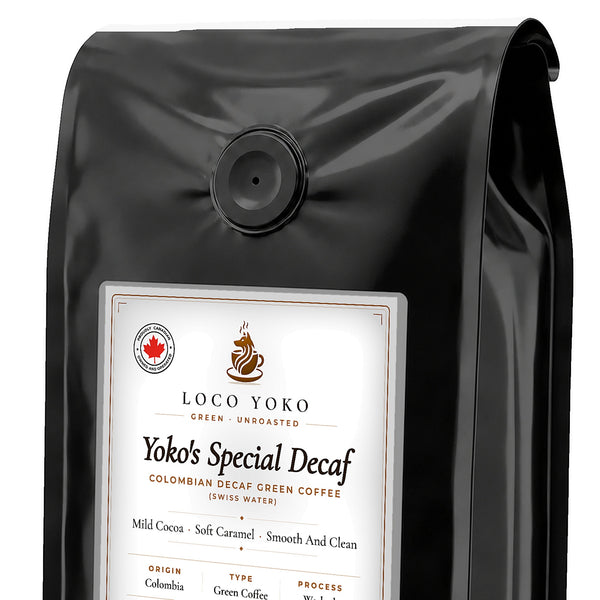
Yoko's Special Decaf
Mild cocoa · Soft caramel · Smooth and clean
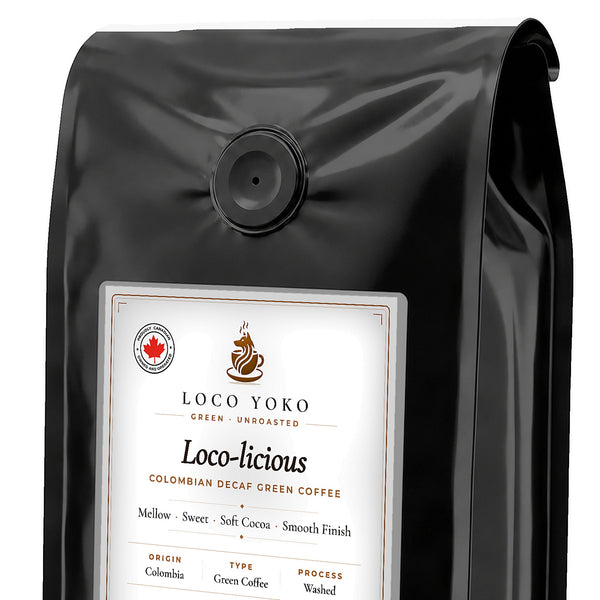
Loco-licious
Mellow · Sweet · Soft cocoa · Smooth finish
Try removing a filter or two.
Tap a choice and we'll take you to the next step.
A Grower's-Eye Guide to Colombian Decaf
Colombia grows some of the most consistent, well-balanced arabica in the world, and that consistency is exactly why it makes such a good base for decaf. The country's high-altitude farms, mostly family-run plots on volcanic soil across Huila, Nariño, and Tolima, produce dense, evenly ripened cherries that hold up well through the decaffeination process without losing their character. A lot of decaf tastes flat because the beans going in were mediocre to start. That's not the case here: our colombian decaf coffee beans come from the same quality lots we'd happily sell as caffeinated single origins.
If you've written off decaf as a compromise, this is the origin that changes your mind. Good colombian decaf whole bean coffee should taste like Colombian coffee first and "decaf" a distant second — bright red-apple acidity, a caramel-forward sweetness, and a clean, medium body. We roast to order here in Toronto and ship free across Canada on orders over $50, and like every coffee we sell, we recommend giving the beans 24 to 72 hours of rest after roasting before you brew, decaf included. That rest period matters even more for decaf because the processing adds moisture the beans need to shed before they hit their stride.
Growing Region and Terroir
Colombia's coffee belt sits almost entirely within the Andes, which gives growers a rare advantage: farms at 1,300 to 2,000 metres elevation, consistent rainfall from two harvest cycles a year, and volcanic soil rich in the minerals that build sugar in the cherry. Huila in the south produces some of the most award-winning lots in the country, with juicy, fruit-forward profiles. Nariño, further south and higher still, tends toward more floral, tea-like cups. Tolima and Cauca round things out with classic nutty-caramel Colombian character. When we're sourcing green stock, whether for decaf or not, we're looking at the same regional differences you'd weigh for any origin — it's part of why we keep a dedicated green coffee selection for roasters and home enthusiasts who want to see the raw material before it's fire-treated.
What separates a forgettable decaf from a great one usually isn't the origin at all — it's what happens to the bean before it ever reaches a roaster. That's the step most people skip past, and it's worth understanding.
How the Decaffeination Actually Works
Almost all the decaf coffee beans canada shoppers can find on shelves are stripped of caffeine using one of three methods: a chemical solvent (methylene chloride or ethyl acetate), supercritical CO2, or the Swiss Water Process. We only use the last one. The swiss water process decaf colombian beans we roast go through a plant-based, solvent-free system that uses green coffee extract (GCE) and osmosis to pull caffeine out of the bean while leaving the flavor compounds largely intact. No chemicals ever touch the bean.
Here's the short version of how it works: green coffee is soaked in hot water to dissolve both caffeine and flavor compounds. That water is passed through an activated-charcoal filter that's calibrated to trap only caffeine molecules, based on their size, while letting the larger flavor and aroma compounds pass through. The resulting caffeine-free GCE solution is then used to soak fresh batches of green coffee. Because the GCE is already saturated with flavor compounds, only caffeine migrates out of the new beans — the flavor stays locked in. It's a slower, more expensive process than solvent-based decaffeination, but it's why our decaf tastes like coffee rather than like cardboard with a caffeine warning removed.
If you're specifically looking for swiss water decaf coffee canada roasters that actually disclose their process, ask. A surprising number of "Swiss Water" labels on shelves are marketing shorthand rather than a guarantee, so it's worth confirming with any roaster you buy from. We're upfront about it because it's the whole reason our decaf holds onto Colombia's signature sweetness instead of tasting stripped and one-dimensional.
Why Choose Chemical-Free Decaf
The case for chemical free decaf coffee beans isn't just about avoiding trace solvents, which regulatory bodies consider safe at approved residual levels anyway. It's about what solvent processing does to flavor. Methylene chloride and ethyl acetate are efficient at grabbing caffeine, but they're less selective than the Swiss Water method, and they tend to pull some of the oils and compounds that give coffee its aromatic complexity along with it. The result is often a duller, flatter cup. Swiss Water's slower, water-based approach is gentler on those delicate compounds, which is a big part of why decaf coffee no jitters good taste is a real, achievable combination and not a marketing contradiction.
There's also a practical upside for people who are sensitive to solvent residues, pregnant, or just prefer to keep their coffee as close to unprocessed as possible. A solvent-free method removes that variable entirely, and for a lot of our customers, that peace of mind is worth as much as the flavor.
Organic and Fair Trade Sourcing
Beyond the decaffeination method, sourcing matters just as much. Our organic Colombian decaf comes from certified farms that avoid synthetic pesticides and fertilizers, which tends to go hand in hand with the kind of careful, small-lot farming that produces better cherries in the first place. Organic certification in Colombia is rigorous — it requires documented crop history, buffer zones from conventional farms, and ongoing soil management — so it's a reasonable proxy for a farm that's paying close attention to quality, not just yield.
We also prioritize fair trade Colombian sourcing where lots are available, because fair trade certification guarantees a price floor for the farmer regardless of what commodity markets are doing, plus a community development premium paid on top. Colombian smallholders are especially exposed to price swings since most farms are two to five hectares, worked by a single family with no buffer against a bad season. Paying fair prices isn't charity from our end — it's what keeps skilled growers in coffee instead of switching to a more stable crop, which is ultimately what keeps good beans available at all.
Flavor Profile and Taste Notes
Typical colombian decaf coffee taste notes run through red apple, brown sugar, milk chocolate, and a soft citrus brightness that shows up more in Nariño and Huila lots than in beans from further north. The body is medium and syrupy rather than thin, with an acidity that's present but rounded — nothing sharp or vinegary. Compared to a lot of decaf on the market, which can taste muted or papery, a well-processed Colombian decaf keeps enough of its natural sweetness that you'd have a hard time picking it out in a blind cup next to its caffeinated counterpart.
For comparison, if you're used to the winey, blueberry-forward profile of Ethiopian coffee, this decaf will read as calmer and more chocolate-driven — less about wild fruit, more about balance. Against the earthy, full-bodied character of Indonesian coffee like Sumatra, it's brighter and cleaner on the palate. And next to the black-currant snap typical of Kenyan coffee, it's noticeably gentler — Colombia doesn't chase that same acidity, it leans into sweetness instead. If your palate prefers approachable and balanced over intense and polarizing, Colombian is usually the answer regardless of caffeine content.
Roast Level Guidance
We roast most of our decaf as a colombian decaf medium roast coffee, and that's a deliberate choice, not a default. Decaffeinated beans lose some structural density during processing, which means they roast faster and scorch more easily than green coffee that hasn't been through the Swiss Water system. A medium roast hits the point where the bean's natural sugars caramelize fully without pushing into the bitterness that comes from over-roasting an already more fragile bean. Go too light and you risk a grassy, underdeveloped cup since decaf doesn't always show the visual and aromatic roasting cues that green coffee gives off. Go too dark and you lose the fruit and chocolate notes that make this origin worth choosing over a generic decaf blend in the first place.
If you brew with a moka pot or espresso machine, a medium-dark roast within that same family will still hold detail while giving you the body those methods reward. For pour-over or drip, stick with medium — it's where this coffee shows its full range. And if espresso is your main use case beyond decaf, it's worth browsing our espresso collection to see how roast level shifts across our whole caffeinated lineup, since the same principles apply.
Buying Guide: What to Look For
If you're trying to figure out how to buy colombian decaf coffee online canada wide, or you've searched for this Colombian decaf beans canada roasters and gotten a wall of generic listings, a few things separate a good purchase from a disappointing one:
- Roast date, not "best before" date. A bag without a roast date printed on it is a red flag — you have no way to know if you're buying fresh coffee or old stock.
- Disclosed decaffeination method. If a bag just says "decaf" with no mention of process, assume it's the cheaper solvent method.
- Single-origin labeling, not a "decaf blend." Blends can hide lower-grade beans behind the decaf label since flavor differences are harder to spot once caffeine's removed.
- Whole bean over pre-ground. Ground decaf loses aromatics fast; grinding fresh at home preserves what the Swiss Water process worked to protect.
All of our decaf ships as whole bean, roasted after your order comes in rather than pulled from a warehouse shelf, which is the biggest single factor in freshness regardless of origin or process.
Finding the Best Colombian Decaf
Calling anything the best Colombian decaf is a claim worth being skeptical of, ours included, but there are objective markers to check: Swiss Water or another solvent-free process, a real roast date, single-origin sourcing from a named region rather than a generic "Colombia" blend of unknown lots, and a roast level suited to decaf's faster development. If a coffee checks those boxes and still tastes flat, the green coffee itself was probably the weak link — which loops back to why sourcing from established, high-altitude Colombian farms matters as much as the decaffeination method itself.
For shoppers comparing us against other roasters, our full coffee lineup gives you the context to see where this decaf sits relative to our other origins — same roast-to-order approach, same 24-to-72-hour rest recommendation, same free shipping over $50 across Canada.
FAQ
Is Swiss Water decaf actually caffeine-free?
Not entirely, but close. Swiss Water Process coffee is certified 99.9% caffeine-free, which is the same threshold used across the decaf industry regardless of method. A cup will have roughly 2-5 mg of caffeine versus 80-100 mg in a regular cup, which is low enough that most people who are sensitive to caffeine don't notice any effect.
Does decaf coffee taste worse than regular coffee?
It can, but it doesn't have to. Most of the flavor loss people associate with decaf comes from cheap solvent processing and stale green stock, not from the absence of caffeine itself. Caffeine is actually quite bitter, so removing it properly, as the Swiss Water method does, can even smooth out a cup's harsher edges while preserving sweetness and body.
What's the difference between Swiss Water and CO2 decaf?
Both are solvent-free, but they work differently. CO2 decaffeination uses pressurized carbon dioxide to strip caffeine and is common for large commercial batches. Swiss Water uses hot water and a green coffee extract solution instead, which tends to be gentler on flavor compounds and is the method more associated with specialty-grade, single-origin decaf like this one.
How should I store decaf coffee beans?
The same way you'd store any whole bean coffee: in an airtight container, away from light and heat, and ideally not in the fridge or freezer where condensation can introduce moisture. Buy what you'll use in two to three weeks and grind just before brewing for the best results.
Can I use Colombian decaf for espresso?
Yes. Its medium body and balanced sweetness make it a solid espresso base, though you'll want a slightly finer grind and a shorter dial-in window than you'd use for caffeinated beans, since decaf's altered cell structure can pull faster. A medium roast, which is how we roast this one, gives you enough density to hold a proper shot without turning bitter.
Is this coffee organic and fair trade certified?
Yes, our sourcing prioritizes certified organic farms and fair trade relationships with Colombian growers wherever those lots are available, on top of the Swiss Water decaffeination process. That combination is genuinely rare in the decaf category, where most producers optimize for cost over full-chain sourcing standards.
Frequently asked questions
The essentials about this collection. Still curious about something?
Ask us anything