
Ethiopian Coffee
Ethiopia — the birthplace of coffee. High-altitude Yirgacheffe and Sidamo lots grown from wild heirloom varietals, prized for their floral aroma and bright citrus finish. Roasted to order and shipped free across Canada over $50.
Products in this collection
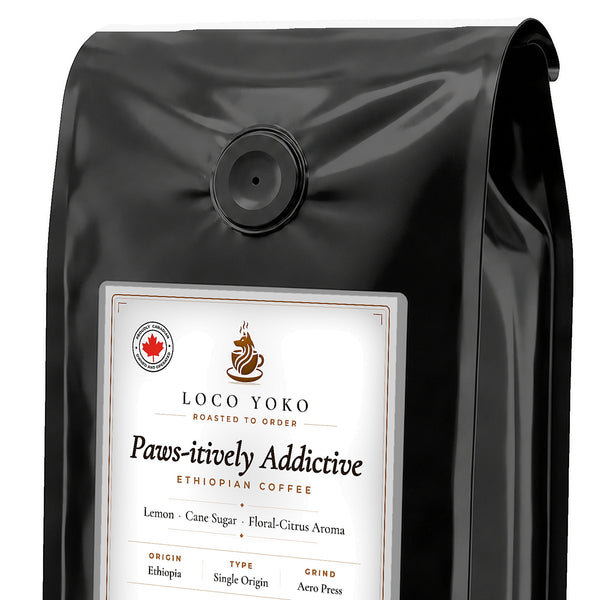
Paws-itively Addictive
Lemon · Cane sugar · Floral-citrus aroma
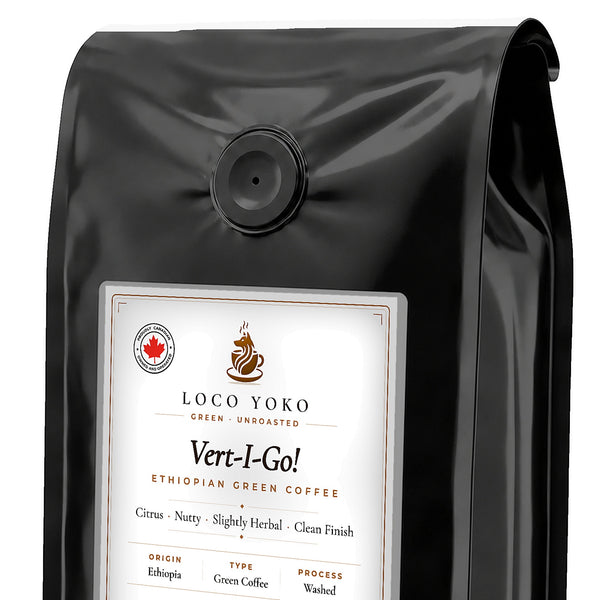
Vert-I-Go!
Citrus · Nutty · Slightly herbal · Clean finish
Try removing a filter or two.
Tap a choice and we'll take you to the next step.
Ethiopian Coffee: The Birthplace of the Bean
Ethiopia is where coffee began. Every arabica plant grown anywhere in the world traces its genetic lineage back to the forests of southwestern Ethiopia, where coffee still grows wild under a shaded canopy today. That deep genetic diversity is the single biggest reason ethiopian coffee beans taste so different from beans grown almost anywhere else. While most of the world's coffee farms grow a handful of cultivated varieties descended from a narrow genetic pool, Ethiopian coffee comes from thousands of indigenous heirloom varieties, often growing side by side in the same small plot. The result is a cup profile that's harder to pin down and far more interesting than a lot of the more "standardized" origins we carry, like our Brazilian lots, which tend to taste rounder and more consistent from harvest to harvest.
If you've never had a genuinely good Ethiopian coffee, it can be a bit of a shock the first time. These aren't the deep, chocolatey, low-acid cups a lot of people default to when they think "coffee." Ethiopian coffee tends to be bright, aromatic, and often downright fruity or floral, closer in some ways to tea or even wine than to a typical diner cup. That's exactly why we roast it light to medium here and treat it as its own category rather than folding it into a generic blend.
Where It's Grown: The Major Ethiopian Coffee Regions
Ethiopia's coffee-growing land sits at high altitude across the southern and southwestern highlands, generally between 1,500 and 2,200 metres above sea level. That elevation matters enormously — the cooler temperatures at altitude slow down how fast the coffee cherry ripens, giving the bean more time to develop the sugars and acids that show up later as flavor in the cup. A few regions come up again and again on labels, and each one has its own character.
Yirgacheffe, in the Gedeo Zone of the Southern Nations region, is probably the most famous name in Ethiopian coffee, and for good reason. Ethiopian yirgacheffe coffee beans are prized for a clean, tea-like body with intensely floral aromatics — think jasmine and bergamot — layered over citrus and stone fruit. It's often the first Ethiopian coffee people fall in love with because it's so distinct from anything else on a shelf.
Sidamo (sometimes spelled Sidama) is the larger region that historically surrounded Yirgacheffe before Yirgacheffe was broken out as its own designated growing area. Ethiopian sidamo coffee shares some of that floral DNA but usually leans a bit heavier — more red berry, more wine-like fruit, a slightly fuller body. If Yirgacheffe is the tea-like end of the spectrum, Sidamo sits a step closer to what most people picture when they think "fruity coffee."
Harrar, grown in the eastern highlands rather than the south, is a different animal entirely. It's almost always processed as a natural (dry-processed) coffee, and the result is famous for deep, jammy fruit character. Ethiopian harrar coffee blueberry notes are the classic descriptor here — a distinctive, wine-like blueberry sweetness that's become something of a benchmark flavor in the specialty coffee world. It's punchier and more polarizing than Yirgacheffe or Sidamo, and it's the region we point people toward when they say they want something bold and unmistakably different from their everyday cup.
Washed vs. Natural: How Processing Shapes the Cup
Processing method matters as much as region when it comes to ethiopian coffee flavor profile, and it's worth understanding the difference before you buy.
Washed (wet-processed) coffee has the fruit pulp removed from the bean before drying, usually via fermentation tanks and a wash channel, then the beans are dried on raised beds. Washed processing produces a cleaner, brighter, more transparent cup — the floral and citrus notes that define classic Yirgacheffe come through most clearly when the coffee is washed, because there's no fruit-pulp residue muddying the underlying bean character.
Natural (dry-processed) coffee is dried with the whole cherry still intact around the bean, often for two to three weeks on raised beds, with the fruit slowly imparting sugars and flavor compounds directly into the seed as it dries. This is what gives naturals — including most Harrar and a growing share of Sidamo lots — that heavier, more decadent berry and stone-fruit character. It's a riskier process (uneven drying can introduce off-flavors) but done well, it produces some of the most memorable cups in coffee.
Some farms now also do "honey" or pulped-natural processing, a middle ground where some mucilage is left on the bean during drying, splitting the difference between clean and fruit-forward. When you're comparing bags, checking the processing note is often more useful than checking the region alone if you're chasing a specific taste.
What Ethiopian Coffee Actually Tastes Like
Across the different regions and processing methods, there are some throughlines you can expect in the cup. The most consistent one is aromatic intensity — Ethiopian coffee tends to smell as good as it tastes, often before you even take a sip. Beyond that, the general ethiopian coffee taste notes people report include:
- Floral aromatics — jasmine, bergamot, orange blossom, especially in washed Yirgacheffe
- Bright citrus acidity — lemon, lime, sometimes grapefruit
- Berry and stone fruit — blueberry, raspberry, peach, apricot, more pronounced in naturals
- A light, tea-like body rather than the heavy mouthfeel of, say, an Indonesian coffee
- A clean, sometimes wine-like sweetness in the finish
Those ethiopian coffee floral fruity notes are really the calling card of the entire origin. If you've had a coffee that tasted almost like a fruit tea, there's a good chance it was Ethiopian, or at least trying to imitate that style.
Yirgacheffe vs. Sidamo: Which One Should You Buy?
This is one of the most common questions we get, and the honest answer is that it comes down to how you like your acidity and body. When people ask us to settle yirgacheffe vs sidamo coffee, we generally point out that Yirgacheffe is the more delicate, more floral, more tea-like of the two — it rewards careful brewing and a lighter roast, and it's the one to reach for if you want something that tastes closer to a fine white tea than to "coffee" as most people picture it. Sidamo is the more approachable middle ground: still bright and still carrying that distinctive Ethiopian fruit character, but with a bit more body and a slightly heavier berry note that makes it a good bridge coffee if you're used to darker, heavier roasts and want to ease into single origin coffee rather than jump straight to the most delicate option on the shelf.
If you want a useful comparison point, our coffee from Kenya sits in a related but distinct lane — also bright and acidic, but usually built around a bigger, juicier blackcurrant-and-tomato acidity rather than the more floral, tea-like profile you get from Ethiopia. Tasting the two side by side is one of the best ways to understand what makes East African coffee, broadly, so different from Latin American or Southeast Asian origins.
Roast Level: Why Light Roast Matters Here
Ethiopian coffee is the clearest argument in the entire industry for roasting light. Push an Ethiopian Yirgacheffe or Sidamo into a medium-dark or dark roast and you'll actively destroy the qualities that make it worth buying in the first place — the floral aromatics burn off, the bright acidity flattens out, and what's left tastes like generic dark roast with a faint fruit echo. That's why virtually every serious roaster treats ethiopian coffee beans light roast profiles as close to non-negotiable.
We roast our Ethiopian lots light to medium-light specifically to preserve that aromatic complexity, stopping well before the second crack where those delicate compounds start to break down. If you're used to darker, more traditional roasts, expect an Ethiopian light roast to look — and taste — noticeably different: lighter in color, higher in acidity, lower in bitterness, with a much more pronounced aroma right out of the bag.
Brewing Ethiopian Coffee
Because the appeal of Ethiopian coffee is so tied up in aromatics and clarity, brew method matters more here than it does with a heavier, chocolatey coffee that can shrug off a mediocre brew. Ethiopian coffee for pour over is close to the gold standard — a V60, Chemex, or Kalita Wave gives you the clean extraction and full aromatic lift that lets the floral and fruit notes really show. Use a medium-fine grind, water just off the boil (around 94-96°C), and a slower pour to draw out the acidity without over-extracting into bitterness.
That said, Ethiopian coffee isn't exclusively a pour-over origin. A well-dialed-in AeroPress can highlight the fruit notes nicely with a shorter, more forgiving brew, and it makes an excellent espresso for anyone who wants a lighter, more acidic shot with pronounced citrus and berry character instead of the usual chocolate-and-caramel espresso profile. French press works too, though you'll lose some of the aromatic clarity that a paper filter provides. Whatever method you choose, always let the beans rest 24-72 hours after roasting before brewing — Ethiopian coffee in particular can taste sharp or unsettled straight off the roaster, and that short rest period lets the CO2 degas and the flavors properly settle.
How Ethiopian Coffee Compares to Other Origins
Context helps here. If you're building out a home lineup or just trying to understand where Ethiopian coffee fits, it helps to compare it against a few other origins we carry. Indonesian coffee — you can browse our Sumatra and other Indonesian selections — sits at almost the opposite end of the spectrum: heavy body, low acidity, earthy and herbal rather than floral, usually wet-hulled rather than washed or natural. Where Ethiopian coffee is bright and aromatic, Indonesian coffee is deep and grounding. Brazilian coffee, meanwhile, tends to be nutty, chocolatey, and low-acid, which is why it's such a popular base for espresso blends and why it makes such a useful contrast cup against something as vivid as a Sidamo or Yirgacheffe. Kenyan coffee, as mentioned above, is the closest sibling to Ethiopian in terms of brightness, though the flavor direction diverges once you get past the acidity.
For anyone getting seriously into home roasting, it's also worth knowing that single origin ethiopian coffee is available unroasted through our green coffee selection, letting you control the roast curve yourself and taste firsthand how much roast level changes the final cup — a genuinely eye-opening exercise if you've only ever had Ethiopian coffee roasted by someone else.
Buying Guide: What to Look For
A few practical pointers if you're shopping for whole bean ethiopian coffee and want to make sure you're getting something worth the price:
- Check the region. "Ethiopian" alone tells you less than "Yirgacheffe" or "Sidamo" or "Harrar" — the region is doing a lot of the flavor work.
- Check the process. Washed for clean and floral, natural for heavier fruit and berry character.
- Check the roast date, not just the roast level. Ethiopian coffee's aromatics fade faster than a heavier, oilier bean, so freshness matters more here than with a lot of other origins.
- Buy whole bean, not pre-ground. Those floral and fruit aromatics are volatile — they start dissipating within minutes of grinding, so grinding to order right before you brew preserves far more of what makes Ethiopian coffee worth buying in the first place.
If you're trying to find the best ethiopian coffee beans canada has to offer, roast date and traceability matter more than marketing language on the bag. A roaster who can tell you the specific region, the processing method, and roasted-on date is giving you the information that actually predicts what's in your cup — vague claims about "premium" or "gourmet" beans tell you nothing.
Sourcing, Certifications, and Buying Ethiopian Coffee in Canada
Ethiopia's coffee industry runs differently than most other origins — the vast majority of Ethiopian coffee still comes from smallholder farmers, often with less than a hectare of land, who deliver cherry to local washing stations or cooperatives rather than running their own private mills. That cooperative structure is part of why traceability in Ethiopian coffee sometimes goes to a washing-station or cooperative level rather than a single named farm, which is normal for the origin and not a red flag.
A meaningful share of Ethiopian coffee, particularly from cooperative-run washing stations, is certified organic by default, since many smallholder farms have never had the capital to invest in synthetic fertilizers or pesticides in the first place. Combined with Fair Trade certification, which guarantees cooperatives a minimum price floor regardless of what commodity markets are doing, organic fair trade ethiopian coffee canada buyers can find gives you a way to support smallholder livelihoods directly. We look for both certifications where they're available and verified, though it's worth knowing that plenty of excellent, genuinely sustainably farmed Ethiopian coffee is sold without formal organic certification simply because certification itself is expensive for a smallholder cooperative to pursue.
If you're looking to buy ethiopian coffee online canada wide, freshness and roast date should be the deciding factor over almost anything else. Every bag we roast is done to order here in Toronto, which means you're not buying a bag that's been sitting in a distribution warehouse for months before it reaches a shelf. We ship free across Canada on any order over $50, and we'd always rather ship you a smaller bag roasted this week than a large one roasted a month ago — Ethiopian coffee in particular loses its best qualities the fastest of any origin we carry, so buying in quantities you'll actually get through in two to three weeks is worth more than any bulk discount.
For the full range of what we roast beyond this origin, our main coffee collection covers everything from bright East African lots like these to heavier, chocolatey South American and Indonesian coffees, so you can see exactly how Ethiopian fits into the wider spectrum of what's out there.
FAQ
What makes Ethiopian coffee taste different from other origins?
Ethiopian coffee is grown from thousands of indigenous heirloom varieties rather than the small number of cultivated varieties used in most other origins, and it's grown at high altitude in the region coffee originally came from. That combination produces a naturally floral, fruity, tea-like cup that's structurally different from the chocolatey, nutty profile typical of Latin American coffee or the heavy, earthy profile typical of Indonesian coffee.
Is Yirgacheffe or Sidamo better?
Neither is objectively better — they're different expressions of the same broader region. Yirgacheffe tends to be more delicate, floral, and tea-like, while Sidamo usually has a bit more body and heavier berry character. If you're new to Ethiopian coffee, Sidamo can be a slightly easier entry point; if you already love bright, delicate coffee, Yirgacheffe is worth seeking out specifically.
What roast level is best for Ethiopian coffee?
Light to medium-light. Ethiopian coffee's defining floral and fruit aromatics are fragile and start breaking down as roast development pushes past the first crack toward second crack. A dark roast will mute or eliminate most of what makes an Ethiopian coffee worth choosing over any other origin.
What's the difference between washed and natural Ethiopian coffee?
Washed coffee has the fruit removed before drying, producing a cleaner, brighter, more floral cup — this is the classic Yirgacheffe profile. Natural coffee is dried with the fruit still on the bean, producing a heavier, more jammy, berry-forward cup — this is typical of Harrar and some natural-process Sidamo lots. Neither is "better"; they simply lead to different flavor outcomes from similar underlying beans.
What's the best way to brew Ethiopian coffee at home?
Pour-over methods like a V60 or Chemex are generally considered ideal because they highlight clarity and aromatics, which are the main draw of this origin. A medium-fine grind, water around 94-96°C, and a controlled pour will bring out the floral and citrus notes without pushing into bitterness. Espresso and AeroPress also work well if you want a punchier, more concentrated version of the same fruit-forward character.
Is Ethiopian coffee always organic?
Not always, but a large share of it effectively is, since many smallholder farms have never used synthetic fertilizers or pesticides due to cost, even without pursuing formal organic certification. Look for explicit organic and Fair Trade certification on the bag if that documentation matters to you, and don't assume every Ethiopian coffee is certified just because a lot of smallholder farming in the region is low-input by necessity.
Frequently asked questions
The essentials about this collection. Still curious about something?
Ask us anything