
Nicaraguan Coffee
Nicaragua's Jinotega and Matagalpa highlands, grown at 1,100–1,500m for a balanced cup layered with chocolate and citrus sweetness. Roasted to order and shipped free across Canada over $50.
Products in this collection
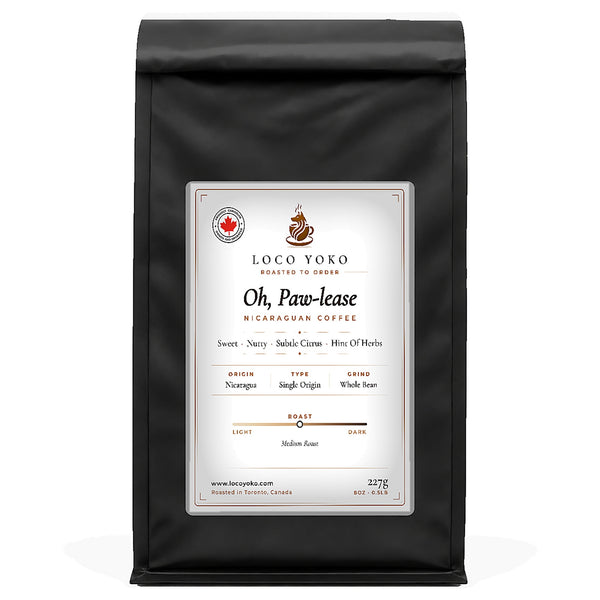
Oh, Paw-lease
Sweet · Nutty · Subtle citrus · Hint of herbs
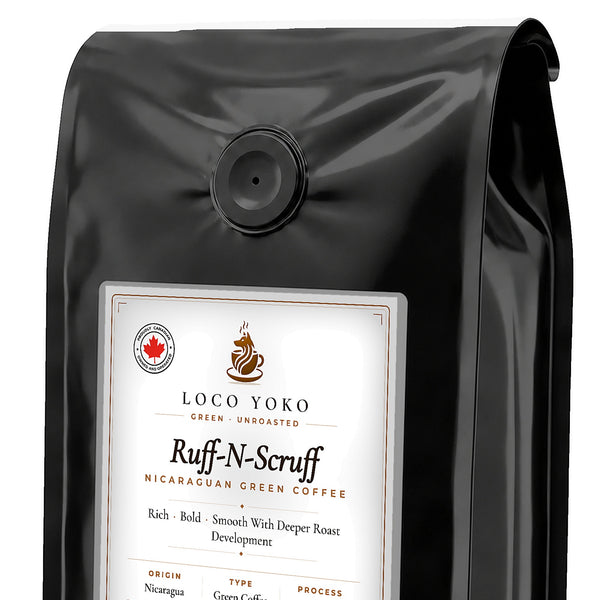
Ruff-N-Scruff
Rich · Bold · Smooth with deeper roast development
Try removing a filter or two.
Tap a choice and we'll take you to the next step.
Nicaraguan Coffee: A Grower's Guide to Central America's Most Underrated Origin
Nicaragua sits in an odd spot in the specialty coffee conversation. Guatemala gets the marketing budget, Costa Rica gets the eco-tourism halo, and Nicaragua just quietly keeps producing some of the most consistent, well-balanced nicaraguan coffee beans in Central America. If you've spent any time drinking around the region, you already know the pattern: Nicaraguan lots tend to split the difference between the fruit-forward brightness of coffees further south and the heavier body you get from beans grown at lower elevation. That balance is exactly why we keep coming back to it — it's an easy coffee to love and a hard coffee to get bored of.
This page covers the two Nicaraguan coffees we currently have roasting in Toronto, but before you scroll up to the grid, it's worth understanding what actually makes this origin distinct, because "Nicaraguan coffee" as a category covers a wider range than most people assume. Elevation, region, and processing method all swing the cup in different directions, and knowing those variables will help you pick the right bag and the right roast level for how you actually brew at home. If you're just getting oriented, our full coffee lineup is a good place to see how this origin sits relative to everything else we roast.
Where Nicaraguan Coffee Actually Grows
Coffee production in Nicaragua concentrates in a handful of mountainous departments in the north and center of the country, most of it sitting on volcanic soil left behind by a chain of active and dormant volcanoes running down the Pacific side of the country. The two names you'll see most often on origin sheets are Jinotega and Nueva Segovia, and they're not interchangeable — they produce noticeably different cups.
Nicaragua Jinotega coffee comes from the country's largest coffee-growing department, a cool, cloud-forest region north of the capital where farms typically sit between 1,000 and 1,500 meters above sea level. Jinotega's climate — heavy rainfall, consistent cloud cover, cooler nights — slows cherry maturation, which is one of the main reasons the region produces such clean, balanced coffee. You'll usually find notes of red apple, brown sugar, and a mild, rounded acidity here, without the sharper citrus character you get from higher-elevation lots elsewhere in the region.
Nicaragua Nueva Segovia coffee comes from the mountains along the Honduran border, and it's the higher-elevation, higher-intensity cousin to Jinotega. Some Nueva Segovia farms climb past 1,500 meters, occasionally touching 1,700, and that altitude shows up directly in the cup as brighter acidity, more defined stone fruit and citrus notes, and a denser bean structure that holds up beautifully to a slightly lighter roast. If you've had a Nicaraguan coffee that tasted almost like a Guatemalan Antigua lot, there's a decent chance it came from Nueva Segovia.
Other producing zones worth knowing — Matagalpa, Madriz, and parts of Boaco — round out the picture, generally sitting at slightly lower elevations than Jinotega and Nueva Segovia and leaning toward heavier body and more chocolate-forward sweetness. Most of what reaches the export market as straight "Nicaragua" without a named micro-region is a blend or lot from Matagalpa or a mix of these central zones. It's a similar story with the South American lots we carry from Peru, where a single country name on a bag can still hide a lot of regional variation worth digging into.
Varietals: What's Actually in the Bag
Nicaragua grows almost entirely Arabica, and within that, a mix of Caturra, Catuaí, Bourbon, and increasing amounts of the rust-resistant Java and Marsellesa varietals that farmers have planted in response to leaf rust outbreaks over the past decade. Caturra and Catuaí are the workhorses — reliable yields, good cup quality, and well-suited to the country's mid-range elevations. You'll occasionally see small-lot Maragogype (the "elephant bean" varietal, physically enormous seeds) from boutique farms, which tends to produce a softer, lower-acid cup with more body than the standard varietals.
Leaf rust (roya) hit Central America hard starting around 2012, and Nicaragua wasn't spared — many farms lost significant portions of their crop and had to replant with rust-resistant hybrids. That replanting push is part of why you now see more Nicaraguan lots built around Java and Marsellesa than you would have a decade ago. The upside for drinkers is that these newer varietals, when well-processed, cup very close to traditional Bourbon and Caturra while giving farmers more resilience against future outbreaks.
Processing: Washed Is the Default, But Not the Only Option
The vast majority of export-grade Nicaraguan coffee is fully washed. Cherries are depulped within hours of picking, fermented in tanks (typically 12 to 36 hours depending on ambient temperature and the mill's house style), washed clean of mucilage, and then dried on raised beds or patios over one to two weeks. Washed processing is what gives Nicaraguan coffee its clarity — it strips away the fruitier, winey characteristics you get from natural processing and lets the underlying nicaraguan coffee taste notes of the bean and terroir come through cleanly. That's the main reason washed Nicaraguan lots read as "balanced" rather than "wild" — there's no fermented-fruit funk sitting on top of the cup.
Honey-processed Nicaraguan coffee has become more common over the past several years, especially from smaller family farms experimenting with added-value processing to fetch better prices. In honey processing, some or all of the mucilage is left on the parchment during drying, which adds sweetness and body without pushing all the way into the more volatile flavor territory of natural (dry) processing. A well-executed honey-processed lot from Nicaragua often tastes like a washed coffee with the volume turned up on caramel and stone fruit.
True natural (dry) processing — drying the whole cherry with the fruit still on — exists in Nicaragua but is much less common than in Ethiopia or Brazil, mostly because the humid climate in the growing regions makes natural drying riskier and slower without specialized equipment. When you do find a natural Nicaraguan lot, expect bigger fruit character (think dried cherry, sometimes a touch of fermented funk) at the expense of some clarity. For most drinkers who want a clean, everyday cup rather than an experimental one, washed remains the safer and honestly the better choice with this origin.
What Nicaraguan Coffee Tastes Like
If you're trying to picture the nicaraguan coffee flavor profile before you buy, think in terms of balance rather than any single dominant note. Classic washed Nicaraguan coffee from Jinotega or Matagalpa gives you medium body, mild-to-moderate acidity, and a sweetness that reads as brown sugar or milk chocolate rather than jammy fruit. It's the kind of cup that works equally well black or with milk, which is part of why it's such a reliable house coffee.
Higher-elevation Nueva Segovia lots push that profile toward brighter, more citrus-and-stone-fruit territory — orange zest, red apple, sometimes a light florality if the lot is from a smaller, more meticulously processed farm. The nicaraguan coffee chocolate notes that show up across most of the country's coffee become more pronounced as you move toward darker roasts, where the natural sugars caramelize further and the brighter fruit notes recede.
Compared to its neighbors, Nicaraguan coffee sits in a genuinely useful middle ground. It doesn't have the intense, syrupy sweetness of a Costa Rican honey-processed lot, and it doesn't have the wine-like fruit bombs you get from a washed Ethiopian Yirgacheffe. It's closer in character to a mild Guatemalan or Honduran cup, but usually a touch softer in acidity and rounder in body. If you've enjoyed coffee from the high-altitude farms we source from in Peru, Nicaragua will feel like familiar territory — both origins favor washed processing and produce clean, chocolate-and-nut-forward cups — though Peruvian lots we carry tend to run slightly softer in acidity thanks to even higher growing elevations in some lots.
It's also worth calling out for anyone specifically shopping for a gentler cup: low acid nicaraguan coffee is easy to find within this origin, especially from the lower-elevation Matagalpa and Boaco zones or from any lot taken to a medium-dark roast, since roasting further breaks down chlorogenic acids and rounds out the sharper edges of the cup.
How Nicaragua Compares to Other Origins We Carry
It helps to place Nicaragua on a map relative to coffees from further afield. If you've tried the beans we bring in from the highlands of Papua New Guinea, you already know that origin runs heavier and earthier, with a more savoury, almost herbal quality that comes from wet-hulling — a processing method almost never used in Central America. Nicaragua, by contrast, stays clean and washed nearly across the board, so the cup is more transparent and less funky.
Hawaii is another useful contrast point. The volcanic soil argument applies to both origins, but our Hawaiian-grown lots come from a much smaller, far more expensive growing environment with different humidity and elevation dynamics, producing a softer, more delicate cup with less of the cocoa-forward weight you get from mainland Central American coffee. Nicaragua gives you a lot of that same volcanic-soil sweetness at a fraction of the price point, which is a big part of its appeal for anyone brewing daily rather than saving beans for a special occasion.
Within our broader coffee selection, Nicaragua functions as a great entry point if you're building out a rotation of single origins. It's a dependable, moderate cup you can drink every day, and once you've got a feel for its balance, it becomes a useful reference point for tasting more extreme origins against — you'll start noticing exactly how much brighter, heavier, or funkier other coffees are relative to a good Nicaraguan lot.
Roast Level: Matching the Bean to Your Brew Method
Roast level matters more with Nicaraguan coffee than with some flashier origins, because this bean rewards a roaster who's actually paying attention to development time rather than chasing a single "house style" across every origin.
Nicaragua light roast coffee — meaning a roast taken to first crack and pulled shortly after, well before second crack — preserves the brighter acidity and more delicate fruit and floral notes, particularly from higher-elevation Nueva Segovia lots. This is the roast level to reach for if you're brewing pour-over (V60, Chemex, Kalita Wave) and want the coffee's terroir to show clearly. Light roasts also tend to highlight any processing nuance — you'll taste the difference between a washed and honey-processed lot much more distinctly at this roast level.
Nicaragua medium roast coffee is, in our experience, where this origin performs best for most people and most brew methods. Medium roast lets the caramelized sugars develop fully — that's where the classic milk-chocolate, brown-sugar Nicaraguan profile really sings — while still retaining enough acidity to keep the cup lively rather than flat. It's the roast level we'd point most people toward for drip coffee, AeroPress, or a standard moka pot, and it's forgiving of small brewing errors in a way light roasts aren't.
Darker roasts work too, especially for espresso or for drinkers who specifically want a heavier-bodied, lower-acid cup, but pushing a good Nicaraguan lot past medium-dark starts to sand off the origin character that makes it worth buying as a single origin in the first place. If you want a dark, bold everyday roast, you're often better served by a Brazilian or Sumatran bean bred for that style — Nicaragua's real strength is in that light-to-medium window.
Organic and Fair Trade Nicaraguan Coffee
A meaningful share of Nicaragua's coffee industry is made up of small farms, many under five hectares, often organized into cooperatives that pool resources for processing, certification, and export. This cooperative structure is exactly what makes certified organic nicaraguan coffee beans and fair trade nicaraguan coffee more available and often more affordable relative to other origins where certification costs are harder for individual smallholders to absorb alone.
Organic certification in Nicaragua typically means no synthetic pesticides or fertilizers across the farm, verified through annual third-party audits, with many farms relying on shade-grown cultivation under native tree canopy instead — a practice that also happens to support bird biodiversity and slows soil erosion on the steep mountain terrain where a lot of this coffee grows. Fair Trade certification adds a guaranteed minimum price and a community development premium paid directly to the co-op, which gets reinvested in things like clean water infrastructure, school supplies, or processing equipment upgrades depending on what the co-op's members vote to prioritize.
When you're specifically looking to buy nicaraguan coffee online canada, certification labels are worth checking, but they're not the whole story — plenty of excellent small Nicaraguan farms aren't certified organic simply because the paperwork and audit fees are a real cost that a five-hectare farm can't always justify, even if their actual growing practices are effectively organic. That's exactly why direct relationships with importers who visit these farms and vet growing practices firsthand matter as much as, or more than, the certification stamp itself.
How We Source It
We buy our Nicaraguan lots as green coffee through importers with direct relationships to co-ops in Jinotega and the surrounding growing regions, then roast every order fresh here in Toronto rather than holding pre-roasted inventory. If you're curious about the raw material before it hits the roaster, our green coffee page walks through what unroasted beans look like and why freshness at the green stage matters as much as freshness after roasting — green coffee degrades slowly if stored properly, but it's not infinite either, and sourcing recent-crop lots is part of what keeps the cup tasting the way it should.
Every bag we roast rests for 24 to 72 hours post-roast before we ship it, which matters more for a washed, medium-roast coffee like this than people often assume — CO2 released during roasting needs time to off-gas, and brewing too soon after roasting (especially with pour-over or espresso) can produce uneven extraction and a slightly sour, unsettled cup regardless of how good the origin coffee actually is. If you're after what we'd call the best nicaraguan coffee canada has easy access to, freshness discipline like this rest period matters as much as the origin itself — a mediocre coffee roasted last week will usually beat a great coffee that's been sitting on a shelf for three months.
We ship free across Canada on orders over $50, and because everything is roasted to order, you're getting beans that were still green a matter of days before they arrive at your door — which is a meaningfully different product than most grocery-store bags that may have been roasted months earlier and simply repackaged.
Brewing Nicaraguan Coffee at Home
Because most Nicaraguan coffee is washed and moderate in acidity, it's genuinely one of the more forgiving origins to brew, which makes it a great choice if you're still dialing in your technique. For pour-over, a water temperature around 92–96°C and a medium-fine grind will let a Jinotega or Nueva Segovia lot show its cleaner, brighter side; for drip machines or a French press, a slightly coarser grind and a touch more contact time brings out the chocolate and brown-sugar sweetness that this origin does so well at medium roast.
If you're buying nicaragua coffee whole bean rather than pre-ground — which we'd always recommend for the freshest cup — grind just before brewing and store the unused portion in an airtight container away from light and heat. Whole bean holds its aromatics for weeks longer than pre-ground coffee, which oxidizes and loses complexity within days of grinding. This matters especially for a balanced, nuanced origin like Nicaragua, where the appeal is in the subtlety — stale or improperly stored beans flatten out exactly the qualities that make this coffee worth seeking out as a single origin instead of a generic blend.
For espresso, a medium roast Nicaraguan lot makes a solid, well-rounded shot — not as syrupy as a Brazilian natural, but with enough body to hold up in milk drinks while still showing some origin character if you pull it slightly shorter. It's also a reliable base for home blending if you want to experiment: cutting a Nicaraguan lot with a brighter Ethiopian or a heavier Sumatran gives you a way to nudge the final cup in either direction while keeping that dependable chocolate-brown-sugar backbone intact.
Buying Guide: What to Look For
If you want brightness and a more delicate, fruit-forward cup, look for a Nueva Segovia lot at a light-to-medium roast. If you want the classic, crowd-pleasing everyday cup — chocolate, brown sugar, gentle acidity — a Jinotega or Matagalpa lot at medium roast is the safer, more versatile pick, especially if you're brewing for a household with mixed preferences. For anyone specifically sensitive to acidity, stick to washed processing at medium roast rather than light, and consider Matagalpa or Boaco-origin lots over the higher-elevation Nueva Segovia coffees.
Roast dates matter more than almost anything else printed on the bag. A great nicaragua single origin coffee roasted three months ago will underperform a merely good one roasted last week, so check for an actual roast date (not just a "best before") before you buy, and plan to use most bags within four to six weeks of roasting for the best cup. If a retailer won't tell you the roast date, that's usually a sign the coffee has been sitting around longer than you'd want.
FAQ
What does Nicaraguan coffee taste like compared to other Central American origins?
Nicaraguan coffee generally sits in the middle of the Central American flavor spectrum — softer and rounder than a bright Guatemalan Antigua, but with more defined sweetness and body than some lighter Costa Rican lots. Expect brown sugar, milk chocolate, and mild fruit notes like red apple, with acidity that's present but rarely sharp. Higher-elevation lots from Nueva Segovia lean brighter and more citrus-forward, while lower-elevation Jinotega and Matagalpa lots lean rounder and more chocolate-forward.
Is Nicaraguan coffee low acid?
It can be, relative to many other single origins. Washed processing at a medium roast, especially from lower-elevation growing zones, produces a noticeably gentler, low-acid cup compared to high-grown washed coffees from places like Kenya or parts of Colombia. If acidity is a concern for you, look specifically for medium or medium-dark roasted lots from Matagalpa or Boaco rather than light-roasted, high-elevation Nueva Segovia coffee, which will always show brighter acidity by nature of its growing altitude.
What's the difference between Jinotega and Nueva Segovia coffee?
Jinotega is Nicaragua's largest and coolest growing region, generally producing balanced, rounded coffee with brown sugar and mild fruit notes. Nueva Segovia, along the Honduran border, grows at higher average elevations and produces brighter, more acidic coffee with more pronounced citrus and stone-fruit character. If you prefer a gentler, everyday cup, Jinotega is usually the better fit; if you want more complexity and brightness, look for Nueva Segovia.
What roast level is best for Nicaraguan coffee?
Medium roast is the sweet spot for most Nicaraguan lots, balancing caramelized sweetness with retained acidity and origin character. Light roast works well for higher-elevation, higher-acidity lots if you're brewing pour-over and want to highlight brightness and terroir. We'd generally steer away from very dark roasts with this origin, since it tends to mute the balanced qualities that make Nicaraguan coffee worth buying as a single origin in the first place.
Is Nicaraguan coffee usually organic or fair trade?
A significant portion of Nicaragua's coffee is grown on small, cooperative-organized farms, which makes both organic and fair trade certification more accessible than in some larger, corporate-farm-dominated origins. That said, certification isn't universal — plenty of small farms grow coffee using effectively organic practices without paying for formal certification. Look for the actual certification label if that matters to you, but don't assume an uncertified Nicaraguan lot was grown with heavy chemical inputs; it's often more about paperwork costs than growing practice.
How fresh is the coffee when I order it online from Canada?
We roast every order to order here in Toronto rather than pulling from pre-roasted stock, so your beans are typically roasted within a day or two of shipping. We recommend letting the bag rest 24 to 72 hours post-roast before brewing, since freshly roasted beans are still releasing CO2 and need a short window to settle for the most even extraction. Orders over $50 ship free across Canada, and we'd suggest using most of the bag within four to six weeks of the roast date for the best flavor.
Frequently asked questions
The essentials about this collection. Still curious about something?
Ask us anything