
Guatemalan Antigua Coffee
Grown in Guatemala's Antigua Valley, ringed by three volcanoes and volcanic soil at 1,500–1,700m. Smoky, spiced and chocolatey with a rich body. Roasted to order and shipped free across Canada over $50.
Products in this collection
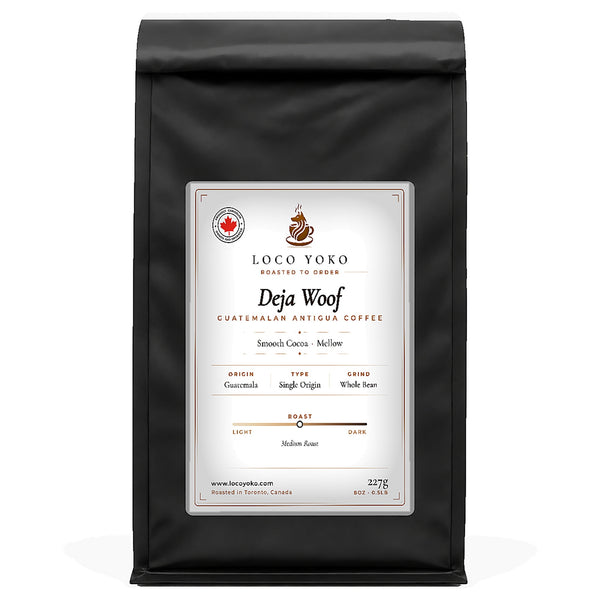
Deja Woof
Smooth cocoa · Mellow
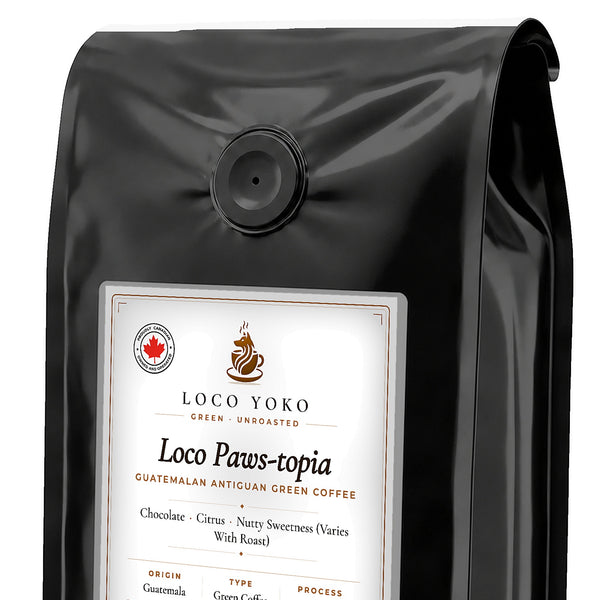
Loco Paws-topia
Chocolate · Citrus · Nutty sweetness (varies with roast)
Try removing a filter or two.
Tap a choice and we'll take you to the next step.
Guatemalan Antigua Coffee: A Grower's-Eye Guide
Antigua is one of the handful of coffee names that earned its fame the old-fashioned way: by consistently tasting better than the beans around it, year after year, harvest after harvest. When people ask us what makes guatemalan antigua coffee worth seeking out, the short answer is geography — a ring of volcanoes, mineral-rich soil, and a valley climate that slows the cherry down just enough to build real depth of flavor. The long answer is everything below.
Whether you're planning a trip from guatemala to antigua or simply shopping online, this page exists to walk you through what Antigua actually is as a growing region, how it's processed, what it tastes like, how it stacks up against the other origins we carry, and how to buy and brew guatemala antigua coffee beans well. If you're already familiar with our full coffee lineup, think of this as the deep dive on one specific, historically important corner of it.
Where Antigua Is and Why the Land Matters
Antigua is a small valley in south-central Guatemala, ringed by three volcanoes — Agua, Fuego, and Acatenango. Fuego is still active, and it periodically dusts the surrounding farms with fine volcanic ash, which is exactly as good for coffee as it sounds. That ash breaks down into mineral-dense soil loaded with potassium and phosphorus, and it's a big part of why coffee grown here has such a distinct mineral backbone underneath its sweetness.
Farms in the valley typically sit between 1,500 and 1,700 meters above sea level, which qualifies as genuinely high altitude volcanic coffee guatemala growers have built their reputation on for over a century. At that elevation, the air is thinner and nights run cool even though the valley sits close to the equator. Coffee cherries mature slowly under those conditions, and slow maturation is one of the most reliable levers a growing region has for building sugar and density in the bean. Fast-grown coffee at low elevation tends to taste flat and one-dimensional; slow-grown coffee at altitude tends to taste layered. Antigua sits near the top of the altitude range for commercially viable coffee in the Americas, which is a large part of why it's held onto its reputation since Guatemalan coffee first reached European markets in the 1800s.
The valley's microclimate helps too. Antigua is shielded from heavy rain by the surrounding peaks, giving farmers more control over harvest timing and drying than growers in wetter parts of the country get. Add rich volcanic loam, consistent shade cover from native trees, and generations of farming families who've refined their picking and processing techniques specifically for this terrain, and you get a growing region that produces some of the most consistent quality in Central America.
How Antigua Coffee Is Processed
Most Antigua lots go through the washed (wet) process. After picking, ripe cherries are pulped to remove the outer skin, then fermented in tanks for roughly 12 to 36 hours to break down the sticky mucilage layer still clinging to the parchment. The beans are then washed clean and dried — on raised beds or patios — down to about 11% moisture before milling and export. Washed processing is what gives Antigua its clarity. Because the fermentation and washing steps strip away the fruit pulp before drying, the final cup expresses the bean itself and the terroir it grew in, rather than fermentation-driven fruit notes you'd get from a natural or honey process. That's part of why washed Antigua reads as clean, structured, and chocolatey rather than boozy or jammy — the growing conditions get to speak clearly, without a heavy processing signature layered on top.
Some small producers in the valley are experimenting with honey and natural processing as demand for experimental lots grows, and those can be worth trying if you come across them. But the washed process is still what most people mean when they picture classic Antigua character, and it's the backbone of what's made this region a reference point for single origin guatemala coffee for decades.
Flavor Profile: What to Expect in the Cup
If you're trying to predict guatemala antigua coffee taste notes before you buy, here's the pattern that shows up across most well-grown, well-roasted lots from the valley: a full, syrupy body; balanced acidity that leans more citric than sharp; and a core of cocoa and toasted nut that anchors the whole cup. Layered on top of that base you'll often pick up dried apricot or plum, brown spice like cinnamon or clove, and a lingering, almost cocoa-powder finish. Taken together, that's the guatemala antigua coffee flavor profile we mean when we describe a lot as "classic Antigua" rather than just calling it generically Guatemalan.
The specific combination that gets cited most often — and that we'd point to as the signature of the region — is chocolate caramel notes coffee guatemala drinkers keep coming back for. That cocoa-and-caramel backbone is remarkably consistent from farm to farm within the valley, which is unusual; most origins show more lot-to-lot variation. It's one reason Antigua became a benchmark cup for training roasters' and cuppers' palates.
Overall, this is a well-rounded, food-friendly coffee rather than a showy, high-acid, fruit-bomb one. If you've had naturally processed Ethiopian coffee and loved the blueberry and floral notes, Antigua will feel like the opposite end of the spectrum — quieter, deeper, more chocolate than fruit. If that sounds appealing, this is very likely going to become a house staple in your kitchen.
Roast Level: How to Buy It
Antigua's dense, mineral structure gives it real flexibility across roast levels, but there's a sweet spot. A true guatemala antigua medium roast coffee is where the bean's cocoa, caramel, and light stone-fruit notes come through most clearly — light enough to preserve acidity and complexity, dark enough to fully develop the sugars the altitude built up during slow maturation. Push it past medium and you'll pick up more roast-derived bittersweetness, which some drinkers like for cutting through milk, but you'll trade away some of the nuance that makes this origin worth choosing over a cheaper, softer bean in the first place.
Because of its dense cell structure and full body, Antigua also holds up unusually well as guatemala antigua espresso beans. The syrupy body translates into thick, stable crema, and the chocolate-forward profile plays nicely with milk without turning muddy or ashy — a common failure mode for lighter, thinner-bodied origins pulled as espresso. If you're building an espresso rotation and want one bag that's reliable in milk drinks and still interesting as a straight shot, this origin is a safe, versatile choice.
Go lighter if you're brewing pour-over or batch drip and want to taste more of the bright citric acidity and stone-fruit character underneath the chocolate. Go to a fuller medium if you're mostly pulling espresso or brewing in a moka pot, where a bit more roast development helps the body stand up to steamed milk.
Grinding, Brewing, and Freshness
Like all our coffee, Antigua lots are roasted to order here in Toronto, and we recommend giving the beans 24 to 72 hours of rest after roasting before you brew — degassing evens out early extraction and lets the sweetness settle in rather than blowing off as sharp, grassy CO2 notes in your first cup.
If you're buying guatemala antigua whole bean coffee, grind just before brewing and match the grind size to your method: coarse for French press or cold brew, medium for drip or pour-over, fine for espresso. If you'd rather skip the step, we also offer pre-ground options — our guatemala antigua ground coffee canada customers rely on is ground to a standard drip-friendly medium, though whole bean will always give you a fresher cup if you own a grinder, since ground coffee loses aromatic oils faster once its surface area is exposed to air.
Water temperature matters more with this origin than with lighter, more forgiving beans — aim for 195–205°F (90–96°C). Too hot and you'll pull excess bitterness out of that dense bean structure; too cool and the chocolate notes stay muted and the cup tastes thin.
How Antigua Compares to Other Origins
Guatemala doesn't grow one flavor profile — Antigua is just one of several distinct regions inside the country, alongside Huehuetenango and Cobán, each with its own volcanic and climate fingerprint. But comparing Antigua to coffee from entirely different countries is often more useful for figuring out what belongs in your rotation.
Coffee from northern India, for instance — worth a look in our Indian-grown selection — tends to run lower in acidity and heavier in spice and earth, shaped by monsoon-influenced growing conditions that couldn't be more different from Antigua's dry volcanic valley. If you want something gentler on the stomach with a more herbal, less chocolatey character, that's the direction to look.
Closer to home in Central America, coffee grown in Costa Rica shares some of Antigua's high-altitude, volcanic-soil pedigree, but Costa Rican lots — especially honey-processed ones — usually swing brighter and sweeter, with more citrus and less cocoa weight. If Antigua is the chocolate-and-caramel end of the Central American spectrum, Costa Rica often sits closer to the caramel-and-citrus end.
Mexican coffee is the other neighbor worth knowing. Beans from our Mexican-origin lots tend to be grown at slightly lower average elevations across a wider range of microclimates, which generally produces a milder, nuttier, softer-bodied cup — a good entry point if you find Antigua's body a bit heavy and want something lighter to start your day with.
And if you're curious what any of these beans taste like before they're roasted, or you roast at home yourself, it's worth browsing our unroasted lots — tasting the raw, grassy character of green coffee side by side with the finished roast is one of the fastest ways to understand how much roasting actually shapes what ends up in your cup.
Sourcing and Buying Guatemalan Antigua in Canada
If you're trying to buy guatemalan antigua coffee beans canada wide, your two real options are importing from a US roaster (usually slower shipping, sometimes duties) or buying from a Canadian roaster who imports and roasts domestically. We do the latter — green beans come in from cooperatives and mills in the Antigua valley, and every batch is roasted here in Toronto to order, not sitting pre-roasted on a shelf for months before it reaches you. That distinction matters more than people expect. Coffee starts losing its best aromatics within two to three weeks of roasting, so a bag that's been roasted, warehoused, shipped, and shelf-stocked before it reaches a Canadian customer can be weeks past its peak by the time you open it. When you're looking for genuinely fresh roasted guatemala antigua coffee, roast date matters as much as origin — always check the bag for one, and be skeptical of any coffee that doesn't list it.
We ship free across Canada on orders over $50, which makes it easy to build a rotation of a few origins — an Antigua for daily drip, something brighter for weekend pour-over — without paying shipping on every bag separately.
As for whether this is the best guatemala antigua coffee you'll find, we'd rather let the cup make that case than the marketing copy. What we can tell you objectively: it's sourced from real high-altitude farms in the valley, it's washed-processed for clarity, it's roasted fresh to order rather than pulled off a warehouse shelf, and it's backed by people who taste every new lot before it goes on the site. Among guatemalan coffee beans canada roasters offer, freshness and sourcing transparency are the two things actually worth comparing — everything else is preference.
FAQ
What makes Antigua different from other Guatemalan coffee regions?
Antigua's defining features are its elevation (roughly 1,500–1,700 meters), its volcanic soil from three surrounding volcanoes, and its dry, shielded microclimate. Other Guatemalan regions like Huehuetenango grow at similar or higher elevations but in wetter, more mountainous terrain, which tends to produce brighter, more floral cups. Antigua's combination of volcanic minerality and slow, dry ripening is what produces its signature cocoa-and-caramel profile.
Is Guatemala Antigua coffee good for espresso?
Yes. Its dense bean structure and full body make it one of the more forgiving single origins to pull as straight espresso or use in a blend. A medium roast brings out thick crema and a chocolate-forward shot that also holds its own in milk drinks, which isn't true of every single-origin coffee.
What roast level is best for Guatemala Antigua?
Medium roast is the traditional sweet spot, balancing the bean's natural acidity against full sugar development. Lighter roasts preserve more citric brightness and stone fruit, while darker roasts push toward bittersweet, roast-forward flavor and mute some of the origin character. If you're new to this coffee, start with medium and adjust from there based on your brew method.
How should I store Guatemala Antigua beans to keep them fresh?
Keep beans in an airtight container away from light, heat, and moisture, and buy in quantities you'll use within three to four weeks of the roast date. Avoid the freezer for everyday storage — condensation on thawing does more damage than it prevents. Grinding just before brewing preserves far more aroma than buying pre-ground, though pre-ground is still a reasonable choice if freshness turnover is quick.
Does Guatemala Antigua coffee taste like chocolate?
Cocoa and caramel are the most consistently reported notes across well-grown, washed-processed lots from the valley, often alongside toasted nut, brown spice, and light stone fruit like apricot or plum. It's not as sweet as flavored coffee — there's nothing added — but the natural profile does lean noticeably toward chocolate and caramel compared to brighter, fruit-forward origins.
How is Guatemala Antigua coffee processed?
The large majority of Antigua coffee is washed: cherries are pulped, fermented to remove the mucilage layer, washed clean, and dried on raised beds or patios. This process produces a clean, clear cup that reflects the growing terroir directly, which is part of why Antigua's regional character comes through so consistently from farm to farm.
Frequently asked questions
The essentials about this collection. Still curious about something?
Ask us anything