
Hawaiian Coffee
Grown on the volcanic slopes of Hawai'i's Kona district, one of the only U.S. coffee origins. Smooth, mild-bodied with a delicate, subtly sweet finish. Roasted to order and shipped free across Canada over $50.
Products in this collection
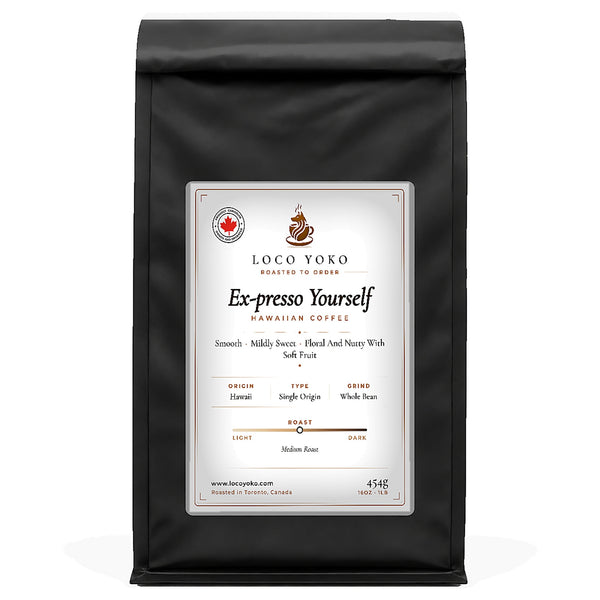
Ex-presso Yourself
Smooth · Mildly sweet · Floral and nutty with soft fruit
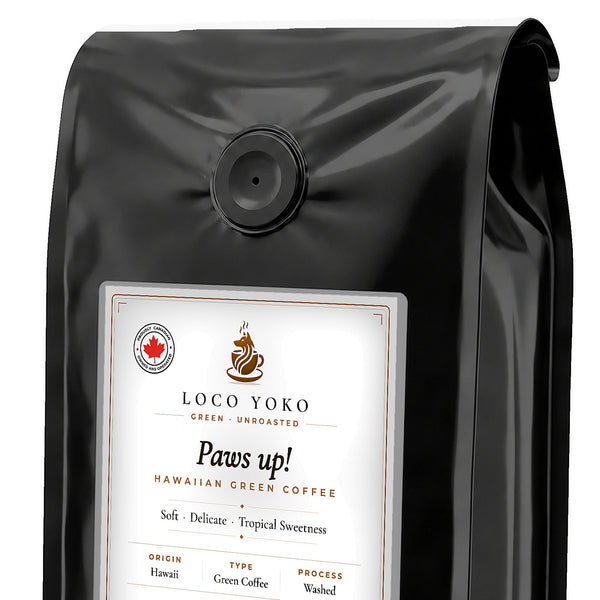
Paws up!
Soft · Delicate · Tropical sweetness
Try removing a filter or two.
Tap a choice and we'll take you to the next step.
Hawaiian Coffee: The Real Story Behind Kona and Its Neighbors
Hawaii is the only U.S. state that grows coffee commercially, and that fact alone drives a lot of the mystique around hawaiian coffee beans. But "Hawaiian coffee" isn't one thing — it's a handful of distinct growing districts spread across several islands, each with its own soil, elevation, and microclimate, and each producing a noticeably different cup. When people say "Hawaiian coffee" they usually mean Kona, because Kona built the reputation, but Kau, Puna, Hamakua, and Maui all grow coffee too, and increasingly some of it rivals Kona in quality while costing meaningfully less. Understanding the differences matters if you're deciding where to spend your money, especially once you're paying import prices to get real Hawaiian-grown coffee shipped to Canada.
Kona: Volcanic Soil, Narrow Belt, Real Scarcity
The Kona coffee belt sits on the western slopes of Hualalai and Mauna Loa on the Big Island, a strip roughly two miles wide and twenty miles long, between about 800 and 2,500 feet of elevation. That narrow band gets a specific rhythm of weather that's hard to replicate anywhere else: sunny mornings, cloud cover that rolls in most afternoons to shade the trees from the harshest sun, and gentle overnight rain during the growing season. The volcanic soil is young, mineral-rich, and well-draining, which is a big part of why kona coffee beans develop the smooth body and low bitterness they're known for. This isn't marketing language — it's a genuinely unusual combination of latitude, altitude, and volcanic geology that doesn't exist together in very many places on earth.
Farms in this district tend to be small, often just a few acres run by families who've been farming the same hillside for generations. Labor is expensive in Hawaii by coffee-growing standards — pickers earn U.S. wages, not the wages typical of coffee-growing regions in Central America or East Africa — and that cost gets built directly into the price of the finished bean. If you've ever wondered why is kona coffee so expensive, that's most of the answer: high U.S. land and labor costs, a small growing area that can't scale up, and a harvest that's still largely done by hand because the ripening cherries don't all mature at once and machine-picking would grab unripe fruit along with ripe.
What "100% Kona" Actually Means (and Why the Label Matters)
For a long time, "Kona blend" coffee — often just 10% actual Kona beans mixed with cheaper filler coffee from elsewhere — was legal to sell in Hawaii and confused a lot of buyers. Hawaii state law has since tightened labeling standards, but the confusion still shows up in how coffee gets marketed outside the islands. When you're buying 100% kona coffee, the label should say exactly that, with no blend percentage hedge. If a bag says "Kona blend" or "Kona style," assume it's mostly coffee from somewhere else with a small fraction of real Kona mixed in, and price it accordingly — it should cost noticeably less than the genuine article. Genuine 100% kona coffee whole bean lots are traceable back to a specific farm or a small handful of farms in the district, and reputable sellers will tell you that directly rather than being vague about origin.
This matters even more once you're buying online from outside Hawaii. A bag labeled simply "Hawaiian coffee" without further detail could be Kona, could be Kau, could be a blend of both, or could even be a mainland roast trying to borrow Hawaiian cachet with a generic tropical name on the label. Always look for the district name and the percentage. It's the single easiest way to tell whether you're getting what you're paying for.
Kau: The District Quietly Beating Kona in Competitions
South of Kona, on the other side of the Big Island, sits the Kau district — lower profile, historically overshadowed by its famous neighbor, but increasingly hard to ignore. Kau coffee grows at similar elevations with similarly volcanic soil, but the district gets more consistent rainfall and slightly different sun exposure, and the resulting cup tends to be a touch brighter and more fruit-forward than a typical Kona, sometimes with notes that edge toward stone fruit or citrus rather than Kona's classic nutty-caramel profile. Kau farms have placed well in the Hawaii state cupping competition and even in some international competitions, which has slowly built a following among people comparing kau coffee vs kona coffee side by side.
The practical difference for a buyer is mostly price and prestige rather than a dramatic quality gap. Kau doesn't carry the decades of brand recognition Kona has, so it often sells for less per pound despite cupping scores that are, in blind tastings, sometimes higher. If you're chasing pure flavor-per-dollar within Hawaiian coffee specifically, Kau is worth exploring alongside Kona rather than as a consolation prize.
Flavor Profile: What to Actually Expect in the Cup
Classic Kona at a medium roast shows a light-to-medium body, low acidity relative to washed African coffees, and a smooth, clean finish. Common tasting notes include brown sugar, toasted nut, a light floral edge, and sometimes a faint winey or fruity note depending on the specific farm and harvest year. It's rarely a coffee that hits you with bold, punchy acidity the way a washed Kenyan or a natural Ethiopian will — if you're comparing hawaiian coffee vs kona coffee difference questions, remember Kona is technically the specific Hawaiian region, while "Hawaiian coffee" as a broader category includes Kau, Puna, and Maui, which can each shift that baseline profile in their own direction. Puna coffee, grown at lower elevation with more rainfall, tends to be a bit heavier-bodied and earthier. Maui coffee, particularly from the Kaanapali and Upcountry areas, can show more citrus brightness.
Understanding kona coffee taste notes in context helps set realistic expectations: this is a coffee built around balance and drinkability rather than intensity. If your palate leans toward big, wine-like acidity and complex fermented fruit notes, you may find Kona quieter than you expect — that's not a flaw, it's the profile the growing conditions produce. If you love a clean, low-acid, easy-drinking cup with gentle sweetness, Kona at its best delivers exactly that.
Processing: Why Method Shapes the Cup as Much as Origin
Most Hawaiian coffee, Kona included, is wet-processed (washed), meaning the cherry skin and pulp are removed mechanically shortly after picking, the beans are fermented briefly in water to break down the remaining mucilage, then washed clean and dried. Washed processing tends to produce a cleaner, more transparent cup that shows the bean's inherent characteristics rather than fermentation-driven fruit notes, which suits Kona's naturally subtle profile well. Some smaller Hawaiian farms have started experimenting with honey and natural processing, where more of the fruit is left on the bean during drying, producing a heavier body and more pronounced sweetness or fruitiness — worth seeking out if you want to taste the same terroir through a different lens.
Drying itself is traditionally done on raised sun decks called "hoshidana," with beans raked periodically over several days to dry evenly, though larger operations now also use mechanical dryers to manage humidity and speed during Hawaii's wetter stretches. After drying, the parchment layer is milled off and the green beans are sorted by size and density before roasting. This is worth knowing if you're curious how it compares to processing you'd encounter elsewhere — for reference, our green, unroasted coffee lots page shows how raw beans look and are graded before any of this transformation happens, if you want to see the starting material coffee roasters actually work with.
Roast Level Guidance
Because Kona's natural sweetness and low acidity are its selling point, a lighter hand at the roaster generally serves it better than it serves punchier, more acidic origins. Kona coffee medium roast is the most common recommendation and for good reason — it develops enough caramelization to bring out the brown sugar and nut notes without pushing into the roasty, smoky territory that can mask the coffee's actual character. Dark roasting Kona is common in supermarket "Hawaiian blend" products but honestly wastes a lot of what makes the origin distinctive; you end up tasting roast more than terroir, and at Kona's price point, that's not a great trade. If you want to actually taste why the origin has the reputation it does, stick to light or medium roasts and avoid anything pushed past second crack.
Brewing-wise, Kona responds well to methods that don't over-extract or add excessive body on top of what's already a smooth, medium-bodied coffee — pour-over and drip bring out its clarity nicely, while a French press can round it out further if you like more body. Water temperature around 195–205°F and a standard 1:16 to 1:17 coffee-to-water ratio is a solid starting point; because the acidity is already gentle, you have some room to push extraction slightly further than you would with a brighter washed African coffee before it turns unpleasant. As with any fresh-roasted coffee, we recommend a 24–72 hour rest after roasting before brewing — degassing evens out during that window and the shot or cup gets noticeably more balanced.
Is It Worth the Price?
This is the honest question every buyer eventually asks, and the honest answer is: it depends what you're buying it for. If you're comparing dollar-for-dollar cup quality against, say, a well-sourced washed lot from a specialty importer, there are coffees at a third of the price that will cup as well or better on a blind scoresheet — that's just the reality of paying U.S. land and labor costs baked into an agricultural product. Is kona coffee worth it really comes down to whether you value the specific, hard-to-replicate flavor profile Kona delivers, the traceability and small-farm story behind it, and the simple fact that it's a genuinely limited product from a genuinely unusual growing region. It's less "objectively the best coffee in the world" and more "a coffee that does something specific extremely well and can't be substituted."
Compare that to the sourcing story behind coffees like our Ethiopian lots, where scale is larger and prices reflect a very different cost structure, or our coffee sourced from the Congo, where smallholder cooperative farming keeps prices more accessible while still delivering distinctive, traceable character. Kona isn't better or worse than these origins — it's a different value proposition entirely, rooted in scarcity and U.S. production costs rather than purely in cup score.
Buying Kona and Hawaiian Coffee in Canada
Sourcing authentic kona coffee canada shoppers can trust is harder than it should be. A lot of what shows up in Canadian grocery stores under a "Kona" or "Hawaiian" label is the diluted blend product mentioned earlier, roasted well past the point where origin character survives, and sold at a markup that doesn't reflect what's actually in the bag. If you're specifically looking for kona coffee canada options or hawaiian kona coffee canada more broadly, your best bet is a roaster that discloses the exact district, farm, or import lot rather than just printing "Hawaii" on the packaging and leaving it at that.
When you're ready to buy kona coffee online canada wide, look for three things: a clear "100%" designation with no blend language, a light-to-medium roast date that's recent rather than a bag that's been sitting on a shelf for months, and a roaster willing to tell you which district or farm the beans came from. We roast Hawaiian lots to order here in Toronto rather than holding pre-roasted stock, which keeps the coffee fresher through transit — and like the rest of our roasted coffee lineup, Hawaiian lots ship free across Canada on orders over $50, with the same 24–72 hour post-roast rest recommended before you brew. For buyers focused specifically on landed cost, kona coffee beans free shipping canada offers effectively close that gap between ordering from a mainland Canadian roaster versus paying import duty and shipping direct from Hawaii yourself, which can add up fast on a product that's already priced at a premium.
How Hawaiian Coffee Compares to Other Origins We Carry
If you're building out a rotation and Kona is your splurge coffee, it's worth understanding what else is on the shelf and how it differs. Coffees from our Colombian and decaf selection tend to run more balanced and chocolatey with a heavier body than Kona's lighter, more delicate structure — a good everyday cup rather than an occasional-treat cup. East African origins like Ethiopian and Kenyan lots sit at the opposite end of the spectrum from Kona entirely, with bright, often fruit-forward or floral acidity that couldn't be more different from Kona's smooth, low-acid profile; if you've found Kona a little quiet for your taste, that's the direction to go. And if you're curious about the raw material stage before any of this roasting and flavor development happens, browsing unroasted green stock gives you a sense of how much origin, processing, and roast level each contribute to what ends up in your cup.
None of these are "better" than Hawaiian coffee — they're just built differently, and knowing the differences helps you buy with intention instead of by label alone. Hawaiian coffee, and Kona specifically, occupies a genuinely unique niche: U.S.-grown, small-batch, low-acid, and traceable down to the farm in a way most origins simply can't match at scale. That uniqueness is exactly what you're paying for.
FAQ
What makes Kona coffee different from other Hawaiian coffee?
Kona is one specific growing district on the Big Island's western slopes, defined by volcanic soil, a narrow elevation band, and a distinctive pattern of morning sun and afternoon cloud cover. Other Hawaiian regions like Kau, Puna, and Maui grow coffee under different conditions and produce noticeably different cups — often brighter or heavier-bodied than classic Kona — even though all of it falls under the general "Hawaiian coffee" umbrella.
Is all Hawaiian coffee actually Kona?
No. Kona is the most famous Hawaiian coffee region but far from the only one. Kau, Puna, Hamakua, and several districts on Maui and Molokai also grow commercial coffee, and some of it — Kau in particular — has scored competitively against Kona in cupping competitions while typically selling for less.
Why does Kona coffee cost so much more than other origins?
Mostly labor and land. Hawaii pays U.S. wages for hand-picking on small family farms in a growing area that's only a couple of miles wide, and the harvest can't be mechanized without sacrificing quality since cherries ripen unevenly. That cost structure, combined with limited total acreage, keeps supply small and prices high regardless of demand.
What roast level brings out the best flavor in Kona coffee?
Light to medium roasting generally serves Kona best because it preserves the brown sugar, nut, and light floral notes that make the origin distinctive without masking them under heavy roast char. Dark-roasting Kona is common in mass-market blends but tends to erase most of what you're paying a premium for.
How can I tell if I'm buying real 100% Kona coffee?
Check the label for an explicit "100% Kona" statement rather than "Kona blend" or "Kona style," which can legally contain as little as 10% actual Kona beans. A trustworthy roaster will also disclose the specific farm or import lot rather than just printing "Hawaii" on the bag.
Does Hawaiian coffee ship well to Canada, and how fresh will it be?
Yes, as long as it's roasted close to your order date rather than pulled from long-held pre-roasted stock. We roast Hawaiian lots to order in Toronto, recommend a 24–72 hour rest before brewing, and ship free across Canada on orders over $50, which keeps both freshness and landed cost reasonable compared to importing directly from Hawaii yourself.
Frequently asked questions
The essentials about this collection. Still curious about something?
Ask us anything