
Indian Coffee
India's Chikmagalur and Coorg estates, shade-grown and monsooned for a spiced, earthy cup unlike anywhere else. Roasted to order and shipped free across Canada over $50.
Products in this collection
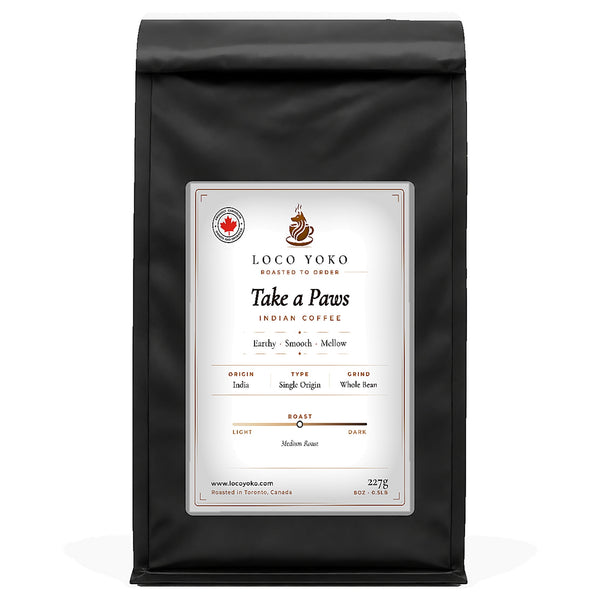
Take a Paws
Earthy · Smooth · Mellow
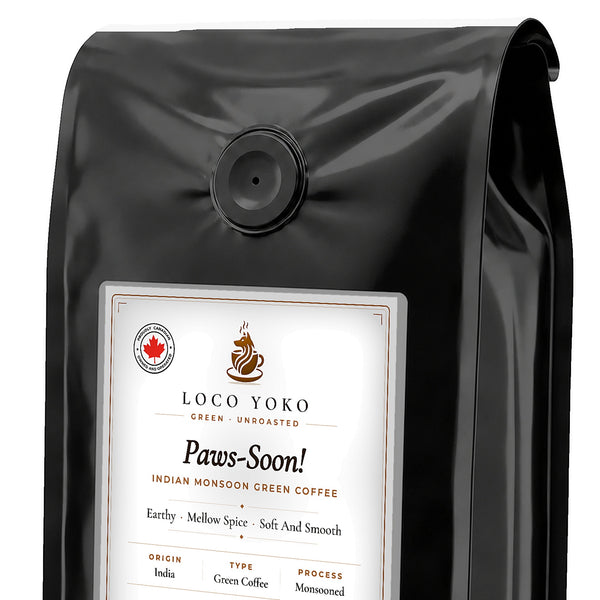
Paws-Soon!
Earthy · Mellow spice · Soft and smooth
Try removing a filter or two.
Tap a choice and we'll take you to the next step.
Understanding Indian Coffee: Region, Process, and Cup
India is one of the few major origins that grows coffee almost entirely in the shade, under a canopy of rosewood, silver oak, and pepper vines, across the Western Ghats in Karnataka, Kerala, and Tamil Nadu. That shade-grown tradition, combined with a monsoon climate that soaks the hill country for months at a time, gives indian coffee beans a character that's genuinely different from anything grown in Latin America or East Africa: heavier body, lower acidity, and flavors that lean toward spice, wood, and dark sugar rather than bright fruit. If you've spent your coffee life drinking washed Central Americans, your first cup of a good Indian lot can feel like switching instruments entirely.
We carry two Indian coffees in this collection, and both come out of the same growing culture even though they're processed differently. Rather than walk through them as a catalog (the grid above does that job), this page is meant to explain what makes coffee from India worth seeking out, how to read the label when you're shopping, and how it stacks up against other origins in our full coffee lineup.
The Growing Regions: Karnataka, Kerala, and the Western Ghats
Roughly 70% of India's coffee comes from Karnataka, centered on the old coffee districts of Kodagu (Coorg), Chikmagalur, and Hassan. This is mysore coffee beans country in the historical sense — "Mysore" was the old name for the region and is still used informally to describe coffee from this belt, even though it's not a strict appellation the way Yirgacheffe or Antigua are. Elevations here run from about 900 to 1,500 meters, which is respectable but generally lower than the high-grown lots you'd find from Central America. Kerala's Wayanad district and parts of Tamil Nadu round out the remaining production, often at slightly lower elevations and with a higher share of robusta.
Both arabica and robusta are grown commercially in India, and unlike in most origins, robusta here isn't treated as filler-grade material — a fair amount of it is grown and processed with real care, especially for the domestic filter coffee market. Understanding arabica vs robusta indian coffee matters if you're buying online: arabica lots (usually labeled Arabica Cherry or Arabica Parchment) give you the more familiar sweet-and-mellow cup, while robusta brings more body, more bitterness, and a stronger caffeine kick, and is traditionally blended with arabica for the South Indian style of milk coffee.
Monsooning: India's Signature Process
The process that makes Indian coffee genuinely unique — and the reason coffee people talk about it at all — is monsooning. During India's June-to-September monsoon, warehouses near the Malabar coast lay out dry-processed green coffee in shallow layers and expose it directly to the humid sea winds blowing in off the Arabian Sea. Workers turn the beans by hand every few days for weeks. The beans swell, turn pale gold, and lose most of their original acidity as the humidity works into the cell structure. The result is monsooned malabar coffee, the signature indian monsooned coffee style that exists nowhere else in the world because it depends on this specific coastal monsoon pattern.
What monsooning does to the cup is dramatic. Regular dry-processed Indian coffee already has moderate acidity; monsooning strips it further and replaces bright, sharp notes with something rounder — muted, almost bread-like sweetness, heavy body, and a smoky, earthy depth that people either love immediately or need a few cups to appreciate. If you look up monsoon malabar coffee taste notes, you'll see the same words come up again and again: mellow, woody, spicy, low-toned, with almost no citrus or berry character left at all. It's the closest thing coffee has to an aged spirit — time and humidity doing the flavor work instead of fermentation.
Because it starts as a natural or dry-processed coffee, monsooned Malabar is inherently different from the washed coffees most specialty drinkers are used to. If you want a point of comparison, our Costa Rica Coffee lots are washed at high elevation and taste almost like the opposite pole — clean, crisp, citrus-forward. Tasting the two back to back is one of the fastest ways to understand what processing actually does to a cup, more than roast level or even varietal.
Flavor Profile: Smoky, Spicy, Low-Acid
Across both processing styles, Indian coffee tends to share a family resemblance: heavy body, low-to-moderate acidity, and flavor notes that read as savory rather than sweet-and-fruity. Expect cedar and tobacco, baking spice like clove and cardamom, dark chocolate, and sometimes a mineral or earthy note that can come across as "monsoon rain on hot pavement" if you let yourself get poetic about it. This is where the description smoky spicy coffee beans comes from — it's not a roast artifact, it's the terroir and processing talking.
For people who find typical light-roast specialty coffee too sharp or sour, this is genuinely useful information: Indian coffee is one of the more reliable places to find low acid coffee beans without giving up complexity. The acidity isn't just masked by a dark roast (though dark roast does soften it further) — it's structurally lower to begin with, thanks to the shade cultivation, monsoon humidity, and lower relative elevation compared to origins like Ethiopia or Colombia. If acid reflux or a sensitive stomach has pushed you away from coffee generally, an Indian lot is worth trying before you give up on drip coffee altogether.
That earthy, low-acid quality also makes India a natural entry point if you're used to darker European-style roasts. Our coffee from Chiapas and Oaxaca shares some of that gentler acidity, though the flavor language is different — more nutty and cocoa-driven than spiced. If you liked a Mexican lot for its smoothness, an Indian coffee is a logical next stop for exploring earthy coffee beans low acidity profiles from a completely different hemisphere.
Roast Level and Brewing
India's coffee culture has historically favored darker roasts, largely because of how the coffee is consumed domestically — as strong, milk-forward filter coffee. If you're shopping for indian coffee beans dark roast style, know that darker roasting amplifies the already-present smoky, spice-forward character rather than fighting it, which is different from, say, a naturally bright Ethiopian being pushed dark to mute its acidity. It's a roast level the bean was practically built for.
That said, we don't roast everything to the same dark endpoint. A medium roast on a monsooned Malabar lot lets you taste the process itself more clearly — the woody, cellar-like notes are still there but with a bit more clarity and less char. A darker roast leans into body and bittersweet depth, which is what most people picture when they think of a classic South Indian brew. Either way, we recommend giving any Indian lot the same 24-72 hour rest after roasting that we suggest for all our coffee — degassing evens out the crema and keeps the first cup from tasting flat or overly sharp with CO2.
For brewing, this is coffee that rewards methods with a metal or cloth filter rather than paper: French press, moka pot, or the traditional South Indian filter (a two-chamber stainless device that drips slowly through a fine metal mesh) all let more of the body and oils through, which is where a lot of the character lives. If you brew south indian filter coffee beans the traditional way — 70/30 or 80/20 coffee-to-chicory in some households, though we sell pure coffee — you'll get the thick, almost syrupy base used for milk coffee. Pour a shot of hot filtered decoction into hot milk with sugar, froth it by pouring back and forth between two vessels, and you have real kaapi coffee beans canada drinkers can make at home without shipping anything in from overseas.
If you prefer drip or pour-over, go with a slightly coarser grind than you'd use for a bright Central American coffee, and expect a shorter, more full-bodied result rather than a delicate, tea-like cup. It's simply a different style of coffee, and pushing it toward the profile of a washed Guatemalan or Costa Rican will just fight the bean.
How Indian Coffee Compares to Other Origins We Roast
Placed next to the rest of our lineup, Indian coffee reads as the smoky, low-acid, savory end of the spectrum. Our Nicaraguan lots sit closer to the middle — balanced, chocolatey, moderate acidity, a good bridge if you're moving from Latin American coffee toward something like a monsooned Malabar. Costa Rica, as mentioned, is the brighter, cleaner counterpoint. And if you ever want to taste coffee before any of this processing and roasting happens, our green, unroasted coffee selection includes lots you can roast at home to see exactly how much a process like monsooning changes the raw bean's starting point.
None of this makes Indian coffee "better" or "worse" than a bright Ethiopian natural or a juicy Kenyan — it's simply solving for a different set of things: body over acidity, spice over fruit, consistency over single-origin fireworks. If your palate already leans toward dark chocolate, cedar, and baking spice in your coffee, or you've been drinking indian coffee beans online canada shoppers rave about from other roasters, ours is roasted to order in Toronto in small batches, which matters more than people think — pre-roasted bulk stock sitting in a warehouse for months loses a lot of the nuance that makes monsooned coffee interesting in the first place.
Buying Guide: What to Look For
When you're trying to buy indian coffee beans canada wide, a few label terms are worth knowing. "Monsooned Malabar AA" tells you both the process (monsooned) and the screen size grade (AA is large bean, generally a proxy for quality within a lot, though not a flavor guarantee on its own). "Plantation A" or "Cherry AB" refer to washed or dry-processed arabica grades without the monsoon step — these will taste closer to a standard low-acid coffee than the more extreme monsooned style. If a bag just says "Indian coffee" with no process listed, it's worth asking the roaster directly, since the difference between monsooned and standard dry-processed is large enough to change your whole experience of the coffee.
We sell our Indian lots as indian coffee whole bean so you can grind to order, which matters even more here than with brighter coffees — the low acidity and heavier oils in monsooned coffee mean pre-ground bags lose freshness and aromatic complexity faster than a bright washed coffee would. Grind right before brewing if you can, store the bag sealed away from light and heat, and don't be surprised if the beans look a little oilier or paler than what you're used to — that's the monsoon process and roast doing exactly what they're supposed to.
All of our coffee, Indian lots included, ships free across Canada on orders over $50, roasted to order rather than pulled from a shelf, which is worth factoring in if you're comparing us to bulk import bags sold under generic Indian-origin labels at grocery chains.
FAQ
What makes monsooned Malabar coffee different from regular Indian coffee?
Monsooned Malabar is a specific processing method, not a growing region on its own. After the coffee is dry-processed, it's exposed to humid monsoon winds along the Malabar coast for several weeks, which swells the beans, fades their color, and dramatically reduces acidity while adding smoky, woody, spice-forward flavors. Standard Indian coffee that skips this step keeps more of its original brightness and is closer to a typical low-acid dry-processed coffee.
Is Indian coffee good for people with acid reflux or a sensitive stomach?
It's one of the better options to try. The combination of shade growing, monsoon humidity, and lower relative elevation gives Indian coffee structurally lower acidity than most Latin American or East African origins, and monsooned lots push that even further. It's not guaranteed to be problem-free for everyone, but if bright, acidic coffee bothers you, an Indian or monsooned Malabar lot is a reasonable place to start before writing off coffee altogether.
Should I buy Indian coffee as light roast or dark roast?
Most Indian coffee, and monsooned Malabar especially, is built for medium to dark roasting rather than light. The bean's inherent low acidity and heavy body pair naturally with a darker roast, which is also how it's traditionally roasted for the milk-coffee style popular across South India. A medium roast will show more of the process character clearly; a dark roast leans further into body and bittersweet depth.
What's the difference between arabica and robusta Indian coffee?
Arabica lots, typically labeled Arabica Cherry (natural) or Arabica Parchment (washed), give the more familiar sweet, mellow, moderately low-acid cup most specialty drinkers expect. Robusta is grown seriously in India rather than treated as filler, and brings more body, more bitterness, higher caffeine content, and is traditionally blended with arabica to add strength and crema to the cup.
How should I brew traditional Indian filter coffee at home?
Use a coarser grind than you would for pour-over, and brew with a metal filter method if possible — a French press, moka pot, or a traditional South Indian filter device all let more body and oil through than a paper filter, which is where a lot of the flavor lives. For the classic milk coffee, brew a strong decoction, mix it with hot milk and sugar, and froth by pouring between two containers a few times.
How long should I let Indian coffee rest after roasting?
We recommend the same 24-72 hour rest we suggest for all our coffee. Freshly roasted beans are still releasing CO2, and letting them rest lets that gas escape gradually, which evens out extraction and keeps the first cups from tasting flat, overly sharp, or unevenly bitter. This matters just as much for a heavier-bodied Indian lot as it does for a bright washed coffee, even if the effect is less visually obvious in the cup.
Frequently asked questions
The essentials about this collection. Still curious about something?
Ask us anything