
Papua New Guinea
Papua New Guinea's Eastern Highlands, small wild-grown lots at 1,300–1,900m producing a rustic, complex cup with tropical fruit and earthy depth. Roasted to order and shipped free across Canada over $50.
Products in this collection
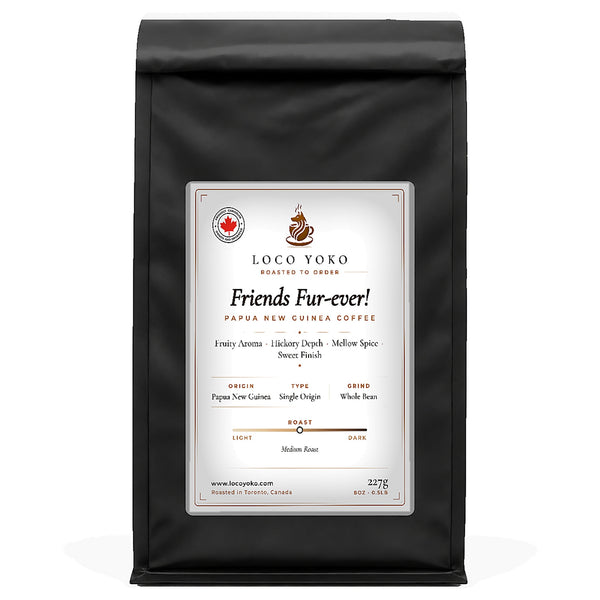
Friends Fur-ever!
Fruity aroma · Hickory depth · Mellow spice · Sweet finish
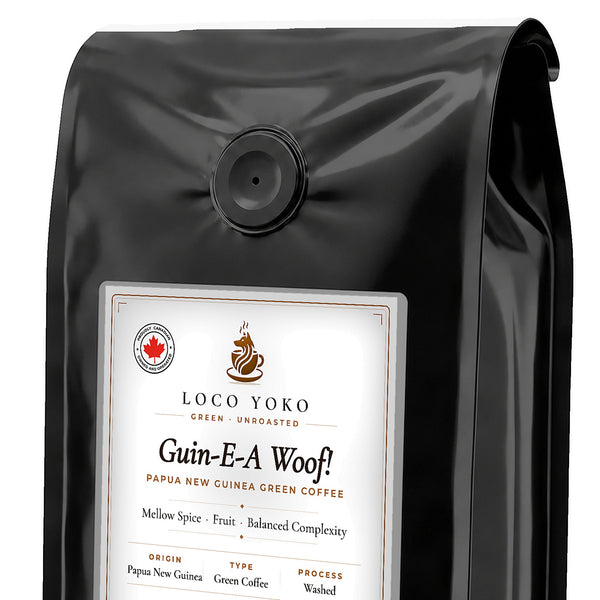
Guin-E-A Woof!
Mellow spice · Fruit · Balanced complexity
Try removing a filter or two.
Tap a choice and we'll take you to the next step.
Papua New Guinea: A Guide to the Highlands
Papua New Guinea occupies a strange middle ground in the specialty coffee world — grown in some of the most remote, high-altitude terrain on earth, yet still under-recognized next to its East African and Central American peers. That's changing. As roasters and drinkers look past the usual Ethiopia-Colombia-Guatemala rotation, papua new guinea coffee beans have become one of the more interesting finds for anyone who wants a cup with real body and a fruit-forward edge without the wilder fermentation notes you get from some African naturals. If you're browsing our full coffee lineup and wondering where PNG fits, this is the primer.
Where It's Grown: The Highlands
Almost all serious papua new guinea highlands coffee comes from the central highland provinces — Eastern Highlands, Western Highlands, Simbu, and Jiwaka — where elevations run from about 1,300 to over 2,000 metres above sea level. The terrain is volcanic, the soil is rich, and the climate delivers a long, even rainy season followed by a distinct dry harvest window. That combination of altitude, volcanic soil, and rainfall pattern is very similar to what you'd find in the highlands of Kenya or the Yirgacheffe zone of Ethiopia, and it's a big reason PNG can produce cups with real structure and sweetness rather than the flat, woody character you get from lowland robusta-adjacent growing regions.
Most farms here are smallholdings — family plots of a hectare or two, often planted alongside food crops, harvested by hand and carried down to communal wet mills on foot or by truck. There are a handful of larger plantation-style estates left over from the colonial coffee boom of the 1950s-60s, and Sigri is the most famous of these. A papua new guinea sigri coffee lot, when you can find one, tends to be more consistent from bag to bag than smallholder mixed lots simply because it comes from a single estate with controlled processing, rather than dozens of small farms pooling cherry at a central mill.
Processing and What It Does to the Cup
The dominant method is washed processing, and it's a big part of why this origin tastes the way it does. Ripe cherry is depulped within hours of picking, fermented in tanks for 24 to 48 hours to break down the mucilage, washed clean, and then dried slowly on raised beds or patios. Washed processing strips away a lot of the wild, boozy fermentation character you'd get from natural-processed lots and instead lets the bean's inherent sugars and acids come through cleanly. That's the throughline in nearly every batch of this origin: clarity first, intensity second.
Some cooperatives are experimenting with honey and natural processing now, chasing the bigger, jammier fruit notes that have made naturals so popular out of Ethiopia and parts of Central America. These lots exist but they're still a small share of total exports, so if you see one, it's worth trying — it's a genuinely different expression of the same origin.
What This Origin Tastes Like
This is the part people actually want to know: what does it taste like in the cup? On the whole, expect full body, low-to-moderate acidity, and a syrupy, almost tropical sweetness. Expect notes of ripe stone fruit, dried fig, brown sugar, and a spice note that some cuppers describe as clove or nutmeg. The fruity notes here are usually more restrained than what you'd get from a washed Kenyan or Ethiopian lot — think ripe plum and dark cherry rather than bright citrus or berry. There's often an earthy, almost herbal undertone as well, a trait PNG shares distantly with some Indonesian coffees, though PNG is cleaner and less funky than a typical Sumatran.
Body is where this origin really stands out. It's heavier and more syrupy on the palate than most washed coffees, closer in weight to what you'd get from a well-processed Peruvian single origin, but with a fruitier top note. If you like coffees that coat the mouth rather than coffees that snap and fade, PNG will probably appeal to you.
Papua New Guinea Single Origin Coffee vs. Other Origins
Comparisons help place an unfamiliar origin, so here's how PNG stacks up against the coffees people already know.
- Vs. Ethiopian and Kenyan coffee: Both regions share the East African Bourbon-descended genetics that made their way to PNG in the 1930s via Jamaican Blue Mountain seed stock. But Kenyan and Ethiopian washed coffees tend toward brighter, more citric acidity, while PNG trades some of that brightness for heavier body and darker fruit.
- Vs. Indonesian coffee (Sumatra, Sulawesi): Geographically closer to PNG than almost any other major origin, and there's a family resemblance in body and earthiness. But Indonesian coffees are usually processed wet-hulled, which produces a muskier, more herbal cup. PNG's washed process keeps things cleaner.
- Papua New Guinea vs Jamaican Blue Mountain is the comparison worth spending the most time on, since the genetic link is direct — Jamaican Blue Mountain trees were the original seed stock planted in the PNG highlands decades ago. The two share a mild, well-balanced, low-acid profile and a similarly heavy body. Where they diverge is price and fruit character: Jamaican Blue Mountain is famously expensive and tends toward a very clean, almost neutral sweetness, while PNG delivers noticeably more dried-fruit and spice complexity for a fraction of the cost. If you've had and liked Blue Mountain, this origin is the value-minded way to explore that same flavor family.
- Vs. Central/South American coffee: Compared to a bright Central American washed lot or a Peru coffee, PNG sits heavier and less acidic, closer to what a Guatemalan or Costa Rican high-grown lot might taste like on a particularly ripe, fruity day.
- Vs. Hawaiian coffee: Both are island-grown, volcanic-soil coffees with smooth, low-acid profiles, but our Hawaiian coffee tends toward a nuttier, more buttery character where PNG leans into darker fruit and spice.
- Vs. Congo coffee: Both trace back to Bourbon-lineage varieties and share a fruit-forward, full-bodied cup, but our Congo coffee tends to run brighter and winier where PNG stays rounder and more syrupy.
Roast Level: What Actually Works
Because the beans already carry heavy body and low acidity, a medium roast is where this origin shines. A medium roast lets the caramelized sugars from roasting layer on top of the coffee's natural fruit and spice without smothering it — you get toffee and brown sugar notes riding alongside the stone fruit and clove character instead of one canceling out the other. Push it into full city or dark roast territory and you'll trade away most of the fruit complexity for straight roast-driven bitterness and smoke, which is a shame given how much nuance is sitting there in the green bean. Light roasting is less common with this origin because the body and sweetness that define it need a bit more development time to open up than, say, a delicate Ethiopian natural does. If you're deciding how to grind and brew it, a medium roast works well across drip, pour-over, and French press — the heavier body actually holds up nicely in immersion methods that would wash out a lighter-bodied bean.
Organic and Fair Trade Availability
Because most PNG coffee is grown by smallholders on family plots without the capital for synthetic fertilizer or pesticide programs, a lot of it is organic by default even before certification paperwork catches up. Actual certified papua new guinea organic coffee is less common than the growing practices would suggest, simply because certification costs money and paperwork that many cooperatives can't easily absorb — so ask your roaster whether a lot is certified organic or "organic by practice," since those are two different claims. The same logic applies to fair trade certification: cooperative-run mills in the highlands often already pay above-market prices to member farmers informally, but only some are enrolled in formal Fairtrade certification programs. When we can source a lot that's both washed to a high standard and either certified organic or certified fair trade, we prioritize it, because the certification tends to track with more consistent farm-gate pricing for the smallholders actually growing the cherry.
Buying It Whole Bean
If you're going to spend money on this origin, buy it whole bean and grind it fresh at home. The syrupy body and dried-fruit sweetness that define this coffee fade fast once it's ground — pre-ground PNG loses most of what makes it worth seeking out within days. Buying it whole bean also lets you dial in grind size for whatever method you're using, which matters more with a heavy-bodied coffee like this than with a thin, bright one that's more forgiving of an imperfect grind.
For anyone in Canada trying to buy papua new guinea coffee online canada shoppers can trust for freshness, look for a roaster that roasts to order rather than shipping from a warehouse shelf. We roast every bag here in Toronto after you order, and we recommend a 24-72 hour rest period after roasting before you brew — degassing evens out the flavor and keeps the crema and body consistent, especially important for a coffee this dense. Free shipping kicks in across Canada on orders over $50, so it's easy to pair a bag of this origin with something from another origin if you want to compare side by side.
Sourcing and Why It's Worth Seeking Out
PNG coffee export volumes are small compared to major producers like Brazil, Vietnam, or Colombia — total national output is a fraction of what a single Brazilian state produces in a season. That scarcity, combined with difficult logistics (many highland farms are days from the nearest paved road), means best papua new guinea coffee canada availability tends to come and go with harvest cycles rather than sitting reliably in stock year-round. When we find a lot worth bringing in, whether from a smallholder cooperative or an estate like Sigri, we bring in what we can and roast it fresh rather than trying to stretch a mediocre lot across months.
If you're new to exploring beyond the familiar origins, this is a genuinely good entry point specifically because it isn't trying to be the boldest or brightest thing on the shelf — it's a well-balanced, full-bodied cup that rewards attention without demanding it. For drinkers who eventually want to go further afield, browsing our green coffee selection is a good way to see the same origins before they're roasted, which is useful if you're curious how much a given bean's character comes from terroir versus roast development.
FAQ
What are the typical this origin taste notes?
Expect full body, low-to-moderate acidity, and sweetness that leans toward ripe stone fruit, dried fig, brown sugar, and a spice note often described as clove or nutmeg. It's syrupy on the palate rather than sharp or bright, with an earthy undertone that's more restrained than a typical Indonesian coffee.
Is PNG coffee the same as Jamaican Blue Mountain?
Not the same, but closely related. The original PNG highland plantings came from Jamaican Blue Mountain seed stock, so both share a mild, low-acid, heavy-bodied profile. PNG tends to show more dried-fruit and spice complexity, while Blue Mountain leans cleaner and costs considerably more.
What roast level is best for this origin?
Medium roast is the sweet spot. It develops caramelized sugar notes without burying the coffee's natural fruit and spice character. Dark roasting tends to erase the nuance that makes this origin worth buying in the first place.
Is PNG coffee usually organic or fair trade?
A lot of it is grown organically by default, since smallholder farms rarely use synthetic inputs, but formal organic certification is less common due to cost and paperwork. The same is true of fair trade status — some cooperatives are certified, others simply pay fair prices informally without the certification.
How fresh is the coffee when I order it from LocoYoko?
We roast to order in Toronto rather than pulling from pre-roasted warehouse stock. We recommend letting the beans rest 24-72 hours after roasting before brewing, which lets the coffee degas properly and settles the flavor. Shipping is free across Canada on orders over $50.
How does this origin compare to African coffees like Kenya or Ethiopia?
Both share genetic roots and altitude-driven growing conditions, but Kenyan and Ethiopian washed coffees generally show brighter, more citric acidity. PNG trades some of that brightness for a heavier body and darker, more syrupy fruit character.
Frequently asked questions
The essentials about this collection. Still curious about something?
Ask us anything