Loco Paws-topia: Guatemalan Antigua Green Coffee
Loco Paws-topia is our unroasted Guatemala Antigua coffee, grown in the small, high-walled valley of Antigua just outside Guatemala City, where three volcanoes — Agua, Fuego, and Acatenango — ring the growing region and feed the soil with fine volcanic ash. If you've been searching for guatemala antigua green coffee beans to roast yourself, or you're simply trying to understand what makes this origin different from the rest of our lineup, this is the page for that. We'll walk through where the beans come from, what to expect flavor-wise, who this coffee suits, and how to roast and brew it once it lands on your counter.
This lot sits alongside the rest of our coffee selection, and specifically within our dedicated Antigua-region lineup, where we carry both green and roasted options from this valley. Loco Paws-topia is the green (unroasted) version — full crop character, no roast curve applied yet, sold for people who want to control that step themselves.
Where These Beans Come From
Antigua is one of the most historically significant coffee-growing zones in Central America, and it earns that reputation through geography rather than marketing. Farms here sit between 1,500 and 1,700 metres above sea level, which is high enough to slow down cherry maturation and let sugars develop more fully before harvest. The basin is protected from wind by the surrounding volcanoes, and the ash-rich, mineral-dense volcanic soil is part of what gives guatemala antigua coffee its distinct depth. Farmers in the region have been refining this since the 1800s, and the growing conditions — guatemala coffee volcanic soil high altitude combined with a defined dry season for drying — are largely why Antigua carries a Denominación de Origen protection similar to a wine appellation.
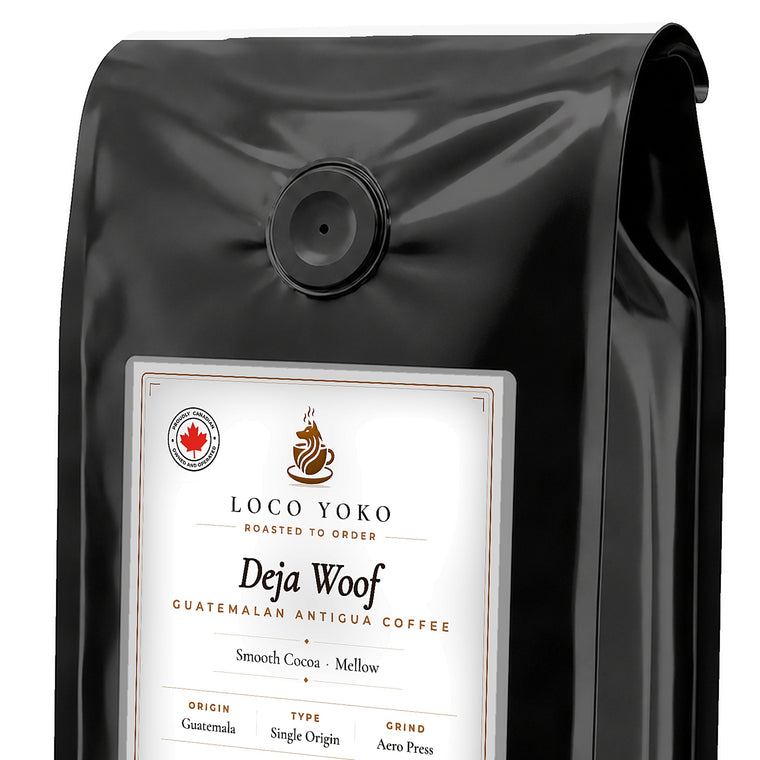
Most smallholder farms in this valley use the traditional wet (washed) process: cherries are pulped, fermented briefly to break down the mucilage, washed clean, and then dried slowly on patios or raised beds. That washed processing is a big part of why this origin tends to taste clean and structured rather than wild or fermented-forward, and it's consistent across the lots we've sourced for both this green offering and our roasted Deja Woof Guatemalan Antigua coffee.
Flavor Profile
Green coffee doesn't taste like much on its own — the flavor develops during roasting — but the potential sitting inside these guatemalan antigua coffee beans is well documented and consistent from crop to crop. When roasted, expect a profile built around chocolate citrus coffee beans character: a cocoa-forward base with bright citrus acidity riding on top, and a nutty sweetness that fills in the middle of the cup. It's a balanced profile rather than an extreme one — nothing about it is overly acidic or overly heavy, which is part of why Antigua coffee has stayed a benchmark origin for so long.
The exact guatemala antigua coffee tasting notes you land on depend heavily on how you roast it. Pull it earlier (city to city+) and the citrus and floral qualities stay forward, with a lighter body and a crisper finish. Push it a shade darker (full city) and the guatemala antigua coffee chocolate notes take over — more cocoa, more caramelized sugar, a rounder mouthfeel, and the citrus recedes into something closer to dried orange peel than fresh juice. Because the underlying beans are dense and well-grown, they hold up to a wider roast range than thinner, lower-altitude coffees do without tasting flat or ashy.
Who This Coffee Is For
Loco Paws-topia is aimed at two kinds of customers. First, home roasters — people who already have an air roaster, a drum roaster, or even a modified popcorn popper, and want quality green coffee beans canada shoppers can actually rely on for consistent crop quality. Second, anyone who's curious about roasting but hasn't started yet: Antigua is widely considered one of the more forgiving, best guatemalan coffee for roasting beginners can practice on, since its density and structure tolerate small mistakes in roast timing better than delicate, low-grown coffees do.
If you'd rather skip the roasting step entirely and just want the cup, our roasted Deja Woof is the same regional character, already roasted to order here in Toronto and ready to brew after its rest period. Loco Paws-topia exists specifically for the segment of our customers doing home roasting green coffee beans themselves — think of it as the raw material version of the same Antigua story.
Roasting Guidance
These are dense, high-altitude beans, so give them a bit more time and heat than you would a lower-grown coffee — rushing a hot roast on dense green coffee is the most common way to end up with a scorched exterior and an underdeveloped, grassy-tasting center.
- City roast (light): first crack plus a minute or two. Expect bright citrus, floral top notes, and a tea-like body. Good for pour-over and light-roast filter brewing.
- City+ to Full City (medium): the balance point — this is where the chocolate, citrus, and nutty sweetness described on this page show up together most clearly. This is the range we'd recommend for a first attempt.
- Full City+ (medium-dark): chocolate and caramel dominate, citrus fades to a dried-fruit note, body thickens. Works well for drip and moka pot.
Whatever roast level you land on, let the beans rest 24 to 72 hours after roasting before brewing — this applies to home-roasted batches the same way it applies to our own roasted coffee. Fresh-off-the-roaster beans are still releasing CO2, and brewing too soon tends to produce uneven extraction and a flat, muted cup regardless of origin.
Brewing Recommendations
Once rested, this profile is versatile across methods:
- Pour-over (V60, Kalita): a lighter roast here really lets the citrus and chocolate separate into distinct notes. Use a medium-fine grind and water just off the boil.
- Drip machine: medium grind, medium roast — an easy, reliable everyday cup with good balance between the chocolate and nutty sweetness.
- French press: coarse grind brings out body and rounds off the citrus into something closer to soft stone fruit.
- Espresso: a medium to medium-dark roast, fine grind, works nicely for anyone wanting a cocoa-forward shot with a citrusy top note rather than a heavy, bitter pull.
Cupping Notes and Green Bean Appearance
If you're evaluating the raw beans before you roast, Antigua green coffee has a fairly distinctive look: a pale, blue-green to grey-green colour, a fairly uniform bean size (Antigua lots are typically graded SHB — Strictly Hard Bean — which refers to the density that comes from high-altitude growing rather than any defect grading), and a clean, slightly grassy smell with almost no fermented or vegetal off-notes if the processing was done properly. A few visibly broken or discoloured beans in any bag is normal — hand-sorting removes most defects, but green coffee is an agricultural product, not a manufactured one, and a small amount of natural variation is expected even in a well-sorted lot.
On the cupping table, professional tasters score this origin on structure as much as on flavor: a clean cup, medium-to-full body, bright but not sharp acidity, and a sweetness that carries through from the first sip to the finish. That combination — body, acidity, and sweetness all present and none of them dominating — is exactly why this origin has held its reputation for so long even as newer growing regions around the world have come onto the specialty market. It's not the flashiest cup you'll try, but it's one of the most reliably well-balanced, which is a big part of the appeal for people roasting at home who want a coffee that's forgiving to dial in and consistently good once they do.
A Quick Word on Freshness and Crop Year
Green coffee doesn't go stale the way roasted coffee does, but it isn't immortal either. Beans lose a bit of moisture and vibrancy every year they sit in storage, and a coffee described as "past crop" or "old crop" will roast and taste noticeably flatter than a current-crop lot, even if it's technically still drinkable. We buy this Antigua lot with crop freshness in mind and turn our green inventory over regularly rather than warehousing it for long stretches, which matters more than people expect once you're roasting at home and can actually taste the difference between a fresh crop and a tired one. If you ever have questions about the specific crop year or harvest window behind a bag you've received, our team can look that up for you — we track lot information on every green coffee shipment that comes through the roastery.
How It Compares
Within our own catalogue, this is our flagship single origin guatemala coffee in green form. If you're comparing it to other origins we carry, Guatemala Antigua tends to sit in the middle of the intensity spectrum — brighter and more structured than a heavy-bodied Sumatra, but rounder and less sharply acidic than a washed Kenyan or Ethiopian lot. Within Guatemala itself, Antigua is generally considered the reference point other Guatemalan growing regions get compared to, largely because of that volcanic soil and altitude combination.
We treat this less as a novelty item and more as a serious offering for anyone building out a home roasting habit — it's why we keep it stocked as a dedicated line inside our broader Guatemalan Antigua coffee collection rather than a one-off. As a specialty green coffee importer canada roasters have used for repeat orders, we source this lot with roasting consistency in mind, not just cupping-table novelty.
Buying Green Coffee in Canada
Sourcing good unroasted coffee beans canada wide isn't always straightforward — a lot of green coffee sold locally is old crop, poorly stored, or sourced without much transparency about the farm or processing method. We import in small batches specifically so stock doesn't sit around losing vitality before it reaches you. If you're trying to buy guatemala coffee beans online canada shoppers can trust for roasting quality, this page and our roasted Antigua line are both drawn from the same relationships and the same crop. For anyone comparing farms, this bag is also a good reference point for guatemalan coffee beans canada buyers looking to understand what "Antigua" actually means on a label versus just a regional name.
Every order — green or roasted — ships free across Canada on orders over $50, and everything moves out of our Toronto roastery. Browse the rest of our coffee lineup if you want to compare this lot against our other origins before deciding what to roast or brew next.
FAQ
What's the difference between Loco Paws-topia and Deja Woof?
They're the same Antigua-region beans at different stages. Loco Paws-topia is sold green (unroasted) for home roasters, while Deja Woof is the roasted, ready-to-brew version we roast to order here in Toronto.
Do I need special equipment to roast green coffee at home?
You need some way to apply even, controllable heat — a dedicated air or drum home roaster is ideal, though many people start with a modified popcorn popper or a stovetop pan. Good ventilation matters too, since roasting produces smoke and chaff.
How should I store green coffee before roasting?
Keep it in a cool, dry, dark place in a breathable bag rather than sealed airtight — unlike roasted coffee, green coffee doesn't need to be protected from oxygen in the same way, and it actually stores far longer than roasted beans, often a year or more without major quality loss.
What roast level brings out the chocolate and citrus notes best?
A City+ to Full City roast tends to show both qualities at once — enough development for cocoa and nutty sweetness to build, without losing the citrus brightness entirely. Go lighter for more citrus, darker for more chocolate.
How long should I rest the coffee after roasting?
Plan on 24 to 72 hours minimum before brewing. Beans continue releasing CO2 for a few days after roasting, and brewing too fresh usually leads to uneven extraction and a flatter-tasting cup.
Is Guatemala Antigua a good starting point for new home roasters?
Yes — its density and structure make it more tolerant of small timing mistakes than thinner, lower-grown coffees, which is a big part of why it's often recommended as a first origin to practice on.


 2026 Canadian Choice Award
Proud winner
2026 Canadian Choice Award
Proud winner