What "Green Coffee" Actually Means
If you've landed here searching for congo green coffee, chances are you already know the basics, but let's be precise anyway: green coffee is the raw, unroasted seed of the coffee cherry after it's been picked, processed, and dried, but before it's ever touched heat. It's grey-green, dense, faintly grassy-smelling, and shelf-stable for a very long time compared to roasted coffee. Paws-tastic Energy - Congo Green Coffee is exactly that: raw beans from the Kivu region of the Democratic Republic of Congo, sold to home roasters who want to take the entire process into their own hands.
This is not a ready-to-brew product. If you grind these beans right now and try to make coffee, you'll get something closer to a bitter, grassy vegetable tea than anything resembling espresso or drip coffee. Green coffee needs to go through an actual roast — a controlled application of heat that triggers the Maillard reaction and caramelization that produce the aromas and flavours we associate with coffee. That transformation is the entire appeal of buying green.
Why Buy Green Coffee Beans From Congo Specifically
There's a growing community of home roasters across Canada looking specifically for green coffee beans congo, and it's not just about novelty. Congo, and the Kivu region in particular, produces beans with a genuinely distinctive profile: volcanic soil, high altitude, and a wet season that lines up well with cherry development. The result, once roasted, tends toward dark fruit — plum, black cherry — with a syrupy body and a bright, wine-like acidity. It's an origin that rewards experimentation, because small shifts in your roast profile change the balance between that fruit character and the deeper caramel notes underneath.
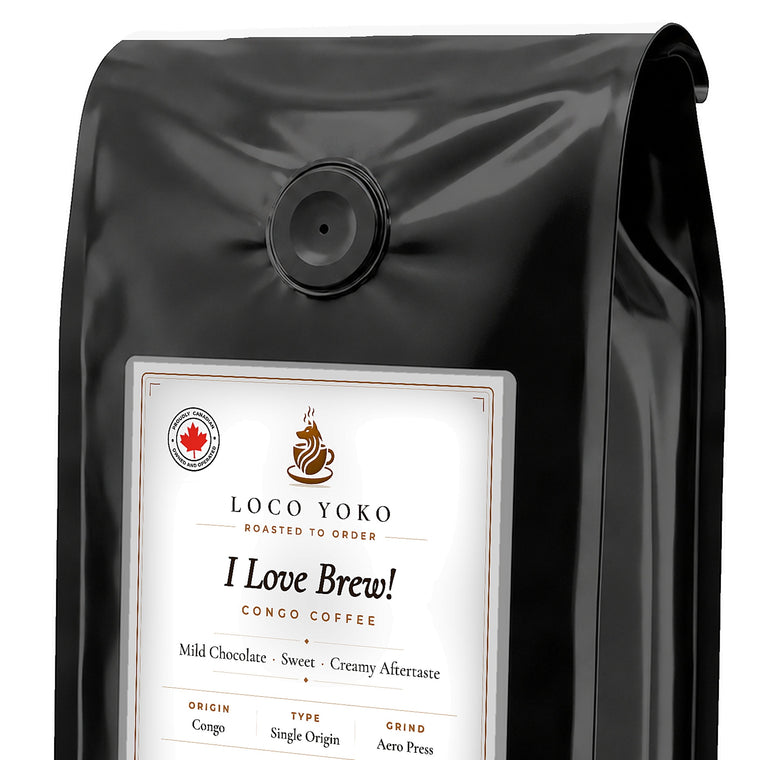
Buying unroasted congo coffee also means you're supporting a coffee-growing region that's still actively rebuilding its export infrastructure after years of instability. Cooperative networks in North and South Kivu have made real strides over the last two decades, and sourcing green coffee directly from these regions helps keep that momentum going. If you'd rather skip the roasting step entirely and just enjoy the cup, we also sell this exact origin already roasted under I Love Brew! - Congo Coffee — same farms, same cherries, just finished for you instead of left in your hands.
Why Home Roasting Is Worth Learning
Roasting your own coffee sounds intimidating the first time you hear about it, but the barrier to entry is lower than most people expect, and the payoff is significant. When you roast at home, you control every variable: the exact darkness of the roast, the speed of the roast, when first crack happens, whether you stop before or after second crack. That control means you can tune this Congo lot exactly to your taste — pull it lighter to chase the fruit-forward acidity, or push it a bit darker if you want more chocolate and less brightness.
There's also a freshness argument that's hard to beat. Roasted coffee starts losing its best aromatic qualities within about two to three weeks. Green coffee, by contrast, stays stable for six months to a year if stored properly. That means you can buy in bulk, roast small batches as you need them, and always be drinking coffee that's days, not weeks, off the roast.
Basic Equipment for Roasting at Home
You don't need an industrial setup to get started. Here's a realistic breakdown of what home roasters typically use, from simplest to most advanced:
- Stovetop popcorn popper or dedicated stovetop roaster: the cheapest entry point, using continuous stirring over direct heat. Great for learning the fundamentals of first crack and roast colour.
- Air popcorn popper (modified): a classic budget hack — a hot-air popcorn popper can roast small batches (around 100g) reasonably evenly, though ventilation is a must since it produces real smoke.
- Dedicated home coffee roasters: countertop machines built specifically for roasting, offering better temperature control, roast logging, and more consistent batches once you're ready to commit.
- Oven roasting: workable in a pinch, though harder to control and more prone to uneven results since the beans aren't in constant motion.
Whichever method you choose, a few accessories make a real difference: a thermometer or probe if your setup doesn't have one built in, a metal colander or tray for cooling the beans quickly after roasting (this stops the cooking process and prevents over-roasting from residual heat), and a well-ventilated space, ideally near a window or under a range hood, since roasting produces smoke and chaff.
A Simple Roasting Process to Start With
- Preheat your roaster or popper to the manufacturer's recommended starting temperature, generally in the 200°C (390°F) range for most methods.
- Add your green beans in small batches — start conservative, even 80-100g, until you understand how your equipment behaves.
- Watch for first crack, an audible popping sound around 196°C (385°F) internal bean temperature, similar to popcorn popping. This marks the beginning of what's considered a light roast.
- Decide your roast level. Pulling shortly after first crack gives you a light roast with maximum acidity and origin character. Waiting for the crackling to slow gives a medium roast with more balance. Pushing toward second crack (a quieter, higher-pitched crackling) gives a darker, bolder roast.
- Cool immediately once you hit your target, spreading the beans thin on a tray or colander and stirring or fanning them to stop the roast quickly.
- Rest the beans for at least 12-24 hours, ideally 2-4 days, before brewing. Freshly roasted beans release CO2 that can make early brews taste flat or overly acidic.
Keep notes on your batches — the time to first crack, total roast time, and how the cup tasted. This origin in particular rewards a bit of experimentation, since the sweet spot between fruit-forward and chocolatey can shift by even 30 seconds of roast time.
Storing Green Coffee Beans Properly
One of the real advantages of buying green is how forgiving it is to store, but "forgiving" doesn't mean "ignore it entirely." A few rules of thumb for keeping your green coffee beans congo order in top shape until you're ready to roast:
- Keep beans in a breathable bag or container away from direct sunlight and humidity. Unlike roasted coffee, green beans don't need a one-way valve, but they still shouldn't sit in a damp basement or a spot with big temperature swings.
- Room temperature is ideal. Avoid the fridge or freezer for green beans you plan to roast within a year — moisture is the main enemy here, not heat exposure in the short term.
- Buy only what you'll roast within six to twelve months for the best cup quality, even though green coffee technically stays usable well beyond that window. Flavour compounds do slowly degrade over time, just far more slowly than in roasted coffee.
What to Expect From This Origin Once Roasted
Because this is the same lot behind our roasted congo coffee beans product, we can tell you exactly what you're working toward. At a medium roast, expect dark fruit — plum and black cherry — layered over a syrupy body with a bright, almost wine-like acidity and a long, slightly cocoa-dusted finish. Pull it lighter and that fruit character gets even more pronounced and tea-like. Push it darker and you'll trade some of that brightness for deeper caramel and roasted-nut notes. There's no wrong answer here — it depends entirely on what kind of cup you're chasing, which is exactly the point of roasting it yourself.
If you want a reference point before you start dialing in your own roast, it's worth tasting our already-roasted version, I Love Brew! - Congo Coffee, so you know what a well-executed medium roast of this exact lot tastes like. Many home roasters use our roasted version as a benchmark, then adjust their own batches lighter or darker from there depending on preference.
Who This Product Is For
This is built for home roasters — hobbyists who already have or are building out roasting equipment, coffee enthusiasts who want total control over their cup, and anyone curious enough to try roasting for the first time with a genuinely excellent origin rather than a bland commodity bean. If you're just looking for a great cup of coffee without the extra steps, our roasted lineup, starting with the LocoYoko Coffee Collection, is the easier path. But if you've ever wondered what it would be like to control every variable in your morning cup, this is where that journey starts, and Congo is a genuinely rewarding origin to learn on given how much its flavour shifts across different roast levels.
We also carry green coffee from other origins if you want to build out a home-roasting rotation, including our Congo Coffee collection for more from this specific region.
A quick note on the name: Paws-tastic Energy plays on the fact that this bag is meant for people who get genuinely excited about the process, not just the destination. Roasting green coffee at home has a way of turning casual drinkers into full-blown hobbyists — there's something satisfying about hearing that first crack, watching the colour shift from pale straw to golden brown to rich chestnut, and knowing you made every call yourself. If that sounds like your kind of Saturday morning project, this Kivu lot is a genuinely rewarding place to start, and it stays interesting well past your first dozen batches since the roast profile has real range to explore.
FAQ
Can I brew these beans without roasting them first?
No. Green coffee beans are raw and haven't developed the flavour compounds that make coffee taste like coffee. Roasting is a required step, not an optional enhancement — brewing unroasted beans produces a grassy, bitter liquid with none of the characteristics you'd want in a cup.
What equipment do I need to get started roasting at home?
You can start as simply as a stovetop popcorn popper or a modified hot-air popper, though dedicated home coffee roasters offer more control and consistency. You'll also want a way to cool the beans quickly after roasting, like a metal colander, and good ventilation since roasting produces smoke.
How long can I store green coffee before roasting it?
Properly stored in a cool, dry spot away from sunlight and humidity, green coffee stays good for six months to a year without major flavour loss, far longer than roasted coffee, which is best used within a few weeks of roasting.
What roast level should I aim for with this Congo origin?
A medium roast tends to showcase this lot best, balancing its dark fruit and wine-like acidity with enough development to bring out caramel sweetness. Lighter roasts amplify the fruit and acidity, while darker roasts push it toward deeper, chocolatey notes.
Is roasting coffee at home difficult to learn?
It has a learning curve, but the fundamentals — listening for first crack, watching colour, cooling quickly — are approachable within your first few batches. Keeping notes on timing and results for each roast will get you dialed in faster than trial and error alone.
Do you sell this same coffee already roasted?
Yes. If you'd rather skip the roasting process, we sell the exact same Kivu-region lot already roasted under I Love Brew! - Congo Coffee, which also makes a useful flavour benchmark if you're planning to roast this green version yourself.


 2026 Canadian Choice Award
Proud winner
2026 Canadian Choice Award
Proud winner