
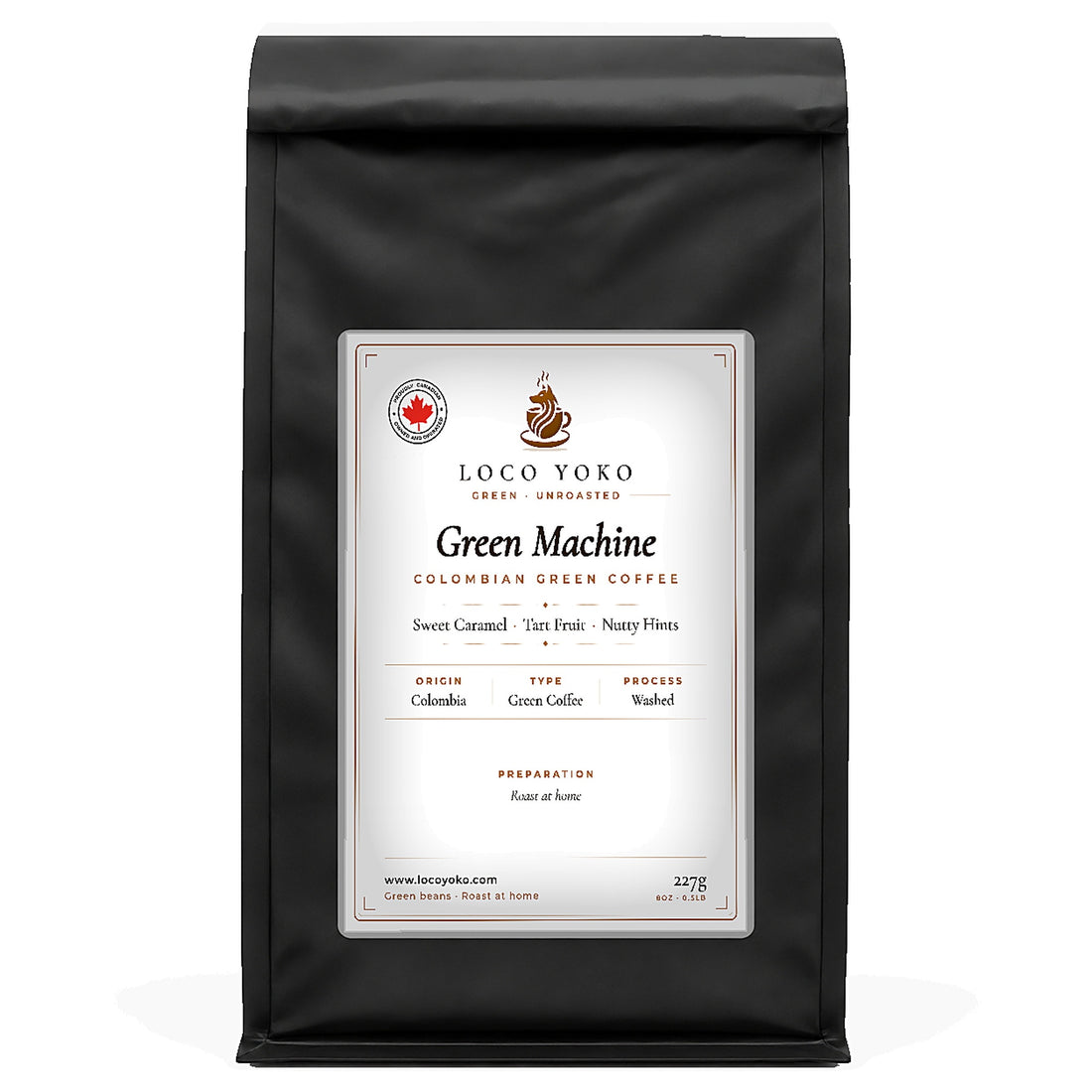


Green Machine - Colombian Green Coffee
Green Coffee Beans | Roasted at Home by You | Brought to You by LocoYoko Coffee For those who love to get their paws dirty and be part of the process — Green Machine is our unroasted Colombian Supremo Arabica, ready for your personal roast journey. Sourced from...
 2026 Canadian Choice Award
Proud winner
2026 Canadian Choice Award
Proud winner
Cupping notes: Sweet caramel · Tart fruit · Nutty hints. Single-origin from Colombia. Roasted to order and stamped with its roast date — best enjoyed within 4 weeks.
We roast and ship Monday–Friday, usually within 24 hours. Free shipping Canada-wide on orders over $50; flat $6 under. Our 30-day happiness guarantee means we'll make it right.
Pour-over (V60): 1:16 ratio, 22 g coffee to 350 g water at 94 °C, ~2:45 total. Prefer filter or French press? Pick your grind above and we'll dial it in.
The spec sheet.
Every bag is stamped with the day it was roasted. If it's older than 30 days when it reaches you, we'll replace it free.
What Canadians say.
Write a review
Genuinely fresh and full of character — the sweet caramel note comes through beautifully. Easily my favourite coffee right now.
You can tell this is small-batch — clean, vibrant, and the sweet caramel is spot on. Beautiful packaging too.
Bold without being harsh — exactly my kind of coffee. The subscription just shows up and I'm thrilled.
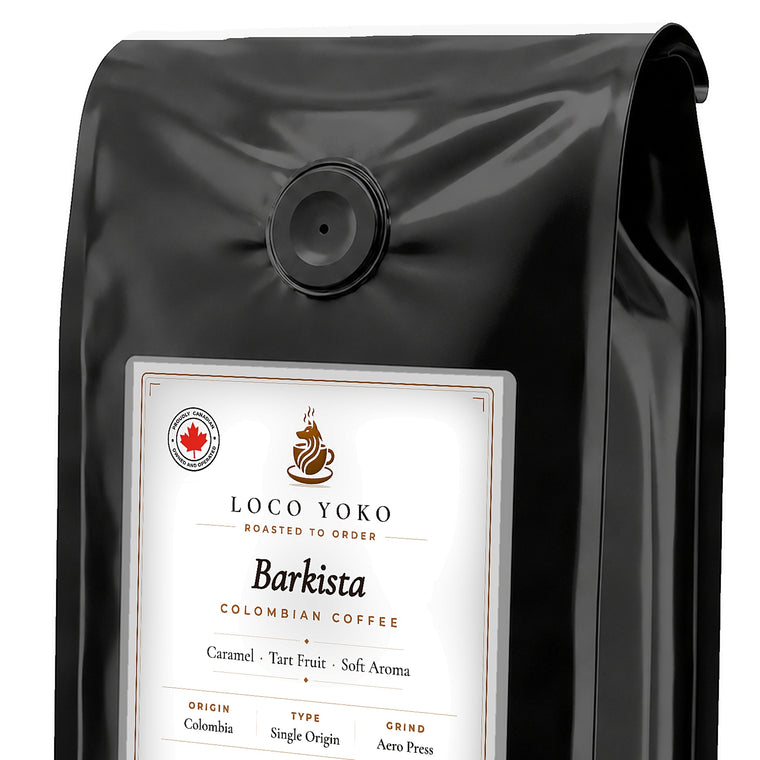
Pairs well with.
What Green Machine Is
Green Machine is our straightforward single origin, arabica colombian coffee, grown in the highland regions of Colombia where cool nights and volcanic soil slow the ripening of the coffee cherries and let more sugar develop before harvest. That slow ripening is a big part of why this lot tastes the way it does. If you're new to our lineup, this is a good entry point into our Colombian lineup, which also includes decaf versions processed a couple of different ways for people who want the same regional character without the caffeine.
We buy this coffee as green coffee colombia sourcing, meaning we're working with unroasted beans bought directly through relationships with mills in the growing regions, then roasting each batch fresh here in Toronto once an order comes in. Nothing sits on a shelf pre-roasted and going stale. Every bag ships within a day or two of roasting, and we recommend a 24-72 hour rest period after roast before you brew, since fresh-roasted beans release CO2 for the first day or two and need that window to settle for the cleanest extraction.
Flavor Profile: Sweet Caramel, Tart Fruit, Nutty Hints
The tasting notes on this lot are sweet caramel, tart fruit, and nutty hints, and they show up in a pretty specific order as the cup cools. Right out of the gate you get the caramel sweetness — not artificial or syrupy, just a rounded brown-sugar note that's typical of washed Colombian coffee beans grown at higher elevation. As the coffee cools a bit, a tart fruit brightness comes forward, more like red apple or a light citrus edge than anything jammy. By the time the cup is at room temperature, the nutty finish takes over, giving it a rounded, almond-like aftertaste that keeps this coffee from tasting too acidic or too sweet in either direction.
This balance is what makes it one of the more approachable colombian coffee tasting notes profiles we carry — it doesn't lean hard into one lane. If you've had colombian coffee with nutty flavor before and liked the roundness but wished for a bit more sweetness, or you've had a fruitier Colombian and wanted more body, this lot tends to land in the middle in a way that works for both camps.
Who This Coffee Is For
Green Machine is built for people who want a reliable, sessionable everyday coffee rather than something that demands a lot of ceremony. If you're the type who drinks two or three cups a day and wants something you don't have to think too hard about — pour it, grind it, brew it, it's good — this is that coffee. It's also a solid choice if you're just getting into fruity caramel coffee beans as a category and want a benchmark for what "balanced Colombian" is supposed to taste like before you branch out into brighter or funkier origins.
It's less suited to people chasing intense, wine-like fermentation flavors or heavily experimental processing — this is a clean, classic profile, not a novelty cup. For that reason it works well as a house coffee, an office coffee, or the bag you keep around for guests who don't want to be surprised.
Roast Level and Grind Guidance
We roast this one to a colombian coffee medium roast profile specifically because it flatters the caramel and nutty notes without pushing the tart fruit into something sharper or more acidic. A lighter roast on this lot tends to emphasize the fruit at the expense of the caramel body; a colombian coffee dark roast flattens the fruit out almost entirely and pushes everything toward bittersweet chocolate. Medium is the sweet spot for this particular lot, and it's the roast level we default to unless you ask us for something different.
On grind: if you're brewing drip or pour-over, aim for a texture similar to coarse sand. For a French press, go coarser still — closer to breadcrumbs. Espresso drinkers should grind fine, almost powdery, and expect to dial in shot time since altitude, humidity, and your specific machine will all shift things slightly from what worked with a different bag. If you want a coffee bred specifically for espresso rather than adapted to it, our Yoko's Courage espresso blend is roasted darker and processed with pressure extraction in mind.
Brewing Tips for This Lot
For drip and pour-over, use a ratio around 1:16 (about 60g of coffee per litre of water) and water just off the boil, around 200°F. Because this coffee's sweetness is front-loaded, a slightly shorter brew time (under 4 minutes for pour-over) tends to preserve the caramel notes better than a long, slow extraction, which can pull out more of the tannic, drying qualities in the finish.
French press drinkers should stick to a 4-minute steep and skim the crema-like film off the top before pressing — it keeps sediment down and lets the fruit notes come through cleaner. If you're on espresso, expect this coffee to pull a shot with more acidity and brightness than a dedicated espresso roast; that's normal for a medium-roast colombian arabica coffee beans profile and part of what makes it interesting rather than a flaw to fix.
However you brew it, remember that grind size, water temperature, and freshness matter more to the final cup than the specific method you choose. A well-dialed-in French press will consistently outperform a poorly dialed-in pour-over, and vice versa.
How It Compares to Our Other Colombian Coffees
If you like everything about Green Machine's profile but need to cut caffeine, we process two decaf versions from the same growing regions. Loco-licious uses a different decaffeination method and keeps a similar caramel-forward character, while Yoko's Special Decaf goes through the Swiss Water process, which uses only water and time (no chemical solvents) to strip caffeine while preserving more of the origin's natural sweetness and body. Between the two, the Swiss Water version tends to read a little cleaner and closer to the caffeinated original, while the other decaf leans slightly more toward the nutty end of the spectrum.
If espresso is your main brew method day to day, the Yoko's Courage Colombian espresso we mentioned above is roasted and blended specifically for that use case rather than being a multi-method lot like this one. And if you want to see the full range of what we're currently roasting, our coffee collection covers every origin and roast level we carry, not just the Colombian offerings.
Where This Coffee Comes From
Colombia's coffee-growing regions run through the Andes across departments like Huila, Tolima, Nariño, and Caldas, mostly on small family farms sitting anywhere from 1,300 to 2,000 metres above sea level. That elevation range is a big deal — the higher the farm, the slower the cherries mature, and slower maturation generally means more developed sugars and a more complex cup. This lot is grown under that same high-altitude model, hand-picked at peak ripeness rather than stripped all at once, which keeps out the underripe or overripe cherries that drag flavor quality down in cheaper commodity lots.
After picking, the cherries go through a washed process, where the fruit pulp is removed and the beans are fermented briefly in water before being dried, usually on raised beds or patios. Washed processing is part of why this coffee reads as clean and balanced rather than heavily fruit-forward or funky — it strips away most of the fruit pulp's influence early, letting the bean's own sugars and acids define the cup instead. If you've had naturally processed coffees that taste more like fermented fruit, this is a deliberately different, more restrained style, and it's the traditional approach for the vast majority of colombian coffee beans grown for export.
Why Buy Colombian Coffee Online From LocoYoko
We're a small roastery based in Toronto, and everything is roasted to order rather than pulled from a warehouse of pre-roasted stock. That matters more than most people realize — coffee starts losing its best qualities within a couple of weeks of roasting, and a lot of what's sold as "fresh" in grocery stores was actually roasted months earlier. When you buy colombian coffee online canada wide from a roastery that roasts on demand, you're getting a meaningfully different product than what typically sits on a supermarket shelf.
We ship free across Canada on orders over $50, and every bag lists its roast date so you always know exactly how fresh what you're drinking is. If you're looking for specialty colombian coffee canada wide with real transparency about sourcing and roast dates rather than vague marketing language, that's the standard we hold ourselves to on every single origin we carry, not just this one.
We get asked fairly often what separates one bag of colombian coffee beans online from another when the tasting notes on the label all sound similar. In our experience it comes down to three things: how recently the coffee was roasted, how carefully the green coffee was sorted before roasting, and whether the roaster is actually tasting and adjusting each batch or just running every bag through the same default profile. We cup every new batch of Green Machine before it ships to make sure the caramel and nutty balance we're describing here actually holds up bag to bag, not just on the batch we happened to like best.
If you've tried a lot of coffee that gets marketed as some of the best colombian coffee beans canada has to offer and come away underwhelmed, freshness is usually the missing piece rather than the origin itself. A great Colombian lot roasted eight weeks ago and shipped from a distribution warehouse will taste flatter and duller than an average Colombian lot roasted three days ago. That's the gap we're trying to close by roasting in small batches and shipping quickly rather than holding inventory.
Pairing and Everyday Use
Because the caramel and nutty notes read as approachable rather than sharp, this coffee works well with breakfast pastries, buttered toast, or anything with a bit of natural sweetness — the coffee won't fight with the food the way a more acidic, citrus-forward origin sometimes can. It also holds up fine black, which is really the best way to taste the colombian coffee caramel notes clearly before deciding whether you want to add milk. If you do take milk or a milk alternative, the caramel body actually carries through better than in lighter, more delicate origins, since it has enough structure not to disappear under dairy.
For batch brewing at the office or at home for a household of coffee drinkers, this is an easy coffee to keep on hand because it's forgiving of small grind or timing inconsistencies in a way that more delicate, high-acid coffees aren't. That reliability, more than any single tasting note, is probably the single biggest reason this has become one of our steadier sellers among single origin colombian coffee drinkers who want something they can trust every morning without overthinking it.
FAQ
Is Green Machine a good first Colombian coffee to try?
Yes. It's one of the more balanced options among colombian single origin coffee canada options we carry, with caramel sweetness, mild tart fruit, and a nutty finish that doesn't lean too hard in any one direction. It's a solid benchmark cup if you're trying to figure out what you like about Colombian coffee before branching into brighter or more fermented lots.
What roast level is Green Machine, and can I request a different one?
We roast this lot medium by default because it's what best balances the caramel, fruit, and nutty notes in this specific coffee. If you have a strong preference for a lighter or darker roast, mention it in your order notes and we'll do our best to accommodate it, though the flavor profile described here reflects the medium roast we recommend.
How should I store the beans once they arrive?
Keep the bag sealed in a cool, dark cupboard away from direct sunlight and heat, and avoid the fridge or freezer for beans you'll use within a few weeks — condensation from temperature swings does more harm than good. If you buy in bulk and won't finish a bag within a month, portioning and freezing in an airtight container is fine, but let it come fully to room temperature before opening to avoid moisture getting in.
Is this coffee available as whole bean or ground?
We sell it as colombian coffee whole bean canada wide by default because whole beans hold their flavor and aroma far longer than pre-ground coffee. If you don't have a grinder, we can grind it to order for your specific brew method — just let us know how you're brewing it so we grind to the right coarseness.
How does Green Machine compare to the decaf Colombian options?
It shares the same growing regions and a similar flavor backbone as our two decaf Colombians, but obviously carries full caffeine. If you want the caramel and nutty character with less caffeine, Yoko's Special Decaf (Swiss Water processed) is the closest match in cup character, while Loco-licious offers a slightly different take on the same regional profile.
What makes this a specialty-grade coffee rather than a commodity coffee?
Specialty grade comes down to sourcing and consistency — this lot is bought from specific growing regions with quality and traceability in mind, rather than blended anonymously from wherever beans happen to be cheapest that season. Combined with roasting to order instead of holding pre-roasted stock, that's what separates specialty colombian coffee canada roasters like us from bulk commodity coffee on a grocery shelf.
Frequently asked questions
The essentials about this coffee. Still curious about something?
Ask us anything