
Congo Coffee
Coffee from the hills near Lake Kivu in the Democratic Republic of Congo, grown above 1,400m. A rising origin with bright, fruity, floral character. Roasted to order and shipped free across Canada over $50.
Products in this collection
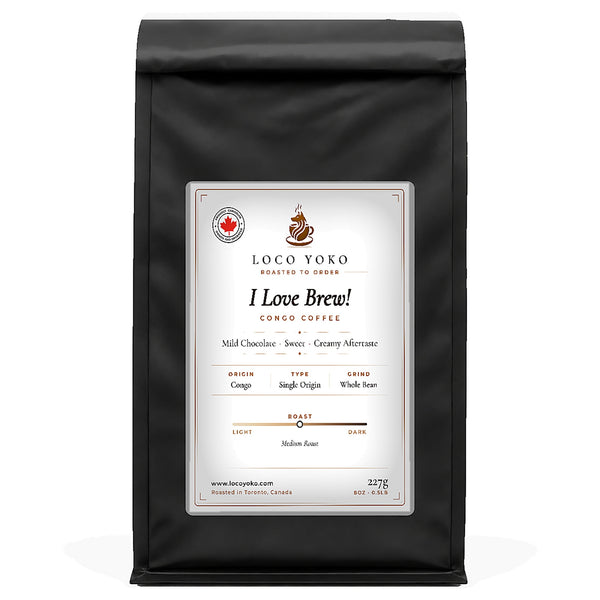
I Love Brew!
Mild chocolate · Sweet · Creamy aftertaste
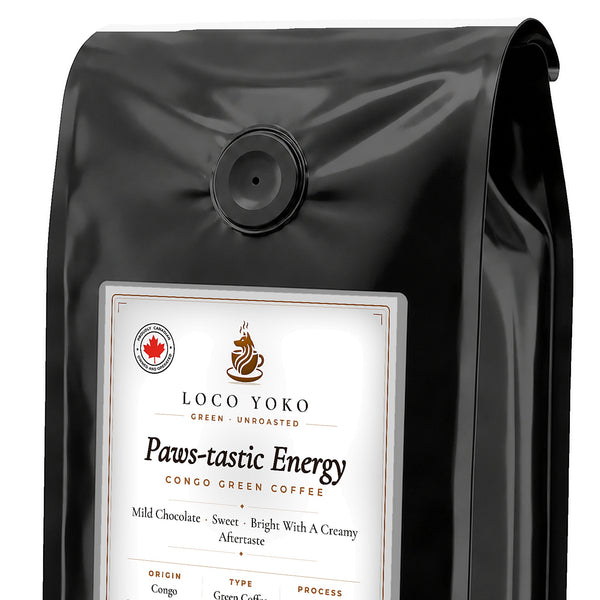
Paws-tastic Energy
Mild chocolate · Sweet · Bright with a creamy aftertaste
Try removing a filter or two.
Tap a choice and we'll take you to the next step.
Congo Coffee: A Guide to the Origin, Flavor, and What Makes It Worth Seeking Out
Congolese coffee is one of the more overlooked specialty origins on the shelf, and that has less to do with quality and more to do with history. The Democratic Republic of Congo grew coffee at real scale for most of the twentieth century, but decades of conflict and infrastructure collapse pushed most of that production out of export channels. What's coming back onto the market now, mostly from smallholder cooperatives around Lake Kivu in the country's east, is some of the most interesting cupping we've brought into the roastery. If you're comparing dr congo coffee beans against the usual suspects from East Africa or Latin America, it's worth understanding what you're actually buying before you commit a bag to the grinder — and for shoppers looking for congolese coffee beans canada wide, sourcing and roast date matter as much as origin.
Where Congo Coffee Grows
Nearly all of the specialty-grade arabica coming out of the country today is grown in North and South Kivu provinces, in the highlands that ring Lake Kivu along the border with Rwanda. This is congo kivu coffee in the strict sense — not a marketing label, but a real geographic descriptor. Elevations in the growing zones typically run from 1,400 to 2,000 meters, with volcanic soil left behind by the Virunga chain and consistent rainfall through the growing season. That combination — altitude, rich soil, reliable moisture — is the same formula that makes the Rwandan and Burundian highlands on the opposite shore of the lake so productive, and it's no accident that lake kivu coffee beans from the Congolese side taste like a cousin to those neighboring origins rather than anything from West Africa's lowland robusta belt.
Most of what's grown here is Bourbon-derived arabica, planted originally under Belgian colonial administration and since maintained (unevenly, depending on the cooperative) by smallholder farmers working plots of a hectare or less. North kivu arabica coffee in particular has built a reputation over the past decade as cooperatives here rebuilt washing stations and re-established relationships with export buyers after years of disruption.
Processing: Why It Matters More Here Than Almost Anywhere
Processing infrastructure in the DRC is still uneven, which means the gap between a well-processed lot and a poorly handled one is wider here than in origins with more mature infrastructure like Colombia or Ethiopia. The lots worth buying are almost always fully washed: cherries are pulped within hours of picking, fermented in tanks for 12 to 24 hours to break down the mucilage, washed clean in fresh water, and dried slowly on raised beds. Done right, this produces a clean, bright cup with none of the fermented or vegetal notes that can show up when cherries sit too long before processing or when drying happens too fast in direct sun.
A smaller amount of honey-processed and natural-processed Congo coffee has started showing up as cooperatives experiment with adding value, and when it's done carefully it produces a heavier-bodied, more fruit-forward cup. But washed is still the benchmark for congo coffee whole bean lots, and it's what we buy for the same reason we lean on washed processing for our Ethiopian lots — it lets the bean's inherent characteristics come through without processing artifacts muddying the read. If you're curious what a lot looks like before roasting brings any of this out, our unroasted green coffee selection includes washed East African beans you can inspect and roast yourself to see the process firsthand.
Congo Coffee Taste Notes
This is the part that actually sells the coffee, and it's the part most retailers gloss over with vague copy. Real congo coffee taste notes run toward red fruit and citrus up front — think ripe cherry, red currant, sometimes a note close to blackcurrant — layered over a body that's fuller and syrupier than what you'd get from a typical Kenyan or Ethiopian washed lot. The acidity is present but rounded rather than sharp; it reads more like the malic brightness of an apple than the tartaric snap you get from some Kenyan AA lots. Sweetness tends toward brown sugar and caramel once the coffee cools, with a finish that's often described as winey without tipping into anything funky or overripe.
That's the general congo coffee flavor profile, but there's real lot-to-lot variation depending on elevation, cooperative, and processing choices, which is part of what makes single origin congo coffee interesting to track over multiple harvests rather than treating as a fixed, interchangeable product. A lot from a 1,800-meter plot near Lake Kivu will taste noticeably different from a lower-elevation lot from the same season — more structured acidity, more defined fruit, longer finish.
How Congo Compares to Other Origins
If you're used to buying from more established origins, the easiest comparison point is East Africa generally. Congo shares genetic stock and geography with Rwanda and Burundi, so it lands in a similar flavor neighborhood to lighter-roasted coffee from the Ethiopian highlands — fruit-forward, tea-like body at lighter roasts — but with more weight and less floral top-note than a classic Yirgacheffe or Sidamo. It's less citrus-sharp than a Kenyan, and it doesn't have the potato-defect risk that occasionally shows up in Rwandan and Burundian lots (a known issue in that region caused by a specific bacterium in the soil), which has actually made Congo more attractive to some roasters as Rwandan sourcing got trickier.
Compared to Latin American coffee, the contrast is sharper. Where a washed Colombian tends toward balanced sweetness, moderate body, and notes of chocolate or nuts, Congo pushes further into fruit and brighter acidity — if you're stocked up on Colombian and decaf options for an everyday drip coffee, a Congo lot is a genuinely different experience rather than a lateral move. And against Indonesian coffee, it's almost a study in opposites: where our coffee from Sumatra and other Indonesian origins leans earthy, low-acid, and heavy-bodied thanks to wet-hulled processing, Congo is clean, bright, and processed to highlight clarity rather than depth. If you want to taste that range side by side, it's worth cupping a Congo lot next to something from each of those origins rather than taking our word for it.
Roast Level and Brewing Guidance
We roast our Congo lots light to medium, and that's a deliberate call, not a house default. A congo coffee light roast preserves the fruit-forward acidity and the citrus and red-fruit notes that make this origin worth buying in the first place; push it into a darker roast and you'll flatten most of that character into generic roasty bitterness, which defeats the purpose of paying for a traceable single-origin lot. If you like darker coffee day to day, this isn't the bag to prove that preference on — grab something from our broader coffee lineup suited to a darker profile instead, and save the Congo for when you want the origin character front and center.
For brewing, pour-over methods (V60, Chemex, Kalita) do the best job of showing off the acidity and fruit clarity — use a medium-fine grind, water just off boiling (around 200°F), and a total brew time in the 2:30–3:30 range. Drip machines work fine too, though you'll lose some of the top-note complexity. We don't recommend French press for this one; the fuller-bodied brew method tends to mute the citrus and red-fruit notes that are the whole point of buying a washed Congo lot. As with everything we roast, give the bag a 24-72 hour rest after the roast date before brewing — degassing evens out, and the fruit notes read cleaner once the bean has had a couple of days to settle.
Buying Congo Coffee: What to Look For
If you're trying to buy congo coffee beans online canada shoppers can actually trust, traceability is the first thing to check. Look for a specific cooperative or washing station name, not just "Congo" as a blanket origin — the country is large, growing conditions vary a lot between regions, and a bag labeled with a real cooperative name tells you someone did the sourcing work rather than buying an anonymous mixed lot. Roast date matters just as much; Congo's fruit-forward acidity fades fastest of any characteristic in a bag, so buy from a roaster that roasts to order rather than one selling off a shelf of unknown age.
Certifications are worth understanding rather than chasing blindly. Fair trade congo coffee beans carry a real premium that goes back to the cooperative, which matters in a region where reliable export income makes a tangible difference for smallholder farmers rebuilding after years of disrupted infrastructure. Organic congo coffee beans are less common simply because certification is expensive and slow-moving for smallholder cooperatives with limited resources, but plenty of Congo coffee is grown with minimal or no synthetic input by default — smallholders here often can't access or afford the fertilizer and pesticide programs that would disqualify a farm from organic status. It's fair to ask a supplier directly about certification status and farming practices rather than assuming the absence of a logo means the absence of good practice.
Why We Carry It
As a specialty congo coffee roaster canada shoppers can order directly from, we roast every Congo lot to order out of our Toronto roastery rather than sitting on pre-roasted stock. That matters more for this origin than most, given how fast the fruit character fades. We source washed lots specifically for the clarity they deliver at a light-to-medium roast, and we treat each harvest as its own thing rather than assuming last year's cupping notes still apply — Congo's cooperative infrastructure is still developing, and lot quality can shift meaningfully year over year. If you're building out a rotation of single-origin coffee and haven't tried Congo yet, it's a genuinely different profile from the East African and Latin American lots most people default to, and it's worth the reordering discipline that a fast-fading fruit character demands.
FAQ
What does Congo coffee taste like compared to Ethiopian or Kenyan coffee?
Congo coffee tends to sit between the two. It has red fruit and citrus notes similar to a washed Ethiopian, but with a fuller body and rounder, less sharp acidity than a typical Kenyan. The sweetness leans toward brown sugar and caramel, with a winey finish that's distinct from either of those more established East African origins.
Is Congo coffee the same as Rwandan or Burundian coffee?
They're closely related — all three grow around the Lake Kivu region and share similar Bourbon-derived varietals and altitude — but they aren't the same. Congo coffee, particularly congo kivu coffee from North and South Kivu, tends to have a heavier body and less floral top-note than Rwandan lots, and it doesn't carry the same risk of potato defect that occasionally affects coffee from the Rwandan and Burundian side of the border.
What roast level is best for a Congo lot?
Light to medium. A congo coffee light roast preserves the citrus and red-fruit acidity that defines this origin. Roasting darker mutes those notes and pushes the cup toward generic roasty flavor, which works against the reason to buy a traceable single-origin lot in the first place.
Is Congo coffee fair trade or organic?
Some lots are certified fair trade, which sends a real premium back to the producing cooperative — meaningful in a region where reliable export income is still being rebuilt. Formal organic certification is less common simply because it's expensive for smallholder cooperatives to pursue, though many farms grow with minimal synthetic input by default due to limited access to fertilizer and pesticide programs. Ask your roaster directly about certification and farming practices for a specific lot.
How should I brew Congo coffee to get the best flavor?
Pour-over methods like V60, Chemex, or Kalita show off the fruit and acidity best — use a medium-fine grind, water around 200°F, and a total brew time of roughly 2:30 to 3:30. Drip machines work fine for daily use. We'd steer away from French press here, since the fuller-bodied extraction tends to flatten the citrus and red-fruit character that makes this origin worth seeking out. Let the bag rest 24-72 hours after the roast date before brewing.
Where can I buy authentic Congo coffee online in Canada?
Look for a roaster who lists a specific cooperative or washing station rather than just "Congo" as a blanket origin, and who roasts to order — this origin's fruit-forward character fades faster than most, so freshness matters more here than with a heavier-bodied coffee. We roast our Congo lots out of our Toronto roastery and ship free across Canada on orders over $50.
Frequently asked questions
The essentials about this collection. Still curious about something?
Ask us anything