
Kenyan Coffee
Kenya's Nyeri and Kirinyaga highlands, SL28 and SL34 varietals grown above 1,400m and double-washed for clarity. Vivid acidity with blackcurrant and berry notes. Roasted to order and shipped free across Canada over $50.
Products in this collection
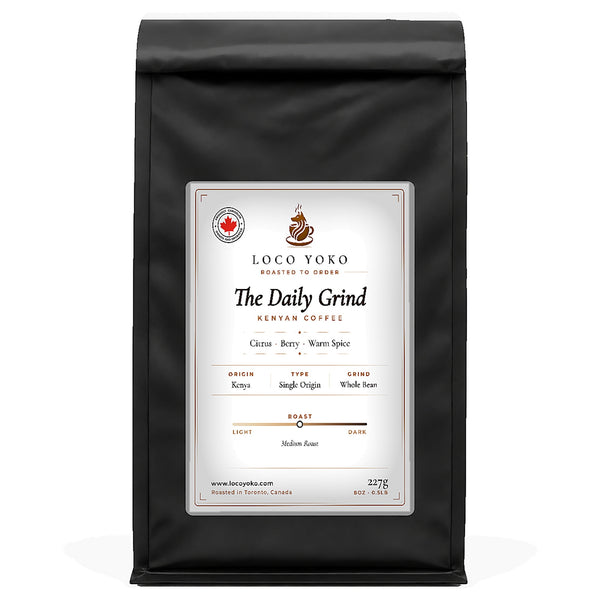
The Daily Grind
Citrus · Berry · Warm spice
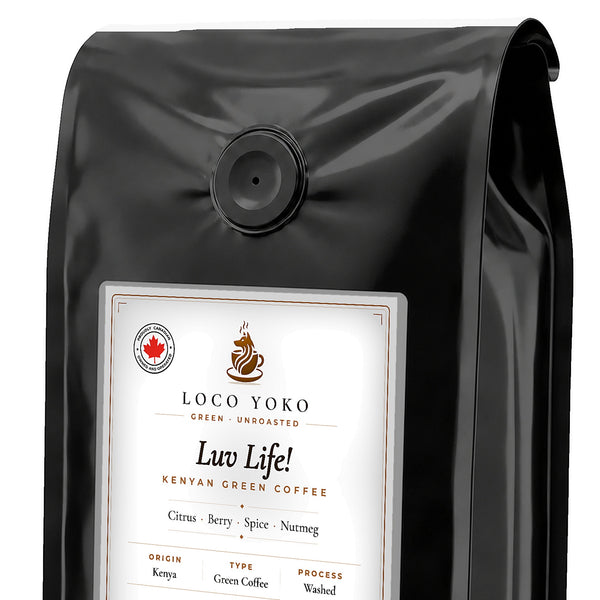
Luv Life!
Citrus · Berry · Spice · Nutmeg
Try removing a filter or two.
Tap a choice and we'll take you to the next step.
Kenyan Coffee: A Buyer's Guide to Origin, Grading, and Flavor
Kenya produces some of the most consistently vivid coffee on the planet, and if you've ever wondered why a bag of kenyan coffee beans costs a bit more than your average bag on the shelf, the answer starts with the land itself. Most of Kenya's coffee is grown between 1,500 and 2,100 meters above sea level on the volcanic slopes around Mount Kenya and the Aberdare Range, in red-brown soils that are naturally rich in nitrogen and phosphorus. This is high altitude kenyan coffee in the truest sense — the elevation slows cherry maturation, which gives the beans more time to develop sugars and acids before harvest. Slower ripening at altitude is one of the main reasons this origin has such a distinct, almost electric brightness compared to coffee grown at lower elevations.
The main growing regions are Nyeri, Kirinyaga, Murang'a, Embu, and Kiambu, along with the Bungoma area near Mount Elgon in the west. Nyeri and Kirinyaga in particular have built reputations similar to how Antigua is spoken of in Guatemala or how specific departments matter in Colombia — the county name on a bag tells you something real about soil and microclimate, not just marketing. Coffee here is grown predominantly by smallholder farmers, many working plots of an acre or two, who deliver ripe cherry to centralized wet mills known as factories (a Kenyan-specific term that has nothing to do with industrial processing — think of it more like a shared washing station cooperative). That cooperative structure is part of what makes single origin kenyan coffee traceable back to a specific wet mill and growing district rather than a vague national blend.
Processing: Why the Double Ferment Matters
Kenya is almost entirely a washed-coffee origin, but the process used here is more involved than washing in most other countries. After cherries are pulped, the parchment is fermented in tanks — often with a second, dry fermentation stage after the first wash — before a final soak and a slow drying period on raised beds. This double fermentation is widely credited with intensifying the acidity and giving the cup its characteristic juiciness. It's a labor-intensive method, and it's a big part of why kenyan coffee flavor profile discussions always circle back to words like "winey," "juicy," and "tomato-like" rather than the softer, rounder character you'd get from a natural or honey process. If you're curious about processing methods more broadly, including what unprocessed lots look like before they ever reach this stage, our unroasted green coffee selection is worth a look — it's where you can see raw parchment-processed beans before roasting changes everything.
Kenya Coffee Taste Notes
Ask five roasters to describe Kenyan coffee and you'll hear a similar cluster of words: blackcurrant, tomato, grapefruit, and a syrupy, wine-like body. The kenyan coffee blackcurrant notes that show up so often in tasting descriptions aren't a coincidence or a marketing flourish — they come from a combination of the SL28 and SL34 cultivars grown almost exclusively in Kenya, plus that double-fermentation processing, plus the altitude. SL28 in particular is known for producing a deep, dark-berry sweetness alongside a crisp, almost citric acidity that lingers on the back of the tongue. When you taste a well-roasted Kenyan, look for a cup that hits bright and tart up front, moves into a syrupy blackcurrant or red-berry middle, and finishes long and slightly savory, sometimes with a tomato-leaf edge. That combination of acidity, body, and fruit intensity is what makes kenya coffee taste notes so recognizable even to casual drinkers who couldn't name another origin by cup alone.
AA, AB, and What the Grades Actually Mean
Kenya grades coffee primarily by bean size and density, using a screen-size system: AA is the largest screen size (17-18), AB is a combined grade of sizes 15-16, followed by smaller grades like PB (peaberry), C, and lower grades used mostly for local consumption or lower-value export. The kenya aa vs ab coffee question comes up constantly, and the honest answer is that size doesn't automatically mean better flavor — it's a correlate, not a guarantee. Larger beans tend to come from stronger, well-nourished cherry and can hold more density, which sometimes translates into a fuller body, but plenty of exceptional lots are graded AB simply because the tree or the season produced a slightly smaller bean. That said, kenya aa coffee beans have built a strong reputation in specialty circles because the grading system tends to concentrate the best lots at the top, and buyers are willing to pay a premium for AA, which pushes producers to prioritize quality control on those separations. When you're shopping for kenya aa coffee canada options, know that you're paying partly for size and partly for the reputation and sorting rigor that comes with it — both are legitimate reasons, but neither is a substitute for tasting the actual lot.
Kenyan Coffee vs. Ethiopian Coffee
These two East African origins get compared constantly, and for good reason — they're geographic neighbors with wildly different flavor personalities. In a kenyan coffee vs ethiopian coffee side-by-side, Ethiopian coffee (especially washed Yirgacheffe or Sidama lots) tends to lean floral and tea-like, with notes of jasmine, bergamot, and stone fruit, and a lighter, more delicate body. Kenyan coffee is the opposite kind of intense: heavier body, sharper acidity, and that unmistakable blackcurrant-and-tomato fruit character instead of florals. If you like a coffee that feels closer to biting into a piece of fruit than sipping tea, Kenya is usually the origin that delivers that experience most reliably. Ethiopia is often considered the birthplace of arabica itself, with an enormous range of indigenous heirloom varieties, while Kenya's cultivar pool is narrower but more deliberately bred for cup quality and disease resistance. Neither is objectively "better" — they're genuinely different tools for different moods, which is exactly why so many specialty drinkers keep both in rotation.
How Kenya Compares to Other Origins We Carry
Origin comparison is one of the most useful things you can do as a coffee drinker, because it trains your palate to notice what altitude, processing, and varietal actually do to a cup. Against a classic Brazilian lot, Kenyan coffee is almost a different beverage category — Brazil's lower-altitude, often natural-processed beans give you a nutty, chocolatey, low-acid cup built for smoothness, while Kenya is all brightness and fruit-forward tension. Compared with the beans grown in the volcanic highlands covered in our guide to Guatemala's Antigua region, Kenya shares the high-altitude advantage but trades Antigua's cocoa-and-spice balance for something sharper and more citric. And set next to the spice-forward, monsooned character you'll find among coffees grown across India's hill regions, Kenya reads as cleaner and more acid-driven, without the earthy, low-acid profile that defines Indian Monsooned Malabar styles. If you're building a home lineup to taste origins side by side, pairing a Kenyan AA against one bean from each of those regions is one of the fastest ways to actually learn what "origin character" means instead of just reading about it.
Roast Level and Brewing Guidance
Kenyan coffee rewards a lighter hand at the roaster. Because so much of its value is in bright acidity and delicate fruit notes, pushing it into a medium-dark or dark roast tends to flatten exactly the qualities that make the origin worth buying in the first place — you'll lose the blackcurrant snap and end up with a generic, roasty cup that could be from almost anywhere. We roast our Kenyan lots light-to-medium specifically to preserve that acidity and fruit definition. For brewing, pour-over methods (V60, Chemex, Kalita) tend to showcase Kenyan coffee best because they let the acidity shine through a clean cup, though a well-dialed-in AeroPress or batch drip machine will still get you most of the way there. If you're using an espresso machine, expect a shot with pronounced acidity and a punchy, almost syrupy finish rather than the heavier crema and chocolate notes you'd get from a South American espresso blend — some drinkers love that intensity, others prefer to save Kenyan beans for filter brewing and reach for a rounder bean on the espresso side.
As with every bag we roast, we recommend giving whole bean kenyan coffee a rest of 24 to 72 hours after the roast date before brewing. Kenyan coffee in particular benefits from this rest window because the CO2 released right after roasting can mute the fruit-forward acidity that's the whole point of the origin — give it those couple of days and the cup opens up noticeably.
Buying and Sourcing Kenyan Coffee in Canada
If you're trying to buy kenyan coffee online canada wide, freshness and traceability are the two things worth checking before anything else. Look for a roast date on the bag (not just a "best before" date, which tells you almost nothing), and look for lot-level information — the wet mill or factory name, the county, and ideally the grade. A bag that just says "Kenya" with no other detail is usually a commodity-grade blend, not the kind of single-lot AA or AB coffee that makes this origin worth seeking out in the first place. We work with importers who deal directly with Kenyan cooperatives and exporters, and our lots typically carry fair trade certification, which matters in Kenya specifically because the cooperative auction system can create real price volatility for smallholder farmers season to season — fair trade kenyan coffee beans help put a floor under what growers are paid regardless of how the Nairobi auction swings that year.
Every bag we sell is Kenya coffee beans roasted fresh here in Toronto, not pulled off a warehouse shelf, and it ships free across Canada on orders over $50. That's a meaningful difference for an origin like Kenya, where the volatile fruit acids that make the cup exciting are also the first thing to fade when beans sit around for weeks before roasting or shipping. If you're comparing options for the best kenyan coffee beans canada has to offer, roast date and lot transparency will tell you more than the marketing copy on the bag ever will. And once you've settled on Kenya as a favorite, it's worth exploring the rest of our full coffee lineup to see how it sits next to the other origins we roast — Kenya tends to become the benchmark a lot of drinkers use to judge every other bright, acidic coffee they try afterward.
FAQ
What makes Kenyan coffee taste different from other African coffees?
The combination of the SL28 and SL34 cultivars, high-altitude growing conditions around Mount Kenya and the Aberdare Range, and a distinctive double-fermentation washing process all push the cup toward bright acidity and concentrated fruit flavor. The kenyan coffee flavor profile most people associate with the origin — blackcurrant, tomato, grapefruit, a syrupy body — comes specifically from that combination, and it's difficult for other regions to replicate exactly because the cultivars themselves are relatively unique to Kenya.
Is Kenya AA always better than Kenya AB?
Not necessarily. AA and AB are size grades, not direct quality grades, though AA lots do tend to get extra sorting attention because buyers pay a premium for them. A well-processed AB lot from a great harvest can easily outtaste a mediocre AA lot. If you see both available, the more useful signal is the wet mill name, the harvest year, and the cupping notes provided by the roaster, not the letter grade alone.
What roast level is best for Kenyan coffee?
Light to medium roast is almost always the right call. Kenyan coffee's value is concentrated in its acidity and fruit character, both of which diminish the darker you roast. A dark roast will still be drinkable, but it erases most of what makes this origin distinct from a cheaper, more generic bean.
How should I brew Kenyan coffee at home?
Pour-over methods like a V60 or Chemex tend to highlight Kenyan coffee's acidity and clarity best. A good drip machine or AeroPress will also work well. If you're using espresso, expect a brighter, more acidic shot than you'd get from a typical South American bean — some people love that profile on espresso, others prefer to keep Kenyan coffee strictly for filter brewing.
How long should I wait to brew after the roast date?
We recommend resting whole bean kenyan coffee for 24 to 72 hours after roasting. This is especially true for Kenyan lots, since the CO2 released immediately post-roast can mask the acidity and fruit notes that define the cup — a short rest lets those flavors come forward properly.
Is fair trade certification common for Kenyan coffee?
Yes, and it matters more here than in some other origins because Kenya's cooperative auction system can create significant year-to-year price swings for smallholder farmers. Fair trade kenyan coffee beans carry a guaranteed price floor that helps stabilize farmer income regardless of how a given season's auction prices land, which is one of the reasons we prioritize working with certified cooperatives and exporters.
Frequently asked questions
The essentials about this collection. Still curious about something?
Ask us anything