


Luv Life! - Kenyan Green Coffee
Luv Life! - Kenyan Green Coffee
Couldn't load pickup availability
Green Coffee Beans | Roasted at Home by You | Brought to You by LocoYoko Coffee
Life is short — roast boldly, love deeply, and sip with joy. Luv Life! brings you Kenya AA green coffee beans, renowned for their vibrant flavour, juicy acidity, and bold personality. These large, high-grade Arabica beans offer excellent roast flexibility and deliver a bright cup with layers of citrus, spice, and subtle nutty undertones.
Grown at high altitudes and patio-dried in the sun, this bean is for those who embrace the full spectrum — of flavour, of adventure, and of wag-filled mornings.
- Tasting Notes (Post-Roast): Citrus, berry, spice, nutmeg
- Body: Medium
- Acidity: Very bright and lively
- Aroma: Spiced fruit, nutty
- Origin: Kenya AA (1100–1800m)
- Process: Washed & patio-dried
- Roasted & Packed: You roast it! We pack it green in Canada
At LocoYoko Coffee, we believe loving life means savoring the highs, embracing the kicks, and sharing it all with someone who’s always happy to see you. Luv Life! is our tribute to bold brews, bright mornings, and the joy of crafting something wild and wonderful — paw in hand.
Available in 0.5 lb, 1 lb and 5 lb bags
*** Notice: Due to green coffee supply chain limitations, purchases are currently limited to 5 lbs per origin.
Share
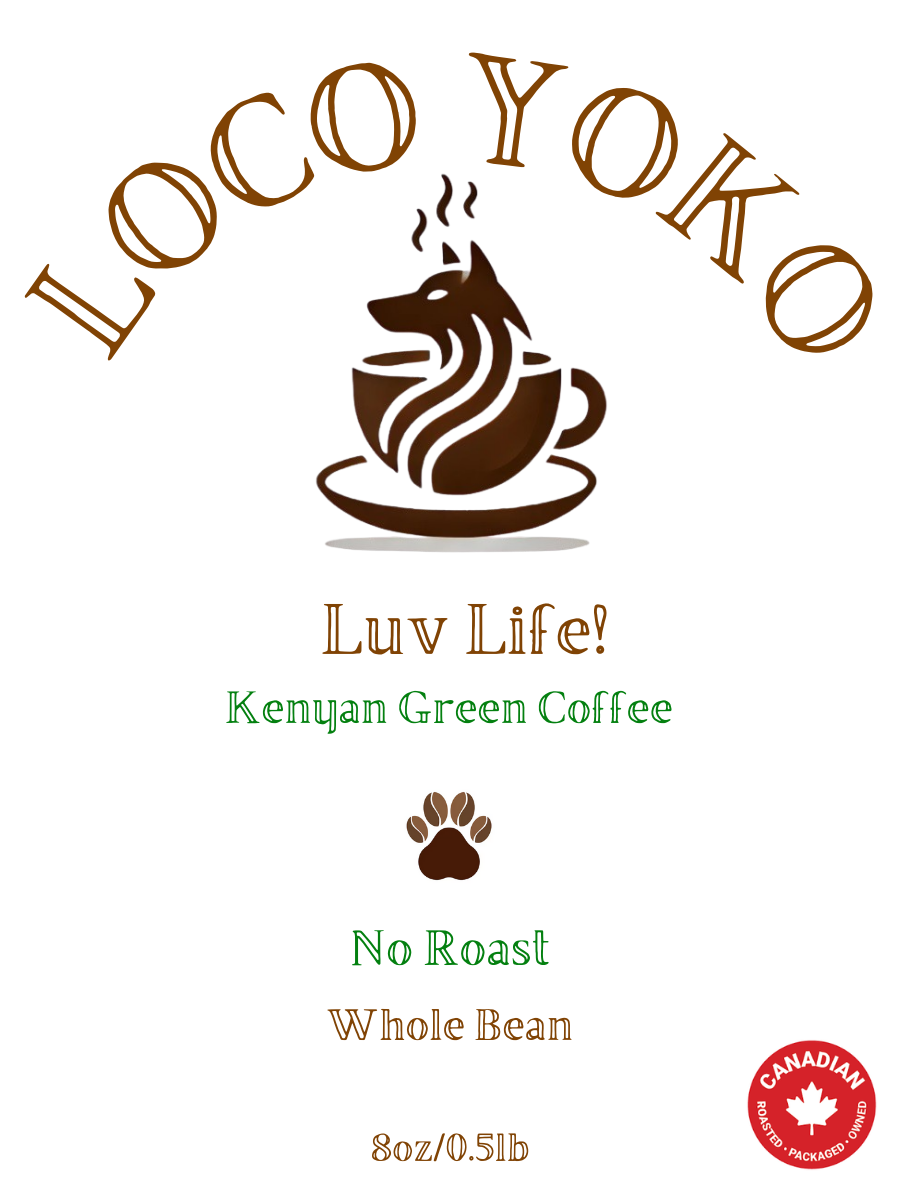

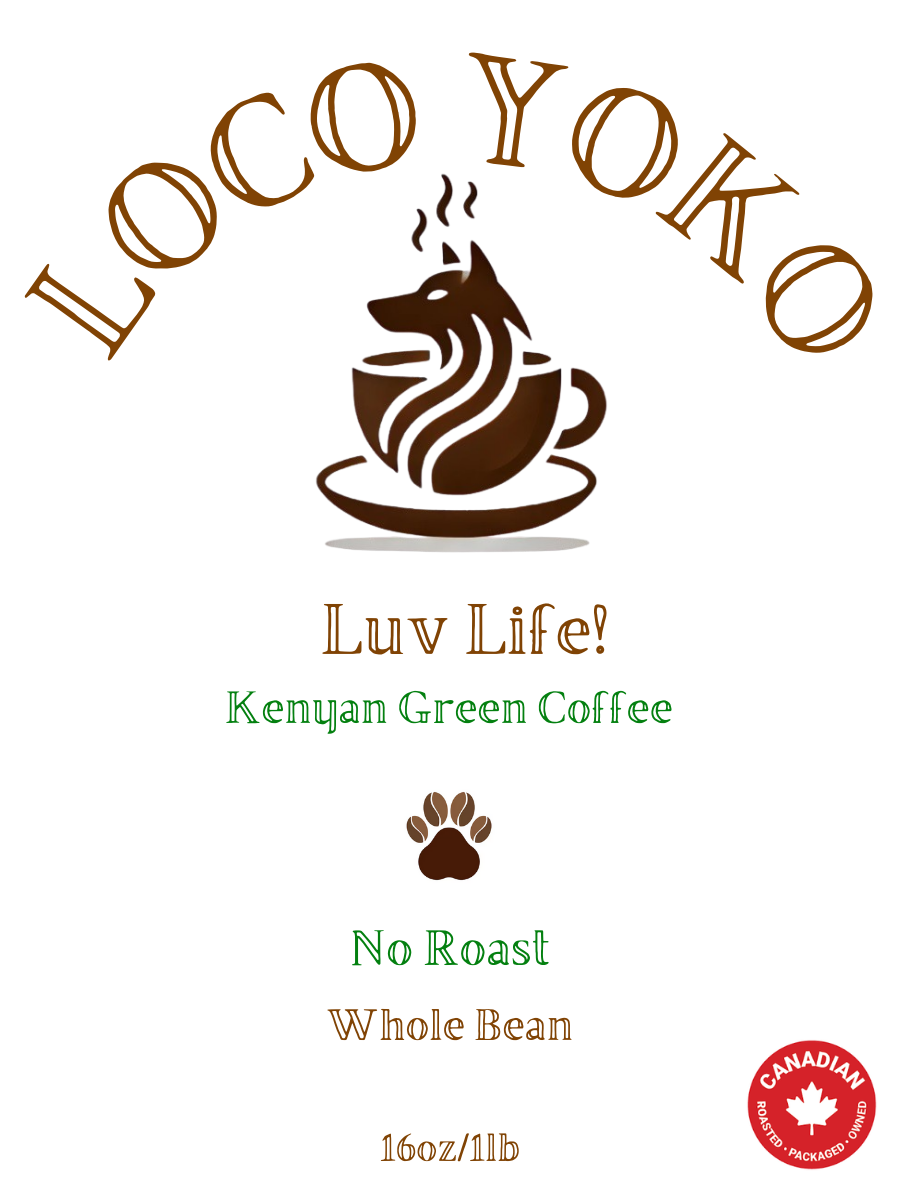
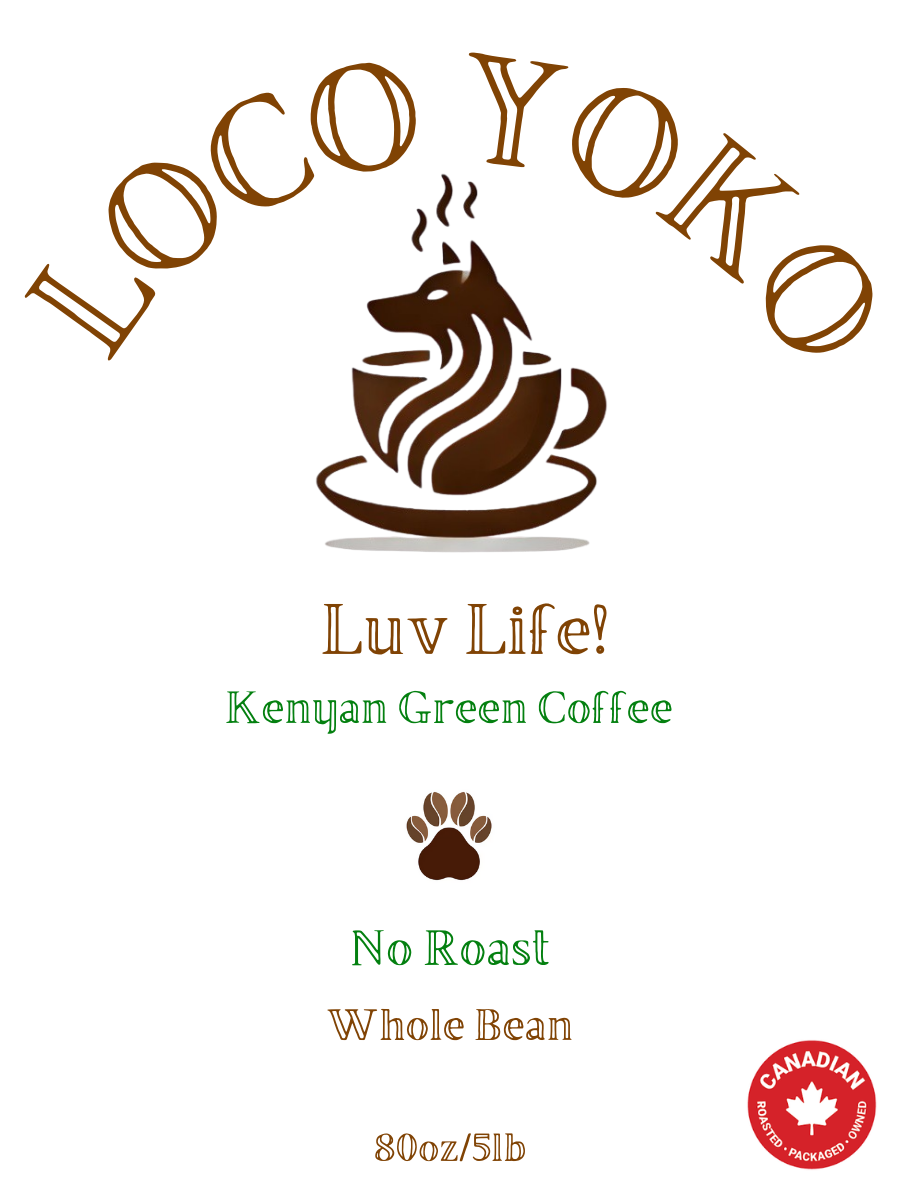
Kenyan Green Coffee Beans: Premium Unroasted Coffee for Fresh Roasting
If you are looking for a bold, bright, and flavour-rich coffee experience, Kenyan green coffee is one of the best origins to consider. Known for its lively acidity, clean cup profile, and complex aroma, Kenyan green coffee beans are highly valued by home roasters, specialty coffee lovers, cafés, and anyone who wants more control over freshness and roast level. Unlike roasted coffee, green coffee beans are raw, unroasted coffee seeds that allow you to roast small batches whenever you want, helping preserve freshness and create a cup that matches your exact taste.
Unroasted Kenyan coffee is especially popular because Kenya has a strong reputation for producing coffees with clarity, brightness, and depth. Many Kenyan coffees are grown at higher altitudes in fertile volcanic soil, where cooler temperatures help the beans develop slowly. This slower development can create denser beans with more flavour potential. For coffee buyers searching for specialty green coffee beans, Kenya is often associated with a vibrant cup, juicy character, and tasting notes that may include citrus, blackcurrant, red berries, caramel, floral sweetness, and a clean wine-like finish.
One of the most recognized terms in this category is Kenya AA green coffee. The “AA” grade generally refers to larger screen-size beans, and it is one of the most searched phrases by customers looking for premium Kenyan beans. While bean size alone does not guarantee flavour, Kenya AA green coffee beans are often preferred by roasters because they are linked with high-quality lots and strong specialty appeal. Other grades such as AB and peaberry can also produce excellent results, but AA remains one of the strongest keyword matches for search intent.
Choosing green coffee beans for roasting gives you the freedom to decide how your final cup should taste. A light roast can highlight the natural brightness of Kenyan coffee beans, bringing out fruit-forward and floral notes. A medium roast can add more sweetness, balance, and body while keeping the cup clean and expressive. A darker roast can create deeper roasted flavours, but going too dark may hide the origin character that makes Kenyan specialty coffee unique. For this reason, many roasters prefer light to medium roast profiles for Kenyan origin coffee.
The flavour profile of Kenyan green coffee beans makes them especially suitable for pour-over, filter coffee, AeroPress, Chemex, drip coffee, and other brewing methods that show clarity. These methods can highlight the layered acidity, aroma, and clean finish that Kenyan coffees are known for. For espresso, Kenyan coffee can be exciting and intense, but it may need careful roast development or blending to avoid sharp acidity. When roasted with balance, it can create a bright espresso with excellent aroma and a memorable finish.
For people who want to buy Kenyan green coffee beans, freshness and storage matter. Green coffee is more stable than roasted coffee, but it still needs proper care. Store unroasted coffee beans in a cool, dry place away from moisture, direct sunlight, heat, and strong smells. Avoid keeping green coffee near spices, cleaning products, or anything with a strong odour, because coffee can absorb surrounding smells. Good storage helps protect quality before roasting and supports a cleaner final cup.
Roasting Kenyan green coffee at home or in small batches can be a rewarding process. During roasting, the beans move from green to yellow, then to light brown, and eventually deeper brown as heat develops sweetness, aroma, and body. The first crack is an important stage where the beans expand and release steam. For many Kenyan coffees, stopping around light to medium development can help preserve the bright acidity and fruit character. However, the ideal roast depends on your brewing method and personal preference.
A major benefit of buying unroasted Kenyan coffee is freshness control. Roasted coffee begins losing aroma after roasting, and ground coffee loses freshness even faster. By keeping green coffee beans Kenya in raw form and roasting only what you need, you can enjoy a fresher cup and experiment with different roast levels. This is one reason home roasters and small coffee businesses often prefer buying green coffee instead of only buying finished roasted beans.
From an SEO and customer-experience point of view, a strong product page for Kenyan green coffee beans should answer real buyer questions clearly. Customers usually want to know the origin, grade, flavour notes, roast recommendation, brewing method, storage instructions, and whether the beans are suitable for home roasting. This type of helpful content supports better engagement because it gives visitors confidence before they make a purchase.
The best keyword focus for this page is Kenyan green coffee, supported naturally by related phrases such as Kenyan green coffee beans, unroasted Kenyan coffee, green coffee beans Kenya, Kenya AA green coffee, specialty green coffee beans, green coffee beans for roasting, and buy Kenyan green coffee beans. These keywords match how real customers search when they are looking for raw coffee beans, not just general information about coffee. The goal is not to repeat the same keyword too many times, but to use a natural mix of buying-intent and product-specific phrases.
If this content is being placed before the footer on a product or collection page, it should be useful but not overloaded. The page should still remain easy to scan. Use clear headings, short paragraphs, product details, FAQs, internal links, and strong calls to action. For example, you can link from this section to related pages such as green coffee beans, specialty coffee beans, single origin coffee, coffee beans for roasting, or other origin pages. Internal linking helps users discover more products and helps search engines understand your coffee category structure.
Images can also support SEO. Use descriptive file names such as kenyan-green-coffee-beans.jpg instead of generic image names. Use alt text such as Kenyan green coffee beans for home roasting or unroasted Kenyan coffee beans. Image text should describe the image naturally and not be stuffed with keywords. Good image optimization improves accessibility and gives search engines more context about the product.
For ecommerce pages, structured product information is also important. Include product name, price, availability, size, roast state, origin, and other key attributes where possible. If the page sells the product directly, product structured data can help search engines understand the product more clearly. For a coffee page, useful attributes may include origin, bean state, weight, roast recommendation, flavour notes, processing method, and suitable brewing methods.
When writing about Kenyan green coffee, avoid generic filler. Search engines and customers both prefer specific, useful content. Instead of saying “this coffee is amazing” many times, explain why it is special: Kenyan origin, green/unroasted format, roasting flexibility, bright flavour potential, specialty-grade appeal, and suitability for home roasting. Specific content is more trustworthy and more likely to match long-tail searches.
The ideal buyer for Kenyan green coffee beans may be a home roaster, a café owner, a small-batch roaster, or a coffee enthusiast who enjoys experimenting. These buyers are usually more educated than someone buying instant coffee. They care about origin, freshness, grade, roast control, and flavour development. A good page should respect that knowledge while still being simple enough for beginners to understand.
If you are new to roasting, start with small batches and take notes. Track roast time, colour, aroma, first crack, cooling time, and final taste. Try the same Kenyan green coffee at different roast levels to understand how the flavour changes. A lighter roast may taste brighter and fruitier, while a medium roast may feel sweeter and more rounded. This learning process is part of the value of buying green coffee beans for roasting.
After roasting, allow the coffee to rest before brewing. Freshly roasted beans release carbon dioxide, and a short rest can help the flavour settle. Filter coffee may taste good after a shorter rest, while espresso often benefits from a longer resting period. Once roasted, store the beans in an airtight container away from heat, light, and moisture. Grind only before brewing to preserve aroma.
For taste expectations, Kenyan specialty coffee is often chosen by people who enjoy a brighter and more expressive cup. It may not be the best choice for someone who only wants a very dark, smoky, low-acidity coffee. However, for customers who appreciate clean acidity, fruit notes, aromatic complexity, and a lively finish, Kenyan green coffee beans can be an excellent choice.
In summary, Kenyan green coffee is a strong option for anyone who wants premium raw coffee beans with excellent roasting potential. It offers freshness control, origin character, and a bright flavour profile that stands out in the specialty coffee world. Whether you are searching for Kenya AA green coffee, unroasted Kenyan coffee, or specialty green coffee beans for home roasting, Kenyan origin is a smart choice for a vibrant, aromatic, and memorable cup.
FAQ About Kenyan Green Coffee
What is Kenyan green coffee?
Kenyan green coffee is raw, unroasted coffee from Kenya. It has not been roasted yet, so it is ideal for home roasters, cafés, and small-batch roasters who want to control freshness and roast level.
Are Kenyan green coffee beans good for home roasting?
Yes. Kenyan green coffee beans are excellent for home roasting because they offer strong flavour potential, bright acidity, and clear origin character. They are especially good for people who enjoy experimenting with light and medium roasts.
What does Kenyan coffee taste like after roasting?
Roasted Kenyan coffee can taste bright, juicy, and complex. Depending on the lot and roast level, it may show notes of citrus, blackcurrant, red fruit, caramel, floral sweetness, or a clean wine-like finish.
What is Kenya AA green coffee?
Kenya AA green coffee usually refers to larger screen-size Kenyan beans. AA is one of the most recognized Kenyan coffee grades and is often searched by customers looking for premium green coffee beans Kenya.
What roast level is best for Kenyan green coffee?
Light to medium roast is often preferred for Kenyan green coffee because it helps preserve the coffee’s brightness, aroma, and fruit-forward character. Darker roasting can reduce acidity but may hide some origin notes.
Can Kenyan green coffee be used for espresso?
Yes, but it needs careful roasting. Kenyan green coffee beans can create bright and aromatic espresso, but some roasters blend them with lower-acidity beans for more balance and body.
How should I store unroasted Kenyan coffee?
Store unroasted Kenyan coffee in a cool, dry place away from moisture, heat, direct sunlight, and strong odours. Proper storage helps protect the quality of the beans before roasting.
Where can I buy Kenyan green coffee beans?
Look for sellers that provide clear product details such as origin, grade, bean state, flavour notes, processing method, weight, and roasting recommendations. This helps you choose the right Kenyan green coffee beans for your taste and roasting style.