
Blended Coffee
Blended Coffee — layered for balance and consistency, roasted to order in Canada and shipped free over $50.
Products in this collection
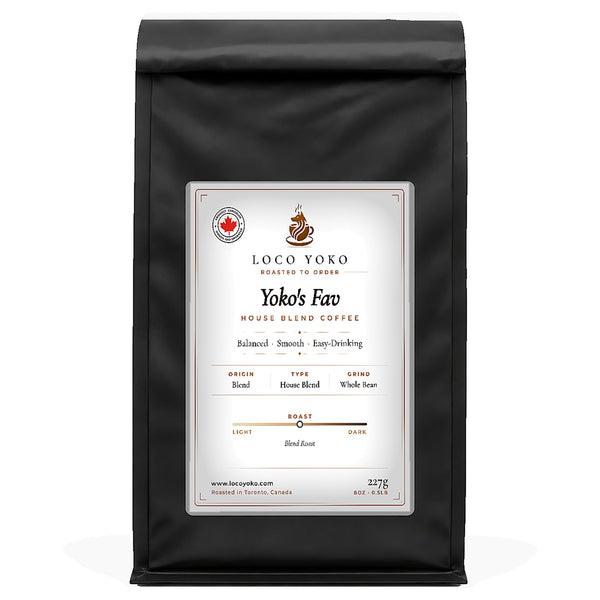
Yoko's Fav
Balanced · Smooth · Easy-drinking
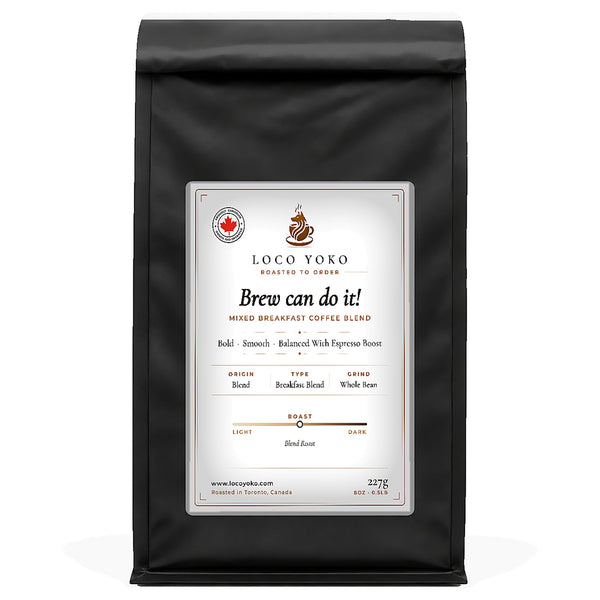
Brew can do it!
Bold · Smooth · Balanced with an espresso boost
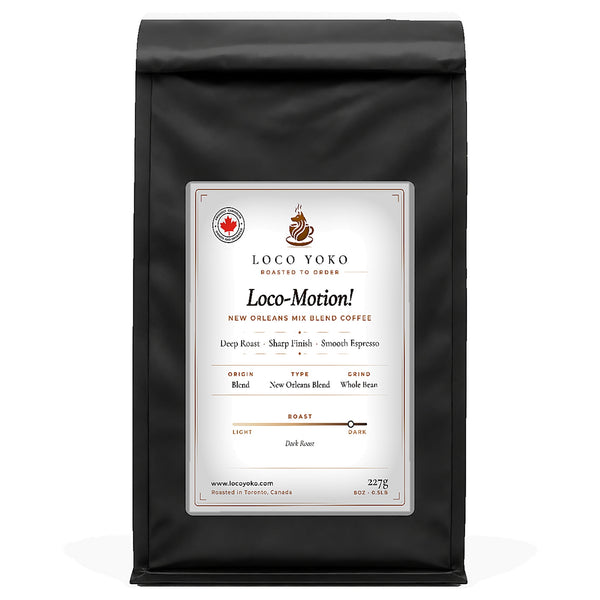
Loco-Motion!
Deep roast · Sharp finish · Smooth espresso
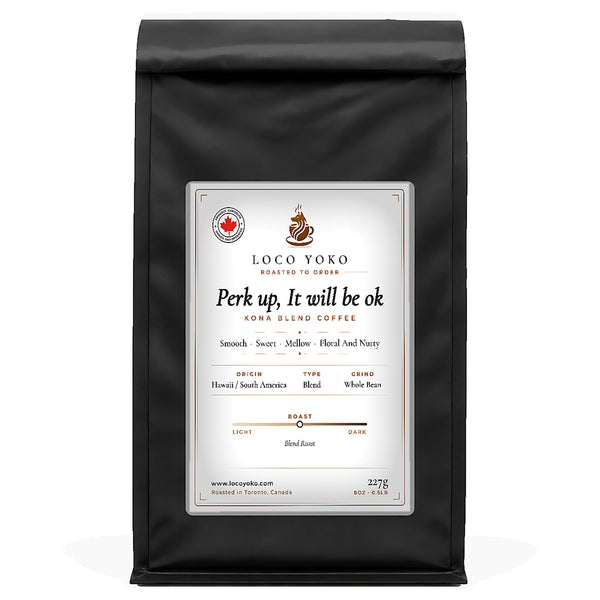
Perk up, It will be ok
Subtle spice · Nutty · Bright & earthy
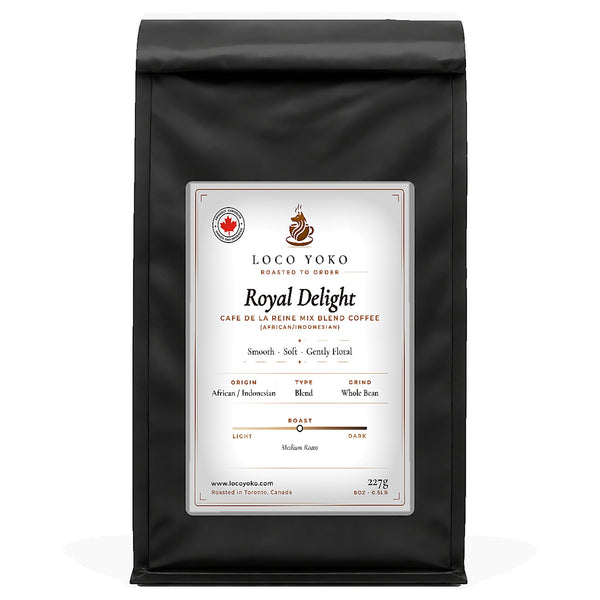
Royal Delight
Smooth · Soft · Gently floral

Java Nice Day!
Light cocoa · Soft fruit · Clean finish
Try removing a filter or two.
Tap a choice and we'll take you to the next step.
Understanding Coffee Blends: How We Build Ours in Toronto
Blended coffee exists because no single farm, altitude, or processing method gives you everything you want in a cup at once. A washed Kenyan brings acidity and berry brightness; a natural-processed Brazil brings body and sugar; a wet-hulled Sumatra brings low acidity and earthy weight. Blending is the craft of combining two or more of these green coffees, roasted either together or separately and mixed post-roast, to hit a flavor target that no single origin reaches on its own. When people search for coffee blends, they're usually after exactly that: a cup that's balanced, consistent, and doesn't ask you to think too hard about acidity or funk before your first coffee of the day.
As a specialty coffee roaster canada drinkers have been ordering from since we opened in Toronto, we build our blended coffee lineup around the same logic every roaster worth their salt uses: pick complementary lots, roast each component to bring out its strength, and combine them in ratios we've dialed in over dozens of test batches. Every bag is roasted to order here in Toronto, and we recommend a 24-72 hour rest after roasting before you brew — blends in particular benefit from this because the different beans inside them degas at slightly different rates.
What Actually Goes Into a Good House Blend
A well-built house blend coffee isn't a random mix of whatever's cheap that week. It's usually built around a base coffee — often a Brazil or Central American lot for body and sweetness — layered with a brighter component from East Africa or a washed Central American to add lift, and sometimes a small percentage of a naturally processed coffee for extra sweetness and fruit. The goal is a cup where no single note dominates and the whole is more drinkable than any one origin alone.
Two of our own blends show this approach from different angles. Our Mocha Java blend, a java blend coffee, revives one of the oldest blending traditions in coffee — pairing earthy, syrupy Indonesian coffee with brighter Yemeni or Ethiopian-style beans, a combination that goes back centuries and still works because the contrast is so complementary. Our Kona-style blend takes a different route, using a small percentage of Hawaiian Kona alongside supporting origins to bring Kona's characteristic smoothness into a more accessible, everyday price point without losing the character that makes Kona distinctive. If you want to see how these fit alongside our single-origin lineup, our full coffee selection lays out both blends and single origins side by side.
Coffee Blend vs Single Origin: What's the Real Difference
The coffee blend vs single origin question comes up constantly, and the honest answer is that neither is objectively better — they're built for different things. A single origin tells you a specific story: one farm or cooperative, one harvest, one processing method, and all the quirks that come with that specificity, good and bad. A blend is engineered for consistency and balance. If a single-origin Ethiopian is having an off week, you taste it. A blend absorbs small variations because its character comes from the combination, not any one component.
Blends also tend to be more forgiving across brew methods. A high-acid single origin that's stunning as a pour-over can taste sharp or thin in a drip machine or a moka pot. A well-designed blend is built to hold up across brewing methods, which is a big part of why cafés lean on them for house coffee and why blends make sense if you're brewing on autopilot most mornings and want a cup that just tastes good without fussing over grind size and water temperature.
Espresso Blends: Built for Pressure, Not Just Flavor
An espresso blend beans mix has different engineering requirements than a filter blend. Espresso extraction is fast and under pressure, which concentrates flavor, acidity, and body dramatically compared to drip brewing. A coffee that tastes great as a pour-over can turn sharp, sour, or thin when pulled as a shot. That's why the best espresso blend for home use is usually built around a base with real body — often a Brazilian natural or a Central American washed coffee roasted slightly darker than you'd roast for filter — layered with just enough brighter component to keep the shot from tasting flat or one-dimensional.
Good espresso blends are also roasted with crema and mouthfeel in mind, not just taste. Natural-processed components tend to boost body and sweetness, which helps a shot hold its crema and stand up to milk in a latte or cappuccino without disappearing. If you're pulling shots at home, look for a blend descriptor that mentions body, low acidity, and chocolate or caramel notes — those are the traits that translate best through an espresso machine, whether you're running a prosumer machine or a basic home unit.
Dark Chocolate, Caramel, and the Classic Blend Flavor Profile
If you've spent any time reading blend descriptions, you've seen the same language over and over: chocolate, caramel, nutty, smooth. That's not marketing laziness — it's what happens chemically when you roast a well-matched blend to a medium-dark level. Sugars in the beans caramelize, developing that rounded sweetness, while deeper roasting mutes the brighter fruit-and-floral notes that dominate lighter roasts. A dark chocolate caramel coffee blend profile is achieved by choosing base coffees naturally high in sugars — Brazilian and Central American coffees are common choices — and roasting them to a point where those sugars caramelize fully without tipping into bitterness or ash.
This is also where coffee blend taste notes become genuinely useful information rather than flowery copy. When a blend is described as having caramel and dark chocolate notes with a nutty finish, that tells you what to expect before you even open the bag: sweetness up front, low-to-moderate acidity, a heavier body, and a finish that lingers without turning bitter. Compare that to a single-origin Ethiopian natural, which might be described with notes of blueberry and jasmine — a completely different flavor family built for a completely different kind of drinker.
Roast Level and Why Medium Works So Well for Blends
Roast level shapes a blend as much as the beans inside it. A medium roast coffee blend sits in the sweet spot most drinkers gravitate toward: enough roast development to bring out caramelized sugars and body, without pushing so far into dark-roast territory that you lose the underlying character of the component coffees and start tasting mostly roast. Medium roasts also tend to have moderate acidity, which is a big part of what makes a blend read as "smooth" rather than sharp or flat.
If you're specifically chasing a smooth coffee blend low acidity cup, roast level matters more than almost any other factor. Lighter roasts preserve more of the coffee's original acidity — great for showcasing a bright single origin, less great if acidity isn't what you're after. Pushing into medium and medium-dark roast levels breaks down more of those acids during the roasting process, which is why a well-roasted medium blend built from low-acid base coffees like Brazilian and Sumatran beans will consistently taste rounder and gentler than a light-roast single origin, even before you factor in the blend itself.
Breakfast Blends and Everyday Drinking Coffee
The term breakfast blend coffee beans usually points to something specific: a lighter-to-medium roast, higher acidity than an espresso blend, and a brighter, more energizing cup meant to wake you up rather than sit heavy. Breakfast blends traditionally lean on Central American coffees — Guatemalan, Costa Rican, Honduran — for their clean, bright character, sometimes cut with a touch of African coffee for extra lift. They're built to pair with cream and sugar just as easily as they work black, which is part of why the style has stuck around as a café staple for decades.
This is a good example of why buying blended coffee is really about matching the blend's design intent to your actual drinking habit. A breakfast blend and a dark chocolate caramel blend sit at opposite ends of the flavor spectrum — one prioritizes brightness and lift, the other prioritizes body and sweetness. Knowing which category a blend falls into before you buy saves you from ending up with a bag that doesn't match how you actually drink your coffee.
Sourcing: Where Our Blend Components Come From
Every component in our blends is sourced as a real, traceable green coffee lot before it ever gets combined with anything else — we don't buy pre-blended green coffee. That matters because it means we control roast profiles for each component individually, roasting the denser, higher-acid coffee differently than the softer, sugar-dense one, then combining them post-roast once each has hit its ideal development. This is standard practice among java blend coffee roasters and other roasters who take blending seriously, and it's the main reason two blends with similar-sounding origin lists can taste completely different depending on how each roaster handles the components.
Our sourcing draws from the same growing regions that show up across most classic blends: Brazilian coffees for body and low acidity, Central American coffees for clean sweetness and balance, Indonesian coffees for earthy depth (central to the Mocha Java tradition), and small percentages of standout origins like Hawaiian Kona where we want a specific character to shine through. All of it is roasted here in Toronto in small batches, which lets us adjust profiles as green coffee availability shifts season to season rather than locking into one static recipe indefinitely.
Buying Coffee Blends Online in Canada
If you're going to buy coffee beans online canada wide, freshness is the variable that matters most and the one that's easiest to get wrong. Bags that sit in a warehouse for weeks before shipping lose aromatic complexity fast, especially in blends where the balance between components can shift as the coffee stales unevenly. Buying from a roaster that roasts to order — rather than roasting in bulk and warehousing it — is the single biggest lever you have over how good your coffee actually tastes by the time it hits your cup.
We ship whole bean coffee blend canada orders free across the country on orders over $50, and every bag is roasted after you order rather than pulled from a shelf. Buying whole bean rather than pre-ground is worth the extra grinding step too — ground coffee loses aromatic oils and flavor within days, while whole beans stay fresh for weeks when stored properly in an airtight container away from light and heat. As a canadian craft coffee roaster online customers keep coming back to, we'd rather you grind at home right before brewing and taste the difference than save you thirty seconds at the cost of flavor.
Finding the Best Coffee Blend for How You Actually Drink
There's no single answer to what makes the best coffee blend beans — it depends entirely on your brew method and taste preference. If you're pulling espresso shots daily, prioritize a blend built with body and low acidity in mind. If you're a drip-machine or French press drinker who wants something bright and energizing in the morning, a breakfast-style blend will serve you better than a dark, chocolatey one. If you gravitate toward dessert-like sweetness with chocolate and caramel notes, look for blends roasted medium-dark with sugar-dense base coffees like Brazilian naturals.
The most useful thing you can do before buying is read the tasting notes and roast level rather than just the blend name — a name alone won't tell you whether you're getting something bright and lively or deep and smooth. And if you're torn between a blend and a single origin, there's no rule against having both in rotation: many coffee drinkers keep a blend on hand for daily drinking and a rotating single origin for slower weekend brewing when they want to taste a specific farm's character on its own.
FAQ
What's the difference between a coffee blend and a single-origin coffee?
A single-origin coffee comes from one farm, region, or cooperative and reflects the specific character of that harvest, including its natural variation. A blend combines two or more coffees, chosen and roasted to complement each other, aiming for consistent balance rather than showcasing one origin's individual traits.
What is the best coffee blend for espresso at home?
Look for a blend with a heavier body and lower acidity, usually built around a Brazilian or Central American base and roasted medium-dark. These traits hold up better under the pressure and concentration of espresso extraction and produce a shot with good crema, especially if you're adding milk.
Is blended coffee lower in acidity than single origins?
Generally yes, especially medium and medium-dark roasted blends built from base coffees like Brazilian and Sumatran beans, which are naturally lower in acid. Roasting further also breaks down more acids, which is why a medium-roast blend typically tastes smoother and rounder than a lighter-roast single origin.
How fresh are LocoYoko's blended coffees when they ship?
Every bag is roasted to order here in Toronto rather than pulled from bulk-roasted stock, and we recommend resting the coffee 24 to 72 hours after roasting before brewing so the flavor fully settles. Orders over $50 ship free across Canada.
What's the difference between Mocha Java and Kona blend?
Our Mocha Java blend pairs earthy, full-bodied Indonesian coffee with a brighter East African or Yemeni-style component, following a centuries-old blending tradition. Our Kona blend uses a smaller percentage of Hawaiian Kona alongside supporting origins to bring Kona's smooth, mild character to a more accessible everyday price point.
Should I buy whole bean or ground coffee blends?
Whole bean is almost always the better choice if you have a grinder. Ground coffee loses its aromatic oils within days, while whole beans stay fresh for weeks when stored in an airtight container away from heat and light, so grinding right before brewing preserves far more flavor. Browse our full coffee lineup to compare blends and single origins before you order.
Frequently asked questions
The essentials about this collection. Still curious about something?
Ask us anything