
Peru Coffee
Peru's Cajamarca and Amazonas highlands, largely organic smallholder farms at 1,200–1,900m for a gentle, sweet cup with citrus and nutty undertones. Roasted to order and shipped free across Canada over $50.
Products in this collection
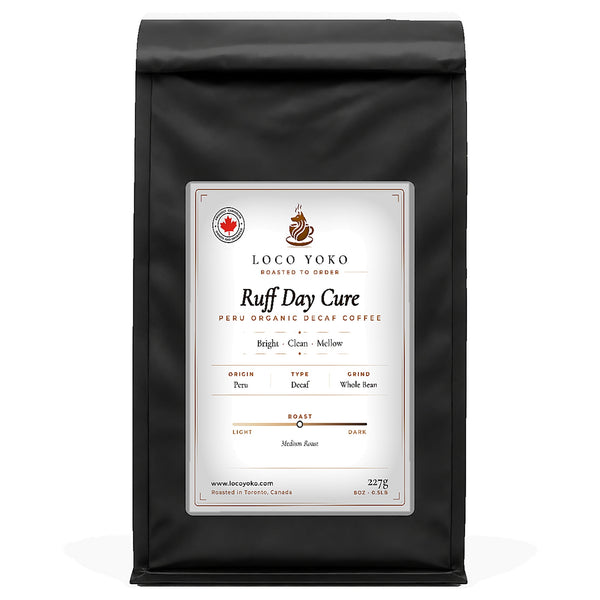
Ruff Day Cure
Bright · Clean · Mellow
Try removing a filter or two.
Tap a choice and we'll take you to the next step.
Peru Coffee: A Grower's-Eye Guide to One of South America's Most Underrated Origins
Peru doesn't get talked about the way Colombia or Ethiopia does, and that's a shame, because peru coffee beans are some of the most quietly consistent lots we buy. Most of Peru's specialty crop comes out of high-altitude smallholder farms in the north and central highlands, where volcanic soil, cool nights, and slow cherry maturation do a lot of the flavor work before the coffee ever reaches a roaster. If you've had a cup that was smooth, low in sharp acidity, and easy to drink black without needing anything to soften it, there's a decent chance it was peruvian coffee beans doing what they do best.
Where Peru's Coffee Actually Grows
Peru's coffee belt runs along the eastern slopes of the Andes, where the mountains drop into Amazon-adjacent cloud forest. The country doesn't have one dominant growing region the way Colombia has its coffee triangle — instead, production is spread across several distinct zones, each with its own microclimate and character. Cajamarca in the north is known for bright, floral lots grown at elevation. San Martín and Amazonas contribute fruit-forward coffees from warmer, lower-lying valleys. And in the central highlands, the Chanchamayo valley in Junín region produces what many buyers consider the country's benchmark cup — peru chanchamayo coffee has been grown there since Peru's earliest coffee plantings in the 1800s, and the valley's combination of altitude, rainfall, and volcanic soil still produces some of the most balanced coffee in the country.
Most farms sit between 1,200 and 2,000 meters above sea level, which is high enough to slow bean development and build the density that gives a cup its structure, but not so extreme that yields collapse. The farms themselves are almost all small — usually two to five hectares, family-run, often organized into cooperatives that pool cherry for processing and export. That cooperative structure is a big part of why so much Peruvian coffee carries organic and fair trade certification: it's easier and more affordable for a co-op to manage the paperwork and inspections collectively than for hundreds of individual smallholders to do it alone.
Why So Much Peruvian Coffee Is Organic and Fair Trade
This isn't a marketing angle — it's a function of how these farms actually operate. Many Peruvian growers never had the capital to buy synthetic fertilizers and pesticides in the first place, so a lot of this coffee was essentially organic by default long before certification bodies existed. Once co-ops realized that formalizing that into a certificate opened up better export pricing, peru organic fair trade coffee became one of the country's biggest specialty-market advantages. If you're specifically shopping for fair trade organic peru coffee canada import options, this is why Peru shows up so often on that list compared to origins where large estates dominate — the smallholder, co-op-driven model lines up naturally with both standards.
The trade-off is that certification and fair pricing don't automatically mean a coffee is exceptional — they mean the farmer got paid fairly and the land wasn't hit with chemical inputs. Cup quality still comes down to picking only ripe cherry, careful processing, and controlled drying. The better Peruvian co-ops we work with have gotten very good at all three, which is why the best peruvian coffee beans on the market now compete on flavor, not just on their certification stickers.
Processing: Mostly Washed, and Why That Matters
The overwhelming majority of Peru's export coffee is washed process. Cherries are depulped shortly after picking, fermented in tanks for anywhere from 12 to 36 hours depending on the co-op and the ambient temperature, washed clean, then dried on raised beds or patios. Washed processing strips away the fruit sugars that cling to the parchment during drying, which is a big part of why peru single origin coffee tends to taste clean and structured rather than jammy or wine-like. You're tasting the bean and the terroir, not a heavy fermentation influence layered on top.
There's a growing amount of honey and natural-process experimentation coming out of San Martín and a few Chanchamayo producers chasing brighter, fruitier profiles, but if you buy a bag labeled simply "Peru" without a processing note, washed is far and away the safest assumption, and it's also the profile most in line with what most drinkers expect from this origin.
Peruvian Coffee Taste Notes: What's Actually in the Cup
If you're trying to pin down peruvian coffee taste notes before you buy, think balance rather than a big, showy flavor spike. Typical descriptors are: milk chocolate, brown sugar, toasted nut, red apple, and a soft citrus or stone-fruit note that shows up more in brighter lots from Cajamarca. Body tends to run medium, sometimes creamy in coffees processed with a longer fermentation, and the finish is usually clean rather than lingering. This is a coffee that plays well with milk but doesn't need it — it holds up fine black, especially once you dial in the right grind and brew ratio.
The peruvian coffee flavor profile is often described by buyers as "reliable" in the best sense of the word: it rarely has an off note, rarely tastes thin, and rarely surprises you in a bad way. That consistency is exactly why so many blends use Peruvian coffee as a base — it plays nicely with other origins without fighting them for attention.
Peru Coffee Low Acidity — Is That Actually True?
This is one of the most search-for-able claims about the origin, and it's mostly accurate but worth explaining rather than just repeating. Peru coffee low acidity character comes from a combination of factors: many growing zones sit at moderate rather than extreme altitude compared to, say, high-grown Ethiopian or Kenyan lots, and the washed processing plus fuller drying that Peruvian co-ops favor tends to round off sharper acids rather than accentuate them. The result is a cup with soft, rounded acidity — more like a ripe apple than a citrus zing — rather than coffees with the crisp, almost sparkling acidity you get from some East African origins.
If you find high-acid coffee harsh on an empty stomach or just prefer something gentler and smoother, this is one of the clearer reasons to reach for Peru. It's also part of why smooth peruvian coffee canada drinkers keep coming back to — this isn't a coffee that fights you first thing in the morning.
How Peru Compares to Other Origins
Context helps here, because "smooth and balanced" only means something next to coffees that aren't. Put a Peruvian lot next to one of our Hawaiian Kona-style beans and the difference is obvious — the Hawaiian coffee brings a heavier, more buttery body and a distinct sweetness that comes from island volcanic soil and a totally different climate, while Peru stays lighter and more citrus-leaning by comparison. Against something like the lots we bring in from the Congo, Peru reads as the calmer, more restrained cup — Congolese coffee tends to carry more wine-like fruit and a heavier body, while Peru keeps things clean and approachable.
The closer comparison, and the one people ask about most, is Colombia. Both are washed-process Andean-region coffees grown by smallholders at similar altitudes, and if you've spent time with our Colombian and decaf offerings, you'll notice the family resemblance — caramel sweetness, medium body, soft acidity. Where they diverge is subtlety: Colombian lots often lean a touch brighter and more citrus-forward depending on the specific region, while Peru tends to sit slightly rounder and nuttier. Neither is objectively better; it comes down to which side of that balance you personally prefer. If you're building out a home lineup and want to taste that difference side by side, it's worth pulling from our full coffee selection and cupping a Peru against a Colombian back to back — the differences are subtle but real once you're paying attention.
Peru Coffee Medium Roast: Why We Roast It This Way
We roast the bulk of our Peruvian lots to a peru coffee medium roast profile, and that's a deliberate choice, not a default. Push a Peruvian coffee into dark-roast territory and you start masking exactly the qualities that make the origin worth seeking out — the soft acidity flattens further, the nutty and chocolate notes get pushed toward generic roast-driven bitterness, and you lose the subtle fruit that a lighter touch preserves. Go too light, on the other hand, and you can end up with a cup that tastes underdeveloped or grassy, since Peru's beans don't have the density of, say, a high-grown Kenyan to handle an aggressive light roast well.
Medium roast hits the sweet spot: it develops enough sugar-browning to bring out the chocolate and brown sugar notes, keeps the body rounded, and lets the coffee's natural low-acid character shine instead of getting roasted out of existence. If you're new to this origin, medium roast is also just the most representative way to taste what peru single origin coffee is actually about before you start experimenting with lighter or darker profiles yourself.
Peruvian Arabica Coffee Beans: Varietals in the Cup
Nearly everything grown in Peru is peruvian arabica coffee beans — Typica and Bourbon dominate, often planted generations ago and never replaced, alongside newer plantings of Caturra and Catimor for growers who need better yields or disease resistance. Typica in particular is a slow, low-yielding, old-world varietal that's fallen out of favor in a lot of the coffee world because it's harder to farm profitably, but it's part of why some of Peru's best lots have a clarity and sweetness that newer hybrid varietals don't always match. When we're sourcing, varietal is one of the things we ask co-ops about directly, because it tells us a lot about what to expect in the cup before the first sample roast even happens.
Buying Peruvian Coffee in Canada: What to Look For
If you're trying to buy peruvian coffee beans canada wide — whether you've come across a well-known name like mt comfort coffee peru or you're starting from scratch — freshness matters more than most people assume. Peru ships coffee as green (unroasted) beans in bulk, and it's the roaster's job to turn that raw material into something worth drinking — which means the date on the bag matters far more than the country of origin printed on it. We roast to order here in Toronto, and every bag gets a recommended 24 to 72 hour rest after roasting before you brew it, since coffee releases CO2 for a few days post-roast and brewing too early can make even a great lot taste flat or overly bright.
When you're evaluating where to buy peruvian coffee beans canada options, look for a roast date (not just a "best before" date), a stated process method, and ideally some indication of growing region rather than just "Peru" as a catch-all. Those details are a decent signal that the roaster actually knows and cares about the coffee, rather than just buying whatever green lot was cheapest that month. And if you're ordering online, check whether the roaster ships fresh rather than holding pre-roasted stock in a warehouse — for peru coffee whole bean online canada orders, that distinction is the difference between a lively cup and a stale one by the time it reaches your door.
Brewing Peru Coffee at Home
Because this origin runs smooth and low-acid rather than bright and punchy, it's forgiving across most brew methods. Drip and batch brew flatter it well, since those methods don't need a lot of acidity to feel balanced. Pour-over lets the more delicate chocolate and stone-fruit notes come through if you're using a lighter medium roast. French press adds body and rounds things out even further, which some drinkers love and others find a bit heavy for this particular origin — if you want more clarity, stick with a paper filter method instead.
A standard starting ratio is 1:16 (about 60g of coffee per litre of water), water just off boiling around 200°F, and a medium grind for drip or pour-over. Because the acidity is already soft, you don't need to compensate the way you might with a bright East African coffee — you're mostly just trying not to over-extract and dull the sweetness, so keep an eye on total brew time and pull it back slightly if the cup starts tasting flat or bitter.
Sourcing Notes: How We Choose Our Peru Lots
We buy from co-ops rather than large estates whenever we can, both because it supports the smallholder model that dominates Peruvian production and because co-op lots tend to be more consistent — cherry from dozens of small farms gets pooled, sorted, and processed to a shared standard rather than varying wildly farm to farm. We sample-roast before committing to a lot, cupping for the balance and clean finish that define a good Peru rather than chasing the biggest, splashiest flavor notes. It's a quieter coffee by design, and we roast it to highlight that rather than fight it.
FAQ
What does Peruvian coffee taste like compared to other South American coffees?
Peruvian coffee is generally smoother and more balanced than punchier origins, with milk chocolate, brown sugar, toasted nut, and soft red apple or citrus notes. Compared to Colombian coffee, it tends to sit slightly rounder and less bright; compared to Brazilian coffee, it usually has more clarity and a cleaner finish thanks to washed processing.
Is Peruvian coffee always organic and fair trade?
Not always, but a large share of it is. Peru's coffee industry is dominated by smallholder farms organized into cooperatives, which makes organic and fair trade certification more accessible than it would be for individual growers. Many farms were essentially organic by default before certification even existed, simply because they never had access to synthetic inputs.
What roast level is best for Peruvian coffee?
Medium roast is generally the best showcase for this origin. It develops the chocolate and brown sugar sweetness without flattening the coffee's naturally soft acidity the way a dark roast can, and it avoids the underdeveloped, grassy notes that can show up if a lower-density bean like Peru is roasted too light.
Why is Peruvian coffee considered low in acidity?
It comes down to growing altitude, varietal, and processing. Much of Peru's crop grows at moderate rather than extreme elevation, and the washed processing and thorough drying that most co-ops use tend to round off sharp acids rather than emphasize them, producing a soft, rounded cup instead of a bright, sharp one.
How fresh should whole bean Peruvian coffee be when I buy it?
Look for a roast date, not just a best-before date, and buy from a roaster that roasts to order rather than holding pre-roasted inventory. We recommend resting coffee 24 to 72 hours after roasting before brewing, since fresh-roasted beans release CO2 for a few days and brewing too soon can mute the flavor.
What's the difference between Chanchamayo coffee and other Peruvian regions?
Chanchamayo, in Peru's central Junín region, is one of the country's oldest and most established growing zones, dating back to the 1800s. Its volcanic soil and altitude tend to produce well-balanced, classic Peru character, while northern zones like Cajamarca often trend brighter and more floral, and lower-elevation areas like San Martín can show more fruit-forward, occasionally natural-processed profiles.
Frequently asked questions
The essentials about this collection. Still curious about something?
Ask us anything