
Mocha Java Coffee - Mix Blend
Mocha Java Coffee - Mix Blend — layered for balance and consistency, roasted to order in Canada and shipped free over $50.
Products in this collection

Java Nice Day!
Light cocoa · Soft fruit · Clean finish
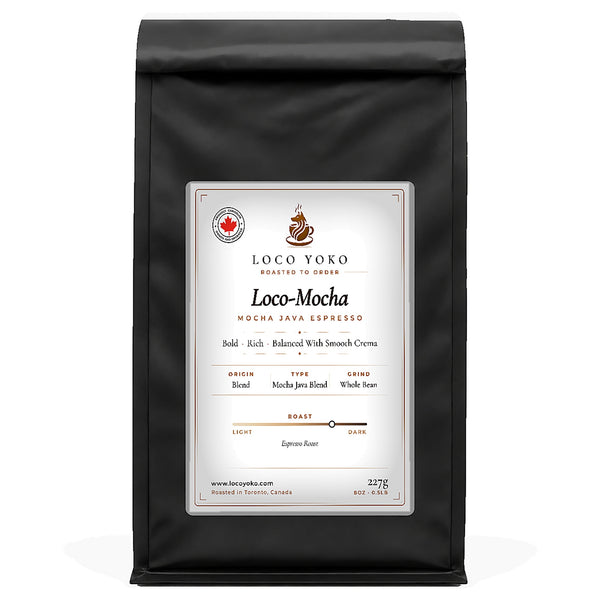
Loco-Mocha
Bold · Rich · Balanced with a smooth crema
Try removing a filter or two.
Tap a choice and we'll take you to the next step.
What Mocha Java Actually Is
Mocha java is a two-origin blend built from beans grown roughly 6,000 kilometers apart: highland arabica from Yemen and volcanic-soil arabica from the Indonesian island of Java. It's one of the oldest named coffee blends in the world, and unlike most modern blends that get invented in a roastery to hit a flavor target, this one was born out of the actual 17th- and 18th-century shipping routes that moved coffee out of the Arabian peninsula and into Southeast Asia and Europe. When people ask us about the world's oldest coffee blend, this is almost always what they mean. It's also one of the more distinctive entries you'll find if you're shopping for mocha java coffee beans or any other java blend coffee anywhere in the specialty market, since so few blends can point to an actual historical trade route as their origin story.
The name itself is a geography lesson. "Mocha" refers to the port city of Al-Mokha in Yemen, the historic export point for Arabian coffee, not the chocolate drink that borrowed its name later. "Java" is the Indonesian island where the Dutch East India Company established some of the first coffee plantations outside Africa and Arabia in the late 1600s. Put the two together and you get a yemen and java coffee blend that's less a marketing invention and more a preserved piece of coffee trade history.
How This Blend Came To Be
The story behind this blend's long, documented history starts with Yemen, which for centuries controlled nearly all coffee exports to the outside world through the port of Mocha. Traders and colonial powers eventually smuggled live coffee plants out of Yemen, and the Dutch planted them in Java starting around 1696. By the early 1700s, Java coffee was reaching European markets in volume, and traders began blending it with the original Yemeni mocha beans that had built the coffee trade in the first place. Few blends on shelves today can claim a backstory this well documented, spanning multiple empires, trade monopolies, and continents over more than three centuries.
That blend stuck for a practical reason: the two origins complement each other in the cup. Yemeni beans bring wild, winey acidity and a natural sweetness that can taste almost fermented in the best way. Java beans, especially the aged and semi-washed lots grown on the island's volcanic estates, bring a heavier body, low acidity, and a round, earthy backbone. Blended together, one origin fills in what the other lacks. Coffee historians generally credit this pairing as the first intentional coffee blend ever documented, predating espresso blending by roughly two centuries — which is why the pairing still carries its "oldest blend" reputation today.
Where the Beans Come From
Yemen: high-altitude, low-tech, and unmistakable
Yemeni coffee is grown on steep, terraced mountainsides in regions like Haraaz, Bani Matar, and Ismaili, often above 1,500 meters. Farms are small, irrigation is scarce, and much of the processing is still done using traditional natural (dry) methods passed down through generations. Trees are old, frequently unshaded, and farmed without the volume-driven techniques common elsewhere. The result is a cup with a distinctive wild character — some cuppers describe it as winey, spiced, or even a little funky — that's genuinely hard to replicate from any other growing region.
Java: volcanic soil and old-growth estates
Java's coffee-growing regions sit on volcanic soil in the island's eastern highlands, particularly around Ijen. Some estates here have been in continuous production since the Dutch colonial period, and a portion of Java coffee is still aged before export using the "Old Java" method, where green beans are stored for one to three years to mellow acidity and deepen body. That aging process is part of why a genuine indonesian and yemen coffee blend tastes so different from a straightforward Central American or East African cup — the Java component is doing something most other origins never attempt.
What It Tastes Like
If you're trying to pin down mocha java coffee taste notes before buying, expect a cup built around three main threads: bright, wine-like acidity from the Yemen side; heavy, syrupy body and earthy depth from the Java side; and a natural cocoa or dark chocolate note that shows up in the finish. That last one isn't a coincidence — the phrase "mocha" is where the modern chocolate-and-coffee drink got its name, because early Yemeni coffee genuinely carried a chocolatey undertone. It's one of the more reliable sources of natural chocolate notes coffee blend drinkers look for without any added flavoring.
Other things to expect in the cup: a spiced, almost cardamom-adjacent aromatic quality, dried fruit or raisin sweetness, low-to-moderate brightness that never turns sharp, and a body thick enough to coat the tongue. It's a complex, layered coffee rather than a clean, one-note cup — closer to what you'd want from a slow Sunday pour-over than a fast morning drip.
How Mocha Java Compares to Other Origins
Against a straightforward Ethiopian natural, mocha java is heavier and less floral — Ethiopian coffees tend toward berry and jasmine, while mocha java leans cocoa and spice. Against a washed Colombian, it's noticeably less acidic and more textured, since Java's semi-washed and aged processing strips out a lot of the bright citrus character you'd get from Colombia's wet-processing tradition. Compared to a Sumatran coffee (grown on a different Indonesian island using wet-hulling), mocha java is brighter and less earthy-mushroomy, because the Yemeni half brings acidity that pure Sumatra doesn't have.
If you already enjoy full-bodied, low-acid coffees, or you gravitate toward our espresso collection for its heavier roasts, mocha java is a natural next step — it holds up well in an espresso pull without losing the chocolate character that makes it distinctive. If you're newer to specialty coffee and mostly drink drip or pour-over, expect a cup that's richer and more layered than a standard single-origin, without swinging into the acidity of an East African bean.
Roast Level: Why Medium Wins
Mocha java medium roast is the standard for a reason. Roast this blend too light, and the wild Yemeni acidity can dominate, tasting sharp or unbalanced against Java's heavier body. Roast it too dark, and you lose the cocoa and spice notes under generic roast bitterness — you end up with something that tastes like any other dark roast, which defeats the point of paying for a historic two-origin blend in the first place. A true medium roast lets the caramelization develop enough body and sweetness to support Java's earthiness while still preserving Yemen's acidity and the natural chocolate finish. We roast our blend specifically to hit that middle ground, then rest it 24 to 72 hours post-roast before it ships, which lets the CO2 released during roasting settle out and keeps the cup from tasting flat or overly sharp in the first few days.
Brewing Mocha Java at Home
Because of its heavier body and lower acidity, mocha java performs best in brew methods that let it develop fully: French press, moka pot, or a slow pour-over with a coarser grind and longer bloom. A metal filter (French press or moka pot) actually suits this blend better than paper, since paper filters strip out some of the body and oils that make mocha java distinctive in the cup. If you're brewing drip, aim for a slightly longer contact time than you would with a lighter, brighter single-origin — this blend rewards patience rather than speed.
As espresso, this blend produces a syrupy shot with a persistent chocolate finish, which is part of why it shows up so often in recipes built for that use — if straight espresso is your main brew method, it's worth comparing it against the darker roasts in our espresso lineup to see which profile you prefer.
Buying This Blend in Canada
If you're looking to buy mocha java coffee online canada-wide, sourcing matters more with this blend than with most others. Because Yemen's coffee industry is small, fragile, and affected by ongoing instability in the region, genuine Yemeni-origin lots are limited and priced accordingly — which means a cheap "mocha java" blend is often cut heavily with generic Indonesian robusta or filler beans rather than true high-altitude Yemeni arabica. When you're evaluating who sells the best mocha java coffee canada has to offer, ask what percentage of the blend is genuine Yemen-origin arabica, and whether the Java component is a real aged or semi-washed lot rather than a generic Indonesian robusta stand-in.
We roast our version fresh to order out of our Toronto roastery rather than holding pre-roasted stock, and every bag ships free across Canada on orders over $50. As a small-batch canadian roastery mocha java supplier, we buy both components as genuine single-origin green coffee — Yemeni highland arabica and Indonesian Java arabica — and blend them ourselves rather than sourcing a pre-blended commodity mix, so you're getting the actual historic pairing rather than an approximation of it.
We also carry an organic mocha java option for customers who want certified organic sourcing on both the Yemen and Java components — worth flagging specifically when you order, since organic-certified lots from Yemen in particular are limited in supply from year to year. If you're comparing formats, our mocha java whole bean coffee holds its flavor noticeably longer than pre-ground, especially given this blend's oil-rich, heavier-body profile — grinding just before brewing preserves the chocolate and spice notes that fade fastest once beans are ground.
Where Mocha Java Fits in a Broader Collection
Mocha java sits at an interesting crossroads in our lineup. It's technically a mocha java blend, which puts it alongside the rest of our blended coffee selection, but its historical weight and single-origin-quality sourcing also make it a favorite among drinkers who otherwise stick to single-origin beans exclusively. If you're building out a broader coffee rotation, it pairs well as a change of pace next to the rest of our coffee selection — something to reach for on days when you want more body and less brightness than a typical East African or Central American origin delivers.
FAQ
What makes this blend different from a regular dark roast?
Most blends are assembled in a roastery to hit a specific flavor profile using whatever origins are available and affordable. Mocha java is different because it's a historically fixed pairing — Yemeni highland arabica and Indonesian Java arabica specifically — that traces back to actual 17th-century trade routes rather than a modern recipe. The origins themselves, not just the roast, define the blend.
Is mocha java the same as a mocha (the chocolate drink)?
No. The chocolate mocha drink borrowed its name from the port of Mocha in Yemen because early Yemeni coffee had a naturally chocolatey undertone. Mocha java is the actual bean blend; the chocolate drink came later and used the name because of that flavor association, not because there's real cocoa in the coffee itself.
What roast level should I buy?
Medium roast is the standard and the one we recommend. It's dark enough to develop the body and sweetness that balances Yemen's acidity, but light enough to preserve the cocoa, spice, and dried-fruit notes that make this blend worth seeking out in the first place.
How should I brew mocha java?
French press, moka pot, and slow pour-over all suit it well because of its heavier body and lower acidity. A metal filter preserves more of the oils and body than paper. It also performs well as espresso, producing a syrupy shot with a lasting chocolate finish.
Is genuine Yemeni-origin coffee actually available right now?
Yes, though supply is limited and prices reflect that scarcity. We source real Yemeni highland arabica for our blend rather than substituting a cheaper regional stand-in, which is part of why sourcing transparency matters when you're choosing where to buy.
How fresh is the coffee when it ships?
Every batch is roasted to order at our Toronto roastery, not pulled from pre-roasted inventory. We recommend a 24 to 72 hour rest period after roasting before brewing, which lets the beans degas properly, and orders over $50 ship free across Canada.
Frequently asked questions
The essentials about this collection. Still curious about something?
Ask us anything