How Much Caffeine Is in Your Coffee? (By Roast & Brew Method)

"How much caffeine is in a cup of coffee?" has a frustrating answer: it depends. Not as a dodge — there are genuinely several variables stacked on top of each other, and two of the most common beliefs about caffeine (that dark roast has more, and that espresso hits hardest) are both distortions of the same underlying issue: what you're actually measuring. Once you understand the levers behind how much caffeine is in coffee, you can dial your dose up or down on purpose instead of guessing.
What actually determines the caffeine in your cup
Four things do almost all the work, and the biggest single split is arabica vs robusta caffeine content:
- Bean species — arabica and robusta are different plants with different chemistry. Robusta beans naturally carry noticeably more caffeine than arabica, often cited as roughly double, though the exact gap varies by variety and growing conditions. Most specialty coffee, including single origins, is arabica.
- Dose — how much ground coffee you use relative to water. More coffee in the basket or filter means more caffeine extracted, full stop.
- Contact time and water temperature — caffeine is water-soluble and dissolves readily, so the longer hot water sits against the grounds, the more of it moves into your cup. This is a major reason brew methods differ from each other even at similar doses.
- Grind size — a finer grind exposes more surface area per gram, so extraction happens faster and more completely for a given contact time.
Roast level is a much smaller factor than most people assume, and it doesn't work the way the popular myth suggests.
How much caffeine is in coffee, by brew method
These are approximate ranges, not lab figures — actual caffeine varies by bean, dose and how the coffee was extracted, even within the same brewer:
- Drip / pour-over (350ml): roughly 120–200mg
- French press (350ml): roughly 100–160mg
- Espresso (single shot, ~30ml): roughly 60–80mg
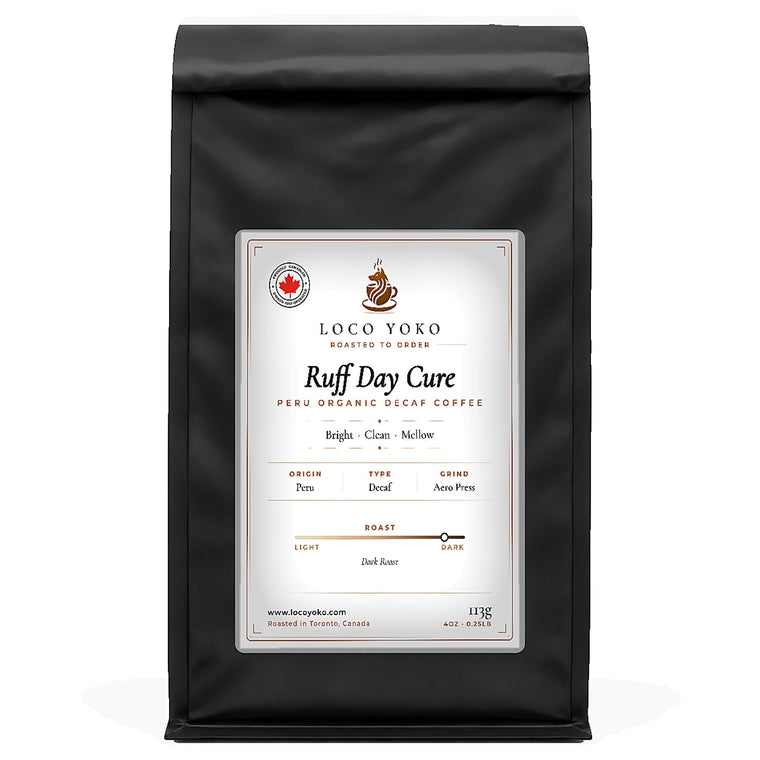
- Decaf: roughly 2–5mg per cup
Caffeine in French press coffee and drip coffee tends to add up fast in total milligrams, simply because of volume. Drip and French press extract from a large volume of water in prolonged contact with a relatively large dose of grounds, which is why their total caffeine content is high even though each is a "weaker" concentration than espresso. Espresso pushes a small amount of very hot water through a fine, tightly packed puck under pressure for a short time — the extraction is fast and intense, but the total water volume is tiny, which caps the total caffeine even though the flavour is concentrated.
Does dark roast have more caffeine?
The claim that dark roast has more caffeine gets repeated constantly, and it survives because it depends entirely on how you measure. Caffeine is a fairly heat-stable compound — it doesn't break down significantly during normal roasting temperatures and times. What does change is the bean itself: as roasting continues, beans lose moisture and organic mass, and they physically expand, becoming larger and lighter for their size.
That means: by weight, a lightly roasted bean has slightly more caffeine per gram than a darkly roasted one, because it has lost less mass overall while the caffeine content stays roughly constant. But by volume — a scoop, a tablespoon, a level basket — the two roasts come out close to even, because the darker bean is bigger and less dense, so a scoop of it actually contains fewer beans than a scoop of light roast.
In practice, most people measure coffee by scoop rather than by scale, which is exactly why the "volume" comparison matters more day to day — and why the honest answer is that roast level makes only a marginal difference to caffeine either way. What roasting changes dramatically is flavour, not the buzz. It's also worth knowing that roast-level names aren't standardised across roasters: what one company calls "medium" another might label "dark," so treat roast descriptions as a guide to flavour, not a caffeine spec.
Espresso vs drip: concentration is not the same as total dose
Caffeine in espresso vs drip coffee comes down to concentration versus quantity: a single shot of espresso has less total caffeine than a full mug of drip coffee — it just delivers that caffeine in a much smaller, more intensely flavoured volume, so it feels stronger. This is the concentration-versus-quantity confusion at the heart of most caffeine myths: espresso is a higher-caffeine liquid ounce for ounce, but a typical drip serving is a bigger dose overall because you're drinking roughly ten times the volume. Multi-shot espresso drinks (a double or triple) obviously change this calculation — more shots means more total caffeine, closer to or beyond a mug of drip.
Caffeine in cold brew: a case of its own
Cold brew doesn't fit neatly into the list above because it's usually made as a concentrate and diluted before drinking, which makes direct comparisons tricky. The method steeps coarsely ground coffee in room-temperature or cold water for many hours rather than minutes. Cold water extracts more slowly than hot water, but the very long contact time more than makes up for it, and the dose used for a concentrate is often higher than a standard drip ratio. The result is a concentrate that can be quite high in caffeine before you dilute it — how strong the final glass ends up depends entirely on how much you cut it with water, milk or ice, so treat any single number you see for cold brew with some scepticism.
Does coffee origin affect caffeine?
Not in any consistent, meaningful way. Growing altitude, soil and processing method shape flavour — acidity, sweetness, body — but they aren't reliable predictors of caffeine content the way species, dose and brew time are. Two beans from different origins, roasted and brewed the same way, will typically land in a similar caffeine range to each other. If you're chasing a caffeine target, look at the brew variables above rather than the country of origin on the bag.
Caffeine in decaf coffee
Decaffeination removes the large majority of caffeine from green beans before roasting, but "decaf" doesn't mean zero — a typical cup carries only a small residual amount, on the order of a few milligrams rather than the hundred-plus in regular coffee. Process matters here too: methods like the Swiss Water Process remove caffeine using water and carbon filtration rather than chemical solvents, which is worth knowing if you care about how your decaf gets there, separate from the caffeine question itself.
Adjusting your dose on purpose
If you want more caffeine without changing your routine drastically, the reliable levers are: use a bit more coffee per cup, brew with a method that has longer contact time (French press or drip over espresso), or grind slightly finer to extract faster. If you want less, go the other direction, cut your dose, or move toward decaf for part of the day. Switching roast level alone won't move the needle much — that's a flavour decision, not a caffeine one.
LocoYoko roasts coffee to order from single origins across Ethiopia, Kenya, Colombia, Brazil, Peru, Guatemala, Costa Rica, Nicaragua, Congo, India, Indonesia, Java and Papua New Guinea, and ships free across Canada on orders over $50. Whichever origin or roast you land on, the caffeine math above holds regardless of where the beans are from.