How to Store Coffee Beans to Keep Them Fresh Longer

Fresh-roasted coffee is at its best in the first few weeks. After that, it slowly loses the aromatic oils and gases that make it taste alive. The good news: knowing how to store coffee beans properly buys you real time, and the reasons why come down to a handful of simple chemical reactions you can actually control.
Why coffee goes stale at all
To understand what causes coffee to go stale, start with roasting itself. Roasting is a violent process — beans hit high heat, lose most of their moisture, and undergo chemical reactions that build the flavour and aroma compounds you're paying for. One by-product of that process is carbon dioxide, which gets trapped inside the bean and slowly escapes over the following days and weeks. That escaping gas is what causes the "bloom" you see when hot water first hits fresh grounds in a pour-over — it's carbon dioxide pushing back against the water.
At the same time, roasting also brings coffee's natural oils to the surface. Those oils are the same kind of compound found in nuts or unrefined cooking oil, and like any oil, they oxidize on contact with air. Oxidation is what turns the bright, complex flavour of fresh coffee into the flat, cardboard-like taste of old coffee. It's a gradual process, not a cliff — coffee doesn't "go off" the way milk does, it just steadily loses character. Everything about good storage is really just slowing down two things: oxidation and gas loss.
The four enemies of fresh coffee, and why each one matters
- Air — oxygen is the direct fuel for the oxidation reaction described above. More exposed surface area and more air contact simply means faster staling.
- Moisture — water on or around the beans accelerates degradation and creates the right conditions for mould, which is a genuine health risk, not just a flavour one.
- Heat — chemical reactions, including oxidation, run faster at higher temperatures. A cupboard near the stove or a bag left in direct sun works against you for the same reason food spoils faster on a hot counter than in a cool pantry.
- Light, especially UV light, breaks down some of the same flavour and aroma compounds directly, independent of oxidation. It's why good coffee bags are opaque rather than clear.
How to store coffee beans, step by step
Keep beans in an airtight coffee container that's opaque too, in a cool, dark cupboard — not on the counter next to the kettle, and not in a clear jar that looks nice but lets light straight through. Airtight matters because it limits new oxygen getting in every time you're not actively pouring beans out; opaque matters because it blocks the light that a clear container invites.
Buy whole bean and grind just before brewing. The whole bean vs ground coffee question comes down to surface area more than ritual: grinding a bean into hundreds of small particles exposes vastly more surface to the air than the whole bean ever had. Pre-ground coffee stales in days for exactly that reason, while whole beans, with far less surface exposed, hold their character for weeks. If you only make one change from this article, make it this one — a cheap burr grinder does more for flavour than almost any other single upgrade.
The coffee bag valve question
You'll often see fresh-roasted coffee sold in bags with a small one-way valve. That valve exists to solve a specific problem: freshly roasted beans are still releasing carbon dioxide, and if you sealed them in a fully airtight bag with no way for that gas to escape, the bag would swell and eventually fail. The valve lets built-up gas out while still blocking outside air from getting in. Once you've decanted beans into your own container at home, days or weeks after roasting, most of that gas release has already tapered off, so a simple airtight container without a valve works fine for everyday storage — the valve's job is really about the first stretch of a bean's life, not the container it sits in on your counter.
Should you freeze coffee beans? Skip it, mostly
This is one of the more genuinely contested corners of coffee advice, and it's worth being honest about where opinions split. Some experienced roasters do freeze beans successfully, but only under specific conditions: beans portioned into small, fully airtight amounts, frozen once, and used in a single go straight from the freezer without being repeatedly taken out and returned. The failure mode isn't the cold itself — it's condensation. Every time frozen beans warm up in open air, moisture from the air condenses onto them, and that moisture then works against you exactly the way it does at room temperature. Freeze-thaw cycles, where beans go in and out of the freezer repeatedly, are the real problem.
For most home drinkers, the simpler and lower-risk approach is just buying smaller amounts more often, so you're never sitting on more coffee than you'll use in a few weeks. It sidesteps the condensation risk entirely and tends to be less hassle day to day. If you drink coffee slowly and want to freeze a larger batch, portion it into single-use amounts before it goes in, and don't put beans back in the freezer once they've come out.
How long do coffee beans stay fresh?
Whole beans are generally at their best for about 3 to 4 weeks after the roast date, and still perfectly drinkable for a couple of months beyond that as staling continues gradually rather than suddenly. There's also a lower bound worth knowing: coffee brewed in the first day or two after roasting, while it's still releasing a lot of carbon dioxide, can behave a little unpredictably — excessive blooming, uneven saturation in the filter — which is why some baristas prefer to let beans rest for a few days after roasting before brewing, particularly for espresso. Freshness has a beginning as well as an end.
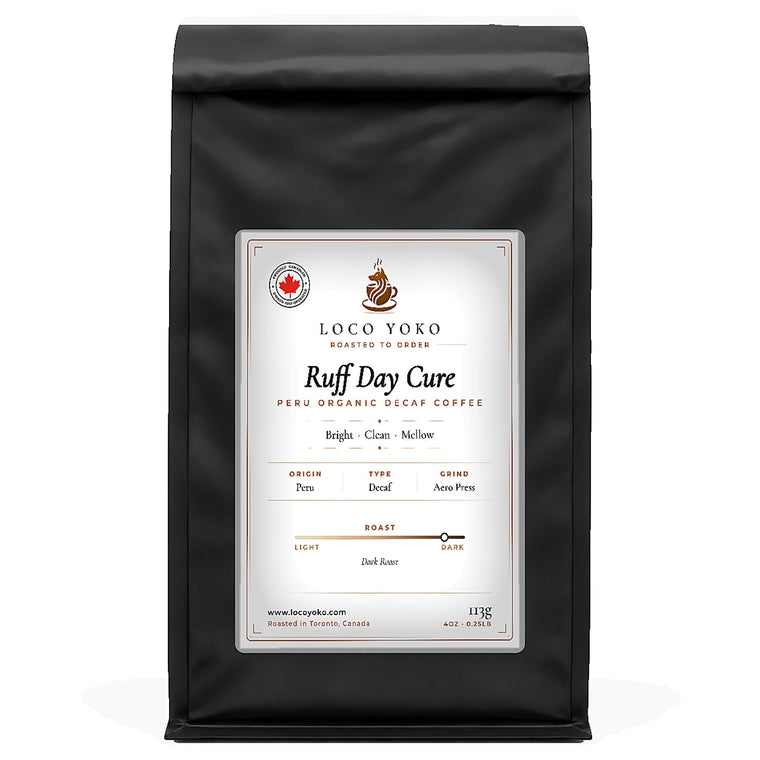
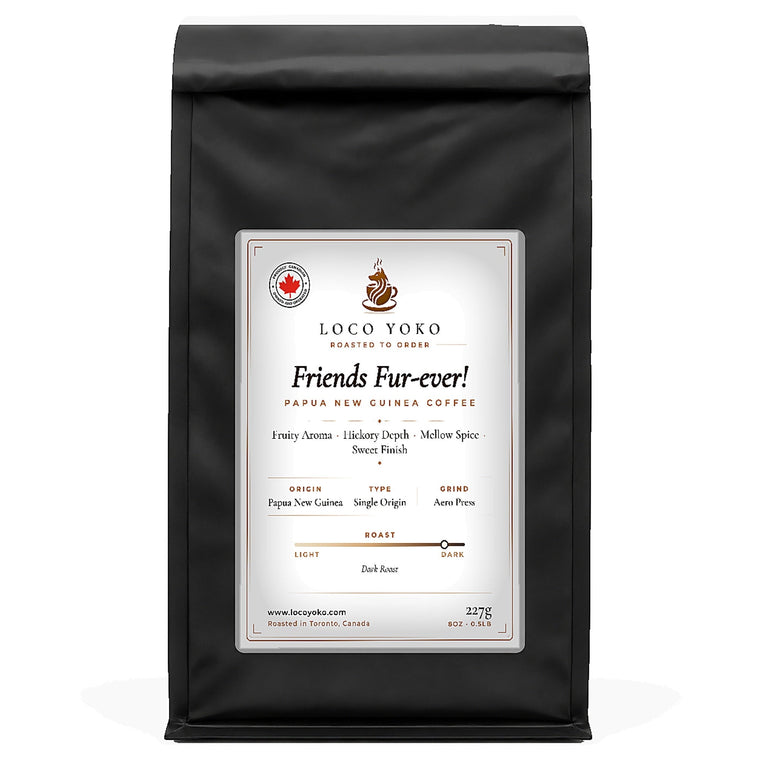
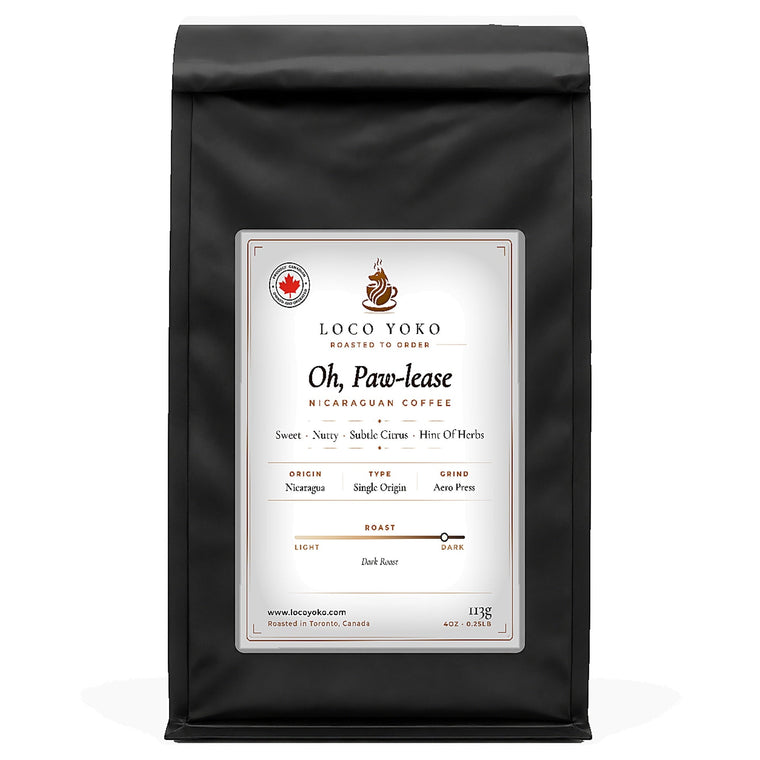
Your coffee roast date is the one number worth checking before anything else. All of this depends on actually knowing your roast date, which is a bigger factor than most people realize — a bag can sit on a shelf for months before you ever open it. LocoYoko roasts to order out of Toronto, so the clock on your bag starts close to the day it ships, not months earlier in a warehouse. Good storage habits only pay off if they're protecting genuinely fresh beans to begin with.